IN Brief:
- Hensoldt's Twinvis passive radar has been integrated with Rheinmetall's Skymaster command and weapon engagement system.
- The Timber Express demonstration fused sensor information through Link 16 while Skymaster directed a Skynex air-defence battery.
- The companies see the architecture as a basis for passive sensing across Skynex, Skyranger, and counter-UAS systems.
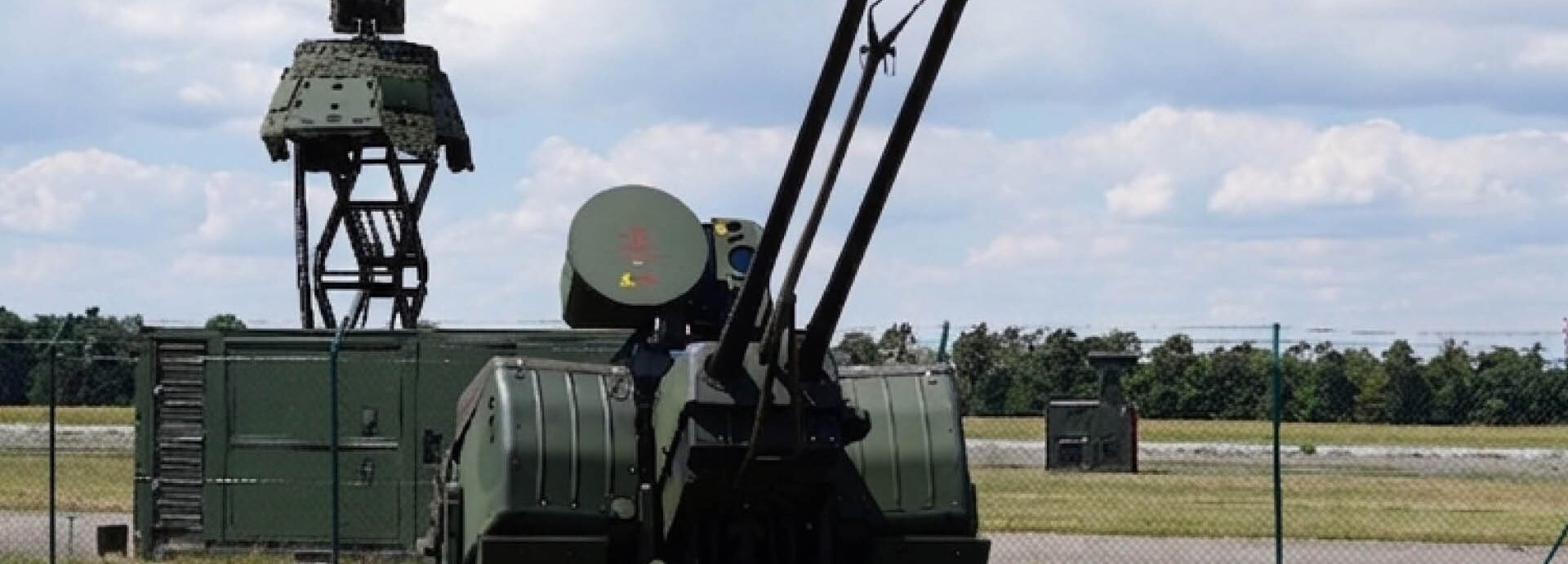
Rheinmetall and Hensoldt have demonstrated the integration of Hensoldt’s Twinvis passive radar with Rheinmetall’s Skymaster command and weapon engagement system during the German Air Force’s Timber Express 2026 exercise at Manching. Skymaster was directing a deployed Skynex air-defence battery while receiving an air picture generated with data from the passive sensor.
The integration was conducted under NATO networking conditions and used Link 16 to fuse and correlate information into a common air picture. The exercise therefore tested more than a connection between two manufacturers’ products: passive-radar tracks had to enter a command environment supporting operationally relevant sensor fusion and weapon control.
Twinvis performs wide-area surveillance without transmitting in the same way as a conventional active radar. Passive radar exploits existing electromagnetic emissions in the environment and analyses how those signals are altered by objects in the airspace, allowing it to contribute tracks without producing the distinctive transmissions associated with an active surveillance sensor.
That characteristic gives passive sensing a different place within an integrated air-defence network. Active radars remain central because of their range, accuracy, and control over transmitted signals, but they also contribute to the electromagnetic picture available to an opponent. Combining active and passive systems gives commanders more options for managing emissions while maintaining surveillance.
Rheinmetall’s Skymaster provides the command layer linking those sensor sources to the wider defence architecture. During Timber Express, the system combined information inside a NATO Link 16 environment while controlling a Skynex battery, demonstrating that Twinvis data could be incorporated into the same operational picture used for engagement decisions.
Sensor fusion is a substantial part of that process. Active radar, passive radar, and electro-optical systems do not necessarily produce identical tracks, update rates, accuracy, or identification confidence. The command system has to correlate those observations and avoid presenting operators with several apparent targets where several sensors are actually observing the same aircraft.
Rheinmetall and Hensoldt also tested the architecture against an emissions-control requirement. By varying the use of active, passive, and electro-optical sensors, an air-defence network can continue gathering information while limiting unnecessary transmissions from some components. The usefulness of that approach depends on available emitters, sensor geometry, communications resilience, track quality, and the tactical situation.
Passive radar therefore complements rather than replaces active surveillance. It can add another information source and complicate attempts to understand the defender’s sensor posture, but its performance is shaped by the electromagnetic environment in which it operates. Connecting it to a command system allows those strengths and limitations to be considered alongside information from other sensors.
The Timber Express demonstration also provides an integration path towards other Rheinmetall air-defence systems. The companies identify stationary Skynex installations, mobile Skyranger systems, and Skyspotter counter-UAS configurations as potential applications for the work completed during the exercise.
Those systems operate at different levels of mobility and against different target sets, but each benefits from an architecture able to receive information from distributed sensors. Counter-UAS missions add a particular challenge because small drones can present weak radar signatures, fly close to terrain and infrastructure, and appear in numbers that place heavy demands on tracking and engagement management.
No procurement award accompanied the Timber Express trial, and the successful integration does not mean Twinvis will automatically become part of every Skynex or Skyranger deployment. The exercise establishes technical compatibility and provides data for subsequent engineering, customer evaluation, and configuration decisions.
The result nevertheless fits a broader direction in European air defence. Procurement is increasingly centred on layered networks in which sensors, command nodes, and effectors from different sources have to exchange information rather than operate as closed batteries. Link 16 provides one established route for that exchange, but the quality of the final air picture still depends on the systems processing the underlying sensor data.
Twinvis has now been connected to an operationally relevant command-and-engagement chain under German Air Force exercise conditions. Further deployments will show whether passive sensing becomes a routine component of Rheinmetall air-defence configurations, but the immediate engineering hurdle — getting the data into Skymaster and the Skynex network — has been demonstrated.