IN Brief:
- North has secured a KBS Maritime contract to modernise security technology at HM Naval Base Portsmouth.
- Work includes a secure control centre, network upgrades, advanced cameras, analytics, and integration of multiple systems.
- Delivery will be phased to maintain uninterrupted surveillance while creating infrastructure able to support future capability upgrades.
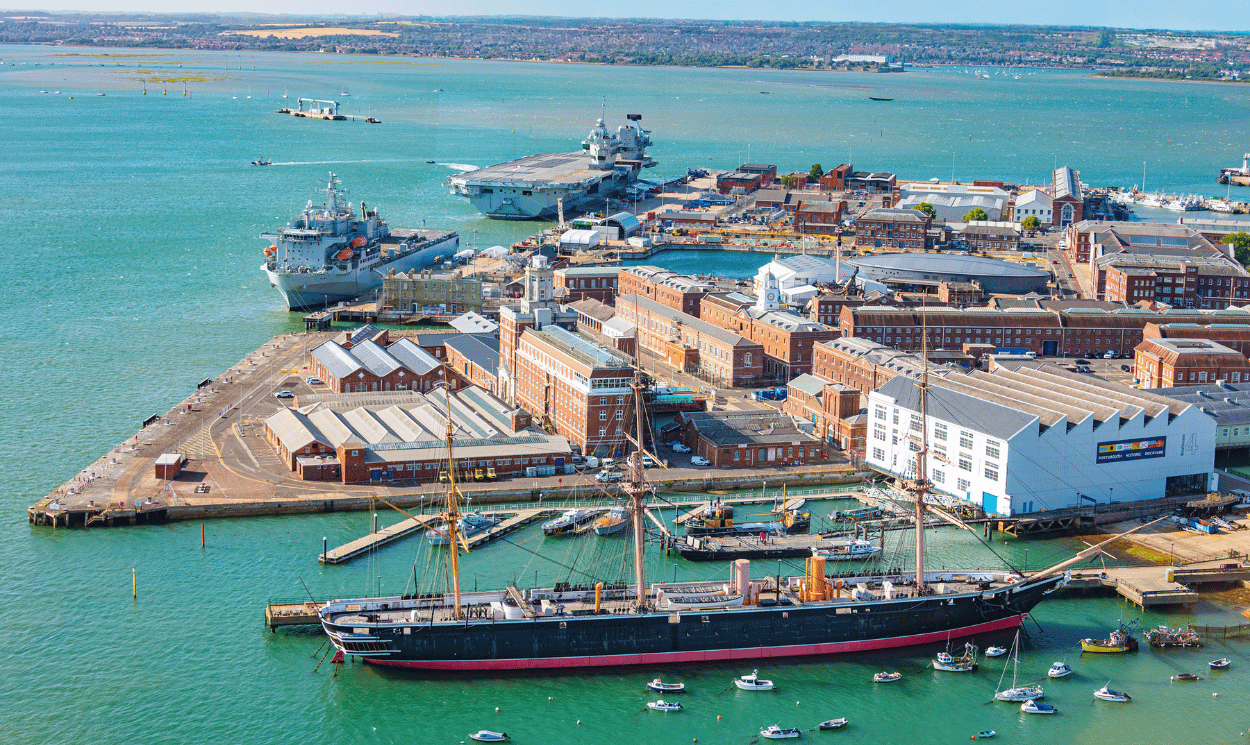
North has secured a contract from KBS Maritime to modernise surveillance, analytics, networking, and control infrastructure at HM Naval Base Portsmouth, introducing a new secure control centre while the existing security operation remains active.
KBS Maritime, the joint venture between KBR and BAE Systems responsible for infrastructure and asset-management services at Portsmouth, selected North through a competitive process. The programme will refresh the base’s video-surveillance estate, upgrade the supporting network, introduce advanced cameras with integrated analytics, and consolidate several systems through a common platform.
The engineering challenge extends beyond replacing ageing cameras. Portsmouth remains an operational naval base with warships, personnel, contractors, logistics movements, restricted areas, and critical infrastructure distributed across a large working estate. Security technology has to be replaced without creating a period in which monitoring or response capability is reduced.
North says the programme will therefore be delivered in phases to maintain zero downtime. Existing and replacement equipment will have to operate through a controlled transition in which cameras, network infrastructure, software, data paths, and control-room functions are migrated while the base continues normal security operations.
Sequencing becomes a significant part of the technical work in that environment. A conventional commercial site can sometimes tolerate planned outages while systems are changed; a major naval installation cannot assume the same flexibility where surveillance contributes directly to force protection and operational security.
The new control centre will sit at the centre of the upgraded architecture. Modern surveillance estates increasingly require operators to draw information from multiple sources rather than watch isolated camera feeds, with analytics used to flag activity or conditions that deserve closer attention.
Those tools depend on the underlying network as much as the cameras themselves. Video places sustained demand on bandwidth and storage, while analytical systems require sufficient processing capacity and reliable access to feeds. Security controls must also prevent the infrastructure intended to protect the site from becoming another route through which an attacker can reach connected systems.
The programme consequently sits across physical and digital security. A connected camera is a physical-security sensor, but its software, authentication, network configuration, firmware, management interface, and recorded data are cyber-security concerns. Integrating the estate into a unified platform increases operational visibility while also increasing the importance of controlled system administration.
The programme will be designed to accommodate future upgrades rather than lock Portsmouth into the current generation of equipment. That addresses a common problem on long-lived infrastructure sites, where successive technology purchases can leave operators managing separate systems with different interfaces, support contracts, and maintenance cycles.
Richard Green, managing director for Defence and Justice at North, described the contract as a significant milestone for the company’s defence and maritime-security work. North’s wider portfolio covers network infrastructure, network security, intelligent video surveillance, and connected systems, allowing it to address both the devices deployed around the estate and the communications infrastructure supporting them.
KBS Maritime managing director James Davis said the upgrade is intended to establish Portsmouth as a secure, high-readiness hub and provide a model that could inform future work at other Ministry of Defence sites. Replicating the architecture elsewhere would depend on how much of the design can be standardised while still accommodating different site layouts, operational roles, threat profiles, and existing equipment.
Analytics will require similar discipline. Automated video tools can reduce the burden of monitoring large estates, but poorly configured detection zones, false alerts, environmental conditions, and unsuitable models can quickly create additional operator workload rather than remove it. Defence sites also require clear rules governing how automated alerts are assessed and recorded.
The programme aligns with a wider UK emphasis on improving resilience at strategic defence infrastructure. Naval bases have to support fleet maintenance, logistics, loading, training, and deployment while protecting personnel, equipment, and sensitive areas from both physical intrusion and digitally enabled disruption.
No contract value or detailed completion date has been disclosed publicly. The industrial significance is therefore in the integration work and the requirement to execute it without interrupting an operational security system rather than in a headline procurement figure.
Portsmouth’s upgrade moves the surveillance estate further away from a collection of individual cameras and towards a connected security environment in which sensors, analytics, networks, and control functions operate together. The success of the project will depend on whether North can make that transition while the base continues to function — an engineering constraint that cannot be solved by installing newer cameras alone.