IN Brief:
- Mara has raised a $7 million pre-seed round led by Khosla Ventures to develop and deploy its Spike counter-UAS system.
- Spike combines Spotter multisensor detection with lightweight Seeker kinetic interceptors to provide distributed coverage against small FPV aircraft.
- Ground-mounted deployment is targeted by the end of 2026, followed by vehicle-mounted and man-portable configurations during production scale-up in 2027.
Mara has raised $7 million in pre-seed funding to move its Spike counter-UAS system from field testing towards initial deployment and production scale-up. The round was led by Khosla Ventures, with participation from a16z Speedrun, Night Capital, Palmdrive, Protagonist, Freedom Fund, Indicator Fund, and angel investors.
Spike is designed primarily around small first-person-view aircraft that can approach at low altitude, from different directions, and without depending on a conventional radio-control link. Fibre-optic control and increasing use of onboard guidance can reduce the effectiveness of electronic jamming, leaving counter-UAS developers to combine physical sensing and interception with electronic-warfare systems rather than assuming every incoming aircraft can be defeated through its communications link.
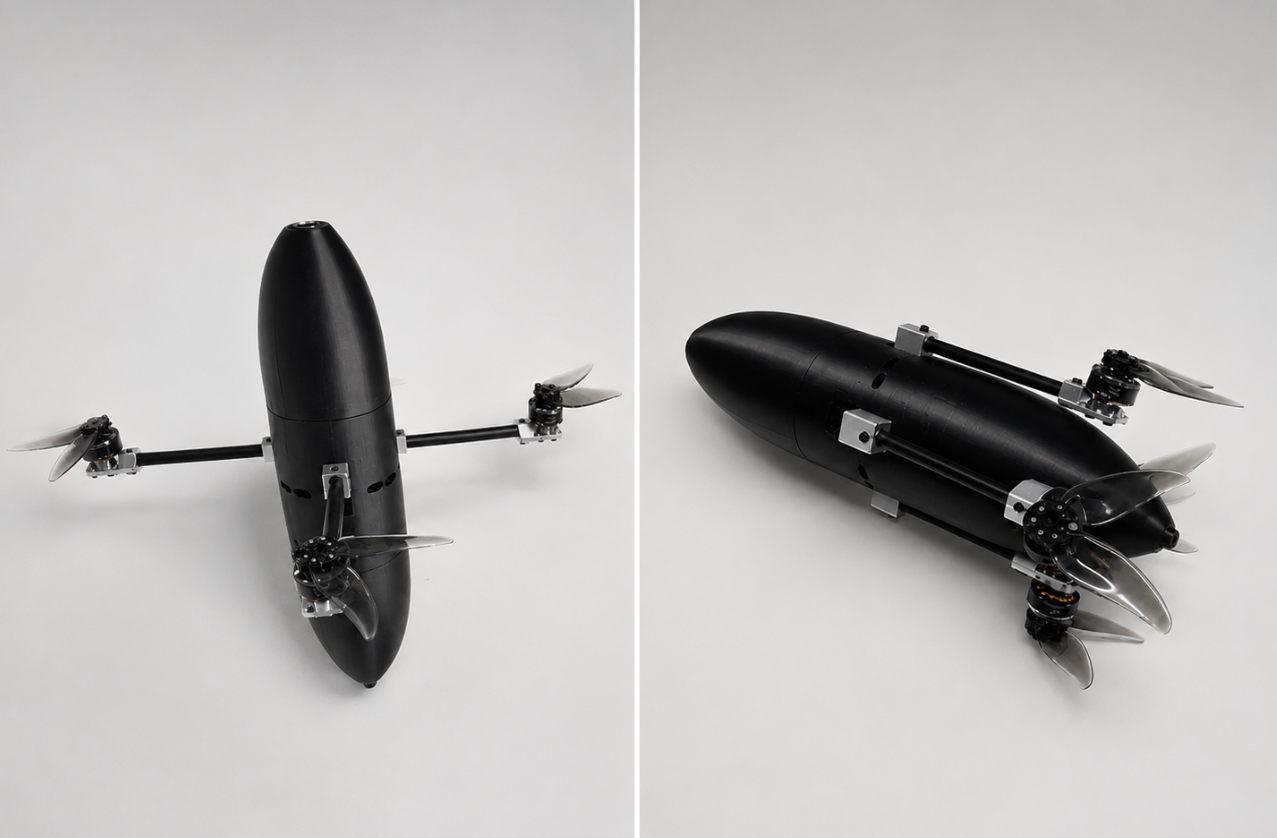
Mara divides that task between two components. Spotter is the system’s detection and tracking layer, combining visual and acoustic sensing with optional radar, while Seeker is a lightweight tube-launched kinetic interceptor. The company gives Seeker a mass of 250g and says the wider Spike architecture can be configured with as many as 48 interceptors, providing a deeper local magazine than systems built around a small number of larger effectors.
The design is intended to distribute both sensors and interceptors. Several nodes can be positioned to cover different approach directions rather than concentrating protection in one turret or launcher, while the small interceptors are intended to keep the cost of each engagement below that of the equipment being protected. That cost relationship is a central part of Mara’s commercial proposition, although the company has not disclosed a unit price for either the complete Spike system or individual Seeker interceptors.
“Spike instead creates a distributed mesh of small, cheap nodes that can each aim and shoot in multiple directions at once,” said Daniel Kofman, co-founder and chief executive of Mara. His description reflects the company’s effort to treat counter-UAS as a problem of magazine depth and coverage as much as detection range or individual interceptor performance.
Spotter uses passive sensor fusion to detect and track small aircraft, with Mara’s current product material also listing an optional W-band low-emission radar. Passive sensing can be useful where operators want to limit their own radio-frequency emissions, although electro-optical and acoustic systems face their own difficulties in clutter, poor weather, darkness, terrain masking, and environments containing large numbers of legitimate small airborne objects.
Seeker receives tracking information before launch and then uses onboard sensing for the interception. The supplied release gives a top speed of 200km/h and describes the aircraft as carrying onboard intelligence for terminal operation. Those specifications establish the intended performance envelope, but Mara has not released independently verified probability-of-kill figures, engagement ranges, environmental qualification data, or production configuration details.
The company has nevertheless progressed beyond laboratory demonstrations. According to the supplied release, Seeker completed intercepts while cued through US Army software during an exercise in Texas, while Spotter was operated on an armoured vehicle during another Army exercise in Europe and fed detection information into Army command software. Mara also reports an end-to-end engagement with a US special-operations unit in which Spotter detected a target and cued Seeker to launch without direct operator input.
Those activities are relevant because a counter-UAS system rarely operates in isolation once it reaches military units. Track information may need to enter an existing command network, while identification, airspace control, rules of engagement, and threat prioritisation can sit outside the interceptor itself. Integration with Army software therefore tests a different part of the architecture from a company-controlled interception against a known target on a test range.
The supplied release states that a human remains on the loop to establish engagement rules and retain the ability to abort launches. That operating model has been retained here because it is the description provided with the funding announcement. Mara’s current product website uses broader language, describing human-in-the-loop functionality as available but optional, so the two formulations should not be treated as interchangeable without further clarification from the company.
Mara also says Ukrainian personnel operated Spotter around 40km from the front line in July, where it tracked multiple FPV aircraft. The announcement does not provide independently verified detection rates or engagement results from that deployment, so the activity is more useful as evidence of field exposure than as a quantified measure of system effectiveness. Operating near an active electronic-warfare environment can still expose sensor, communications, power, and usability problems that are difficult to reproduce during controlled development work.
Outside military testing, Mara is running a civilian pilot at a South Korean port and says it has cooperative research and testing agreements with three US defence organisations. The company has also been selected for NATO’s DIANA innovation accelerator and reports early engagement with organisations in the UK, Czech Republic, and Ukraine. None of those relationships has been announced as a production contract.
The funding now shifts attention towards manufacturing. A distributed counter-UAS architecture only achieves the proposed magazine and cost advantages if sensors and interceptors can be produced in sufficient quantities without expensive components undermining the economics. Seeker still depends on propulsion, batteries, processors, sensors, flight-control electronics, communications hardware, and launch equipment, while Spotter adds cameras, acoustic sensors, computing, and optional radar.
Production consistency becomes increasingly important as autonomy moves from prototypes into repeated manufacture. Sensor calibration, software versions, processor availability, seeker behaviour, and mechanical tolerances have to remain controlled across each batch. If dozens of interceptors are expected to sit within a single defensive installation, reliability at the individual-unit level directly affects the usable magazine.
Mara plans initial ground-mounted deployments with customers by the end of 2026, followed by vehicle-mounted and man-portable configurations alongside increased production during 2027. The company has not disclosed the number of systems it intends to manufacture, the customers involved, or the factory capacity required to support that timetable.
The $7 million round therefore finances a transition rather than proving that transition has been completed. Spike has reached field exercises and external evaluations, but production-scale counter-UAS imposes a different test: whether low-cost sensors and interceptors can be manufactured, integrated, replenished, and supported repeatedly. Against FPV aircraft whose principal industrial advantage is cheap, distributed production, the defence system eventually has to compete on manufacturing arithmetic as well as interception performance.