IN Brief:
- Lockheed Martin has received another $90.2 million for Trident II D5 Life Extension 2 advanced design and development.
- Work is concentrated at Kings Bay and Cape Canaveral, with additional activity at Bangor, Denver, and smaller locations.
- The modification adds to an established D5LE2 development programme intended to support Columbia-class submarines and strategic deterrence beyond the current D5 generation.
Lockheed Martin has received a further $90.2 million US Navy contract modification for advanced design and development work on the Trident II D5 Life Extension 2 programme, adding another funded engineering package to the continuing modernisation of the sea-based strategic weapon system.
The cost-plus-fixed-fee modification covers Strategic Systems Programs alteration, advanced design, and development activity under an existing contract. Work will be concentrated at Kings Bay, Georgia, which accounts for 68% of the effort, with 25% at Cape Canaveral, Florida, 5% at Bangor, Washington, 1% in Denver, Colorado, and the remainder at smaller locations.
All $90.23 million is being obligated from fiscal 2026 Navy weapons-procurement funding, with completion scheduled for 30 September 2030. The award is sole-source and modifies an established D5LE2 development contract rather than beginning a new missile programme.
Lockheed Martin disclosed in July that it had received a separate $850 million modification to continue D5LE2 design and development. An earlier $383 million award announced in January 2025 also funded upgraded missile design and construction of new production capacity in Florida, showing that engineering and industrial preparation are progressing in parallel.
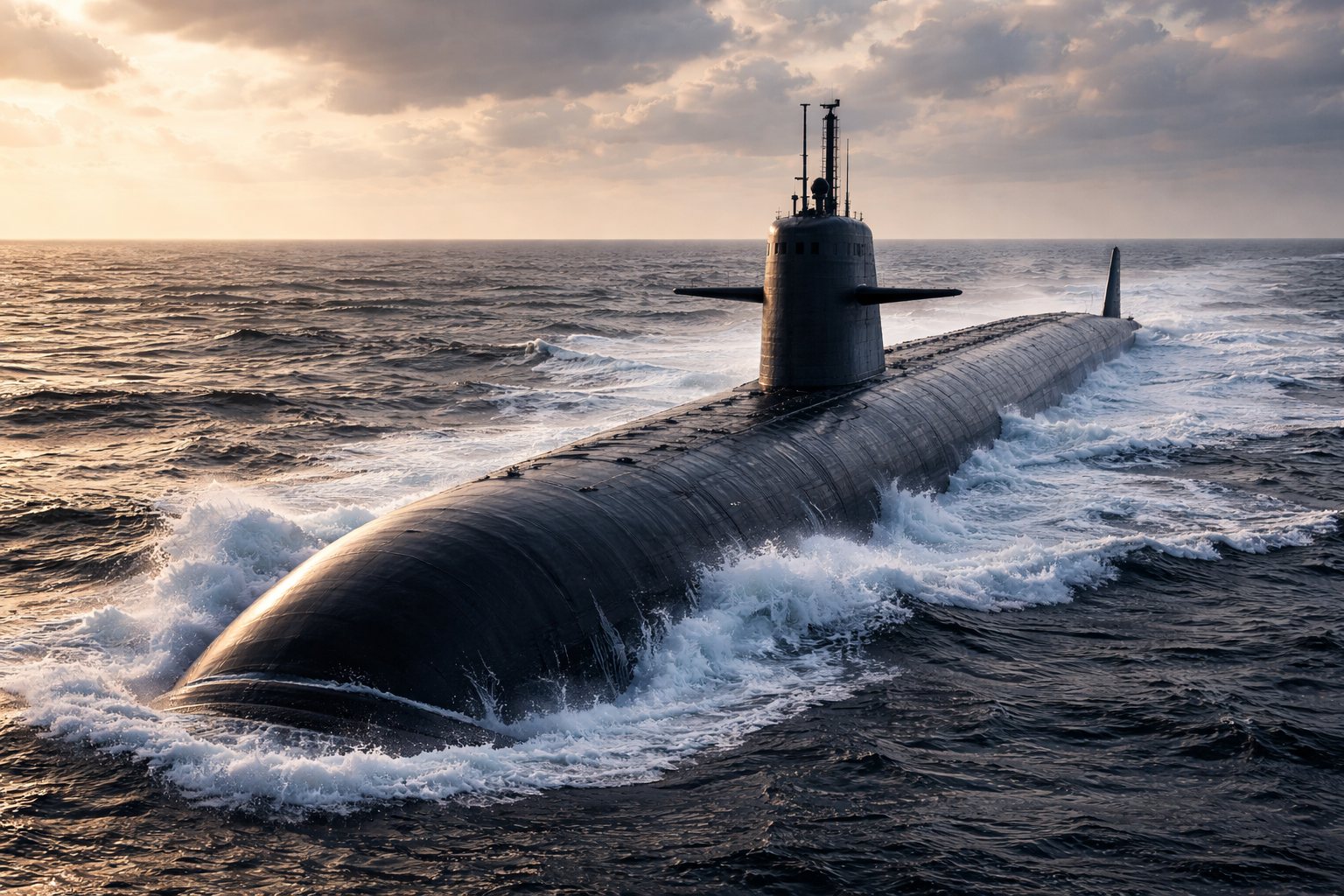
Trident II D5 first deployed in 1990 and remains in use aboard US Ohio-class and UK Vanguard-class ballistic-missile submarines. Lockheed Martin says the current missile will remain in service into the 2040s, while D5LE2 is being developed as the next modernised configuration for the strategic weapon system.
The company says D5LE2 will be carried aboard Columbia-class ballistic-missile submarines and is intended to sustain the strategic weapon system through 2084. That horizon makes the programme a long-duration industrial undertaking in which design decisions made during the current decade will affect manufacture and sustainment for generations.
The latest modification does not disclose a production quantity or new performance specification. Its contract language covers advanced design and development, so the $90.2 million should not be presented as an order for operational missiles or as a discrete manufacturing lot.
Design activity at this stage has to mature a controlled configuration while production facilities, suppliers, test infrastructure, and host-platform interfaces develop around it. Strategic missile programmes cannot defer those industrial questions until a final design is complete because specialist components and qualified manufacturing processes take years to establish.
Lockheed Martin is already expanding facilities in Titusville, Florida, to support future D5LE2 production. The company has said the modernised site will help provide production capacity for the next generation of Trident hardware, linking factory investment directly with the engineering programme now receiving successive contract modifications.
The geographic spread of the September award also reflects the wider system around the missile. Kings Bay and Bangor are the principal US ballistic-missile submarine bases, while Cape Canaveral supports development and flight-test activity. Engineering has to account for the infrastructure through which the weapon will be handled, tested, supported, and ultimately deployed.
Configuration management becomes more demanding during a transition in which the current D5 remains operational while D5LE2 matures. The Navy cannot simply stop supporting the existing missile and switch to the new design on a single date. Components, documentation, software, test systems, and production arrangements have to support overlapping generations.
The Columbia programme adds another dependency. The next strategic missile configuration and the submarine that will carry it have separate design, construction, and qualification schedules, yet their interfaces have to remain aligned closely enough for integration to proceed without late redesign.
The programme also sits within long-standing US-UK strategic cooperation. Lockheed Martin has said the second D5 life extension supports both countries under the Polaris Sales Agreement, although national submarine, warhead, and operational arrangements remain distinct.
That breadth explains why D5LE2 appears through successive engineering and infrastructure awards instead of one contract covering the entire future weapon system. Missile design, facilities, test activity, industrial capacity, and platform integration progress on different schedules and require separate funding decisions while Strategic Systems Programs maintains control of the overall technical baseline.
The September modification extends one of those work packages to 2030. It adds further funding to a programme already in development and preserves engineering activity across the bases, test locations, and design organisations that will have to carry Trident from the current D5 configuration into its second life-extension generation.
The next useful programme markers will be technical rather than rhetorical: design maturity, facility readiness, qualification activity, and the point at which development hardware begins to convert into repeatable production. The $90.2 million modification keeps that work funded while the larger D5LE2 programme continues towards a service life measured well beyond the middle of the century.