IN Brief:
- American Systems will update the P-8A Virtual Maintenance Trainer to represent the Increment 3 Block 2 configuration.
- The $30.58m modification combines US Navy and Australian funding, with work divided between Florida and South Australia.
- Hardware, software, courseware, and readiness-system changes are scheduled for completion in January 2029.
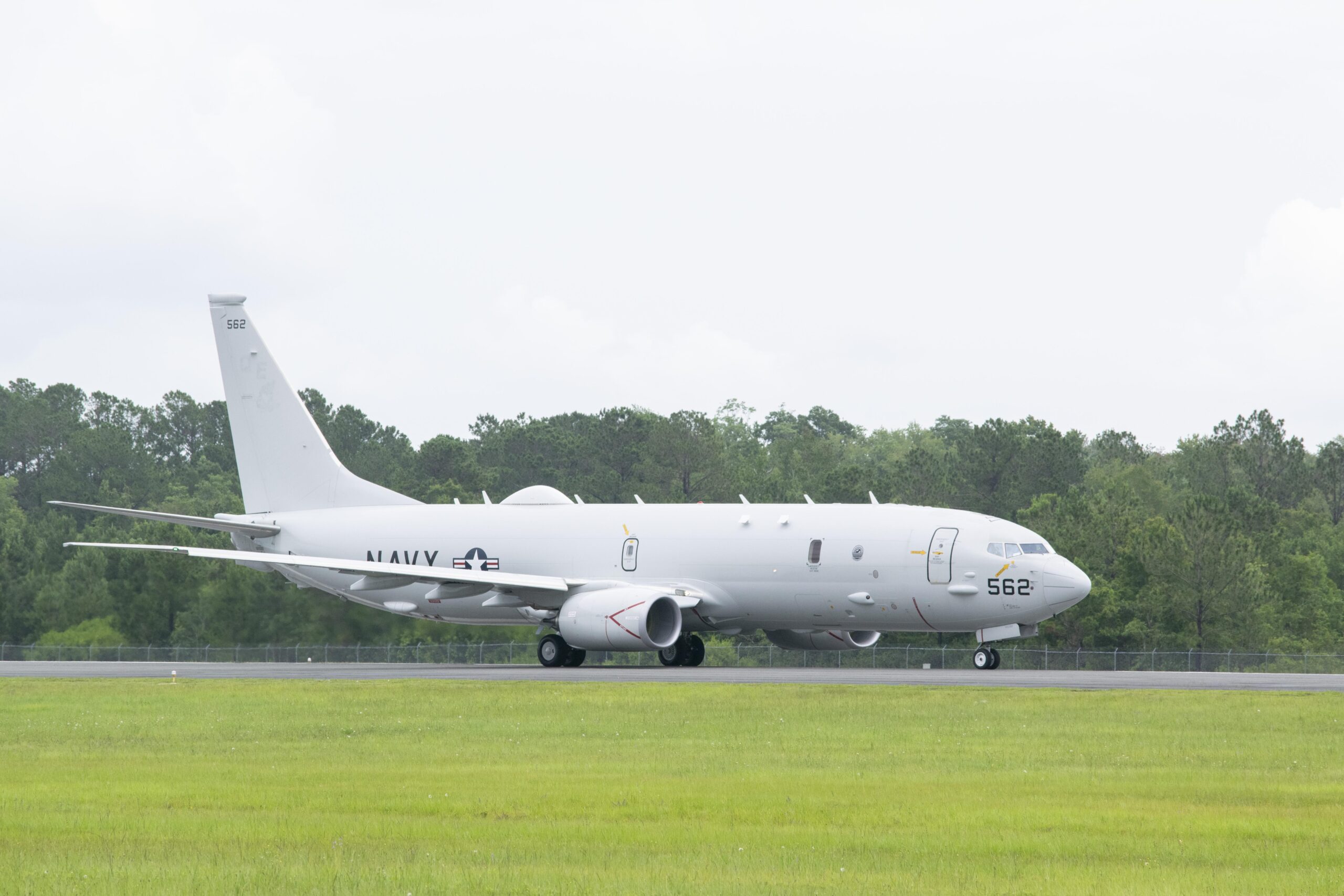
American Systems has received a $30.58m US Navy contract modification to update P-8A Poseidon maintenance training for the Increment 3 Block 2 configuration used by the US Navy and Royal Australian Air Force. The work covers development, integration, testing, and delivery of a software update to the P-8A Virtual Maintenance Trainer, alongside hardware, software, and courseware changes across the wider Maintenance Training Device Suite. Work is split equally between Jacksonville, Florida, and Edinburgh, Australia, and is due to finish in January 2029.
The modification also funds integration of Automated Readiness Measurement System Combat System Increment 3 capabilities for both customers. US aircraft-procurement funding from fiscal 2024 and fiscal 2026 supports the Navy portion, while the RAAF is providing $14.11m, or roughly 46% of the announced value. Naval Air Systems Command at Patuxent River is the contracting activity, and the modification was not competed.
Increment 3 Block 2 reached initial operating capability in April 2026 after initial operational testing and completion of the first aircraft modification in 2025. The configuration introduces new racks, radome, antennas, sensors, wiring, and a revised combat-systems suite with improved processing, higher-security architecture, wideband satellite communications, anti-submarine warfare signals-intelligence capability, track management, and additional communications and acoustics systems.
A maintenance trainer representing an earlier aircraft baseline would lose value as those changes move into operational squadrons. Technicians need training devices that reproduce the equipment, interfaces, faults, procedures, and configuration they will encounter on the aircraft, while courseware has to track the same hardware and software changes. The latest award therefore follows the aircraft upgrade directly into the maintenance and readiness system.
American Systems has worked on P-8A training and readiness integration under contract N61340-22-C-0001 since 2022. Earlier modifications covered installation of Increment 3 Block 2 mission software into training systems including Weapons Tactics Trainers, Combat Systems Part Task Trainers, and the Combat System Electronic Classroom, with separate work supporting US Navy and Australian requirements. The new action extends that progression into the Virtual Maintenance Trainer and adds further readiness-system integration.
Australia’s participation is substantial because the RAAF is moving its own Poseidon fleet onto the same Increment 3 Block 2 baseline. Its upgrade programme was scheduled to begin in 2026 and run through the remainder of the decade, improving anti-submarine warfare, strike, and intelligence capability. Placing half of the training work in Edinburgh keeps part of the supporting engineering effort alongside the Australian operating and sustainment environment.
The arrangement reduces the gap between aircraft configuration and training infrastructure, but it also creates a demanding configuration-management task. Increment 3 Block 2 is not a single software patch: it combines physical aircraft alterations, mission-system upgrades, communications, sensors, processing, and revised maintenance requirements. Training devices, courseware, readiness software, and technical documentation all have to remain aligned as the operational fleet receives further changes.
The Automated Readiness Measurement System adds another layer by connecting training activity with assessment of performance and readiness. The system is intended to measure performance against defined standards, assess the ability to perform assigned tasks and missions, and support decisions about training or resource allocation. Integrating that function into the P-8A environment makes the training suite part of the mechanism used to identify where further preparation is required.
The bilateral structure also supports interoperability between fleets that routinely exercise and operate together. Australia entered the P-8A cooperative programme with the US Navy rather than developing an entirely separate maritime patrol training architecture, so a common Increment 3 Block 2 representation reduces the risk of maintainers or crews training against materially different system behaviour. Australian workshare still allows local procedures, support arrangements, and training delivery to be incorporated where required.
Aircraft upgrades increasingly create parallel demands on simulators and training infrastructure. New sensors or communications equipment can change fault-finding procedures; software revisions alter menus and workflows; revised racks and wiring change physical maintenance tasks. If the training system lags the fleet, the resulting difference has to be absorbed by aircraft-based training, reducing availability and increasing the burden on operational units.
By January 2029, the Navy and RAAF expect the modification to have delivered an updated maintenance-training environment around a configuration already entering operational service. The contract is modest beside aircraft procurement, but the dependency is direct: a more capable Poseidon fleet still requires maintainers and crews trained against the correct baseline. As Increment 3 Block 2 spreads across both fleets, the supporting training system has to move with it.