IN Brief:
- KITE production has moved into Sykes Advanced Manufacturing’s Geelong composite facilities in Australia.
- The site combines aerospace-grade composite tooling, large-format additive manufacturing, and five-axis CNC capability.
- Kite Aero says its current commercial pipeline covers more than 100 aircraft.
Kite Aero has started production of its KITE autonomous logistics aircraft at Sykes Advanced Manufacturing’s facilities in Geelong, moving the uncrewed platform into an Australian manufacturing arrangement built around established composite-production capability.
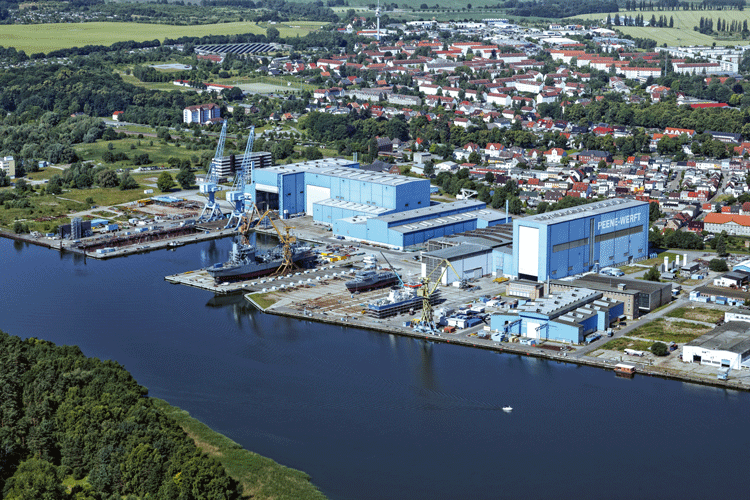
Sykes will manufacture KITE at a Geelong site previously operated by Quickstep, with aerospace-grade composite tooling, large-format additive manufacturing, and five-axis CNC machining available within the production footprint. The companies describe the arrangement as a sovereign Australian supply route intended to support customers in Australia and other allied markets while retaining the aircraft’s intellectual property onshore.
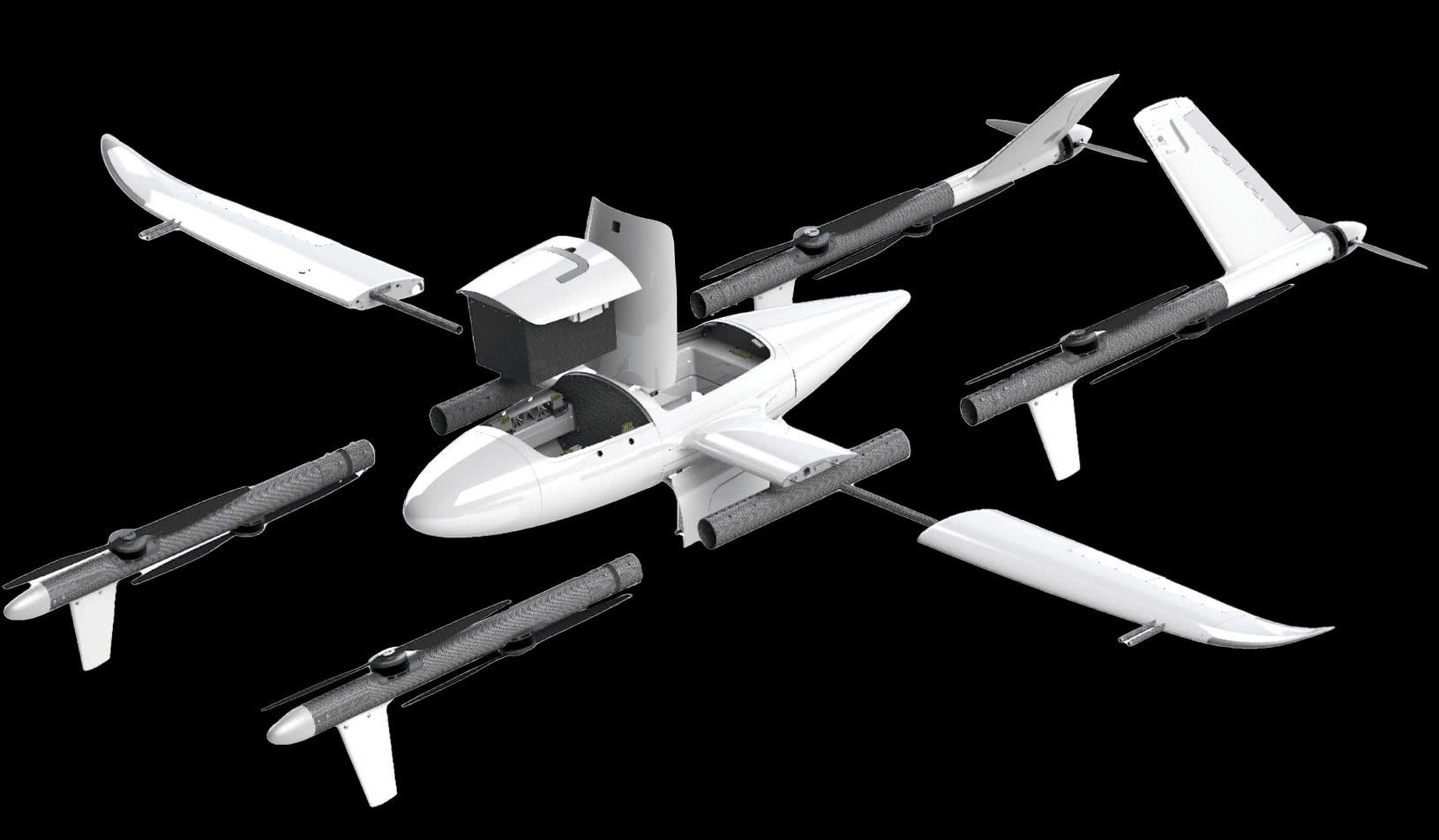
KITE is a fixed-wing vertical-take-off-and-landing aircraft designed for autonomous logistics missions. Kite Aero says the platform is intended to carry critical supplies over routes where conventional transport is limited, while its AXIOM operating system provides flight planning, oversight, and many-to-one aircraft management for scaled operations.
The manufacturing move is being made against a reported pipeline of more than 100 aircraft. Kite Aero states that the KITE airframe has accumulated more than 2,000 flights and 800 flying hours under its ownership, in addition to around 11,000 flights and 2,500 hours under previous ownership. Fleet-wide operations associated with the company and its technology now exceed 41,000 flights and 20,000 hours.
Those numbers give the production programme a different character from an early prototype build. Repeated operations expose maintenance demands, component-life assumptions, software behaviour, and airframe wear that cannot be established convincingly from a small number of demonstration sorties, while a three-figure pipeline begins to put pressure on tooling, supplier control, inspection, and production repeatability.
Kite Aero currently lists a 115km return range and a 240km one-way range when carrying a 2.5kg payload. Those figures place the aircraft in the longer-range logistics segment rather than the short-range multicopter market, where endurance and payload are more tightly constrained by battery consumption and rotor lift requirements.
The choice of Sykes is therefore as much about production method as geography. The Geelong operation brings composite experience, machining, tooling, and additive capability together within a facility intended to support repeatable airframe manufacture, while the wider Sykes operation provides around 6,500 square metres of composites capacity.
Its industrial heritage is rooted partly in high-performance rowing shells rather than military aviation, but several manufacturing disciplines carry across. Lightweight structural composites, controlled resin processes, tooling accuracy, surface quality, and repeatable dimensional performance remain common concerns, even though aerospace production adds a substantially heavier burden of traceability, qualification, inspection, and configuration control.
Kite Aero’s defence relevance sits primarily in logistics, autonomy, and supply-chain positioning rather than in a declared weapons role. The company is presenting Australian production as compatible with Five Eyes procurement expectations, and the ability to source, repair, and support an aircraft within an allied industrial base has become more prominent as government customers scrutinise dependence on opaque overseas component chains.
Autonomous logistics aircraft also occupy an increasingly crowded part of the uncrewed market. Defence organisations are examining how smaller aircraft can move medical supplies, repair components, batteries, sensors, and other time-sensitive payloads without tying up crewed helicopters or ground convoys. Useful performance will be measured in dispatch reliability, repeatable range, maintainability, and fleet availability rather than a single demonstration flight.
AXIOM forms part of that proposition. The operating system is intended to let one pilot supervise multiple aircraft while automatically checking routes and maintaining centralised operational oversight. Scaling that model introduces software-assurance and communications requirements alongside the airframe manufacturing challenge, especially where customers expect beyond-visual-line-of-sight operations across dispersed routes.
Moving KITE into a dedicated Australian production route gives the company an opportunity to convert accumulated flight experience into a repeatable manufacturing baseline. Tooling, work instructions, supplier qualification, inspection, and configuration control now have to support more than development aircraft, while the software stack has to remain aligned with physical changes made as production matures.
A three-figure pipeline will also test whether component suppliers can match the intended build rate. Composite structures may be produced locally, but propulsion, batteries, avionics, communications hardware, sensors, and other subsystems still have to arrive in qualified form and remain available across successive production lots.
The next indicators will therefore be less spectacular than another range claim. Build rate, acceptance quality, support turnaround, supplier resilience, and the conversion of the stated 100-plus-aircraft pipeline into sustained deliveries will show whether Geelong becomes a durable production base rather than a short manufacturing run.
For Australian defence industry, the programme is a relatively compact example of the wider sovereign-capability argument: local assembly alone has limited value if tooling, software, process knowledge, support, and configuration control remain elsewhere. Kite Aero and Sykes are attempting to put more of those functions inside the same national manufacturing route, with production performance now providing the test.