IN Brief:
- The ten-year CORVUS programme is worth up to £400 million and begins with six AR5 aircraft, rising to as many as 24 by 2029.
- AR5 production will be centred at TEKEVER’s new Swindon facility, supported by engineering, test, training and supply-chain activity elsewhere in the UK.
- The aircraft can carry up to 50kg of surveillance payloads and is intended to provide persistent intelligence, surveillance and reconnaissance as Watchkeeper leaves service.
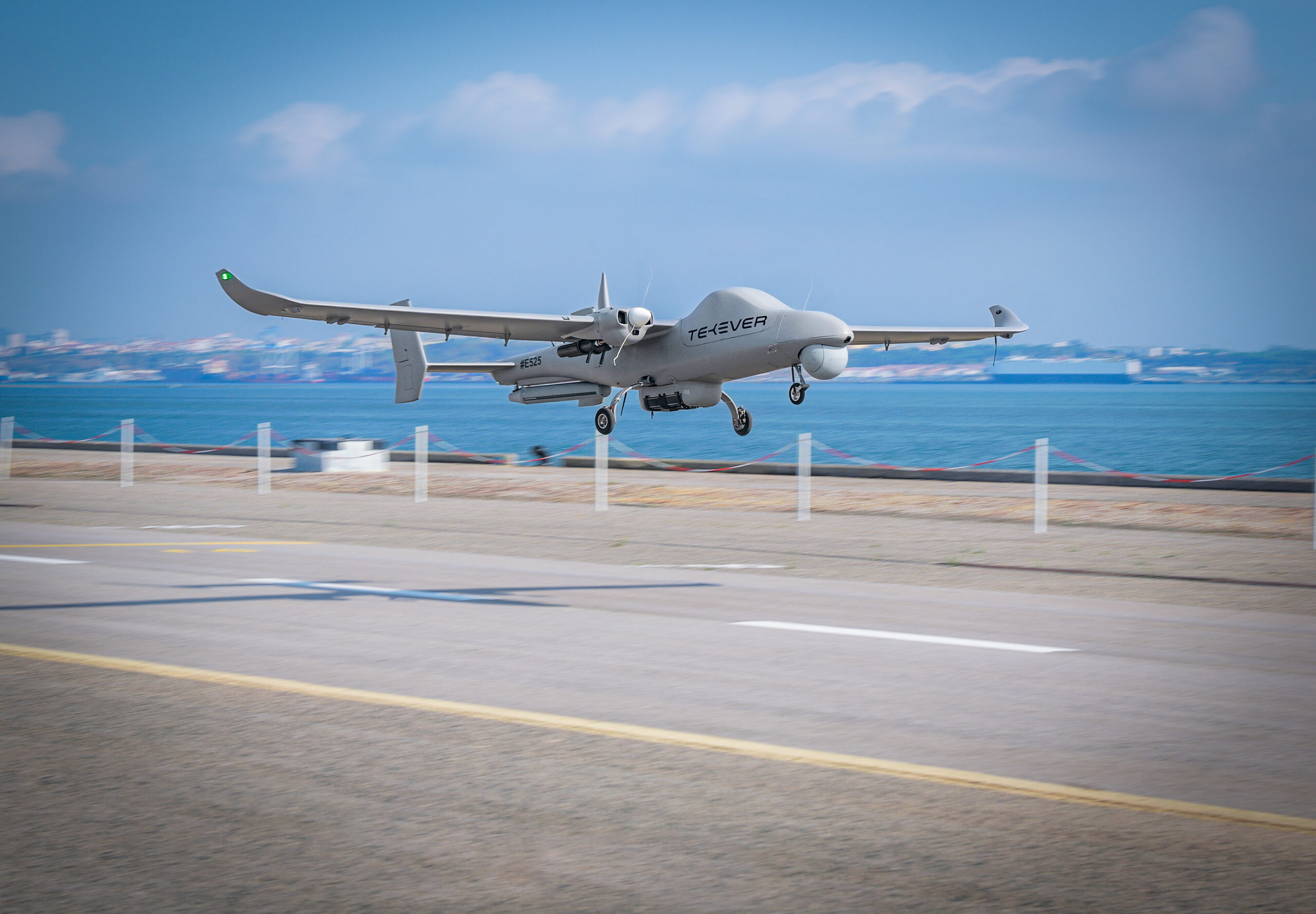
The UK Ministry of Defence has formally awarded TEKEVER a contract worth up to £400 million to bring the AR5 long-endurance uncrewed aircraft into British Army service, moving the CORVUS surveillance programme from selection into contracted delivery.
The agreement starts with an initial order for six aircraft and provides for as many as 24 AR5s to be delivered by 2029. The platform is intended to replace the Army’s Watchkeeper system, which entered service in 2014, with an intelligence, surveillance and reconnaissance capability able to remain on task for longer periods and carry up to 50kg of cameras and other sensors.
The formal award follows TEKEVER’s earlier selection for CORVUS. The programme is structured as a long-term capability rather than a one-off aircraft purchase, combining air vehicles with continuing software, payload, training and support activity over its life. The Ministry of Defence has now converted that selection into an initial six-aircraft order within the wider £400 million ceiling.
Production will be centred at TEKEVER’s new manufacturing facility in Swindon. The company’s UK footprint also includes engineering activity in Bristol and Southampton, with training, testing and evaluation work at West Wales Airport. The Ministry of Defence says the programme will support more than 1,000 highly skilled UK jobs by 2030 across sites including Swindon, Bristol, Lydd, London, Southampton, Edinburgh and West Wales.
CORVUS is therefore being built around a domestic production and support base rather than a simple import model. TEKEVER has said it will lead a consortium of UK small and medium-sized businesses, while the Swindon plant is intended to provide scaled manufacture of larger autonomous aircraft. The arrangement places manufacturing, integration and support alongside the aircraft acquisition from the outset.
AR5 is designed for persistent surveillance missions and can carry a mix of electro-optical, radar and other mission payloads within the 50kg capacity stated for the British programme. TEKEVER also uses its ATLAS mission software across AR5 operations, although the Ministry of Defence has not published the full sensor and mission-system configuration planned for the Army fleet.
Those choices will determine how CORVUS connects into wider command, intelligence and targeting networks. A long-endurance ISR aircraft depends on secure communications, ground-control infrastructure, mission planning, data processing and trained operators as much as on the air vehicle itself. Bringing those elements into service while the platform and payload set continue to evolve will be a substantial part of the programme.
TEKEVER has placed particular emphasis on rapid software and payload development, drawing on operational experience accumulated by its autonomous systems in Ukraine. That development model contrasts with traditional military aircraft programmes built around more stable configurations and longer upgrade cycles. For the Army, certification, configuration control and cyber assurance will have to keep pace with any faster rhythm of software and sensor change.
The supply chain will face the same pressure. A fleet of up to 24 aircraft is modest in numerical terms, but sustained availability will depend on spares, ground equipment, communications hardware, software support and sensor maintenance. Each of those areas can constrain operations even when airframes are available, particularly if modifications create several equipment standards inside a relatively small fleet.
The Portuguese Air Force has separately ordered AR5 with ground-control equipment, mission software and operator training for maritime surveillance, giving the platform another European military customer. The British requirement is different in scale and mission, but a broader military user base gives TEKEVER more opportunity to spread development and support activity across multiple programmes.
Replacing Watchkeeper will still require an operational transition rather than a straightforward handover of aircraft. Watchkeeper combined air vehicles, sensors, ground stations, communications and trained personnel within an established Army organisation. CORVUS has to establish an equivalent support and command structure while exploiting a platform designed around faster software and payload change.
The MOD is introducing AR5 alongside a separate acquisition of more than 1,000 smaller drones, creating an ISR mix extending from sub-250g tactical aircraft to long-endurance systems carrying substantially heavier sensors. How those layers share information will become increasingly important as the Army seeks to move reconnaissance data from small units and persistent airborne platforms into common command and targeting networks.
With the contract now formally awarded, the immediate milestones are production in Swindon, delivery of the first six aircraft and entry into service. The programme ceiling allows the fleet to grow to 24 by 2029; maintaining a coherent software, sensor, communications and support baseline as that fleet expands will determine whether CORVUS delivers the persistent surveillance capability now being contracted.