IN Brief:
- Shadow EW is a family of compact electronic-warfare products intended for smaller crewed and uncrewed airborne platforms.
- BAE Systems is using commercial components, configurable architectures, and established manufacturing processes to support higher-volume production.
- Hardware production will take place in Cedar Rapids, Iowa, with software and design work centred in Nashua, New Hampshire.
BAE Systems has launched Shadow EW, a family of compact electronic-warfare products designed to bring sensing, survivability, targeting, and electromagnetic effects to airborne platforms unable to accommodate larger traditional installations.
BAE Systems is positioning the family for smaller crewed and uncrewed aircraft, combining software-defined functionality, configurable architecture, commercial components, and established production methods. Hardware manufacturing is planned at Cedar Rapids, Iowa, while software and design work will be centred in Nashua, New Hampshire.
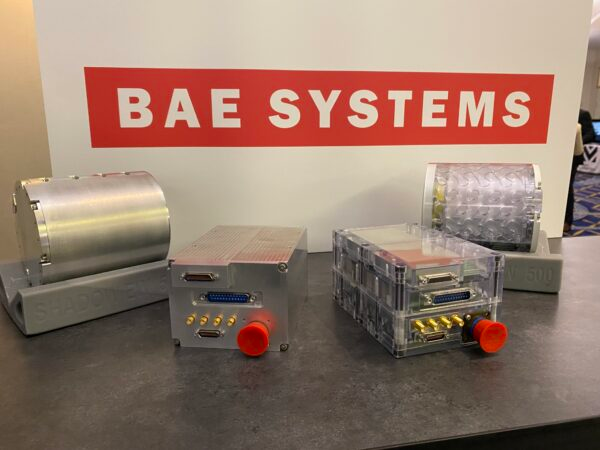
Shadow EW comprises several configurations rather than a single fixed system. BAE lists Shadow 100, Shadow 120, and Shadow 500 within the family, allowing installations to be selected around mission requirements, platform architecture, available electrical power, and payload constraints. The company describes the products as platform-agnostic and designed to maximise radio-frequency capability within a comparatively small physical footprint.
The architecture addresses a persistent airborne electronic-warfare integration problem. High-performance receivers, processors, transmitters, antennas, cooling equipment, power conditioning, and mission computing have traditionally favoured aircraft with sufficient volume and generating capacity to absorb them. Smaller uncrewed aircraft and other restricted-payload platforms have considerably less margin, even as they are increasingly expected to operate in contested electromagnetic environments.
BAE says Shadow EW can support missions including situational awareness, targeting, deception, survivability, and collaborative electromagnetic effects. Detailed figures for frequency coverage, instantaneous bandwidth, sensitivity, transmit power, and individual product weights have not been published with the launch, so the current announcement establishes the architecture and manufacturing approach rather than a complete set of system-level performance data.
Production strategy is unusually prominent in the programme. Shadow EW uses readily available components and proven manufacturing methods, with BAE linking those choices to reduced unit cost and higher-volume fielding. The company is also incorporating commercial microelectronics where appropriate, giving the products access to processing technologies developed on production cycles considerably larger than those available to specialised defence-only components.
Commercial hardware does not remove the environmental and qualification requirements attached to military airborne electronics. Installed equipment still has to withstand temperature, vibration, electrical transients, electromagnetic interference, and the operating conditions of the host aircraft. The manufacturing advantage lies in combining commercially derived processing with packaging, interfaces, and system engineering that allow it to survive those conditions without making every computing element a bespoke defence component.
The software-defined architecture is intended to separate some capability changes from wholesale hardware replacement. Electronic-warfare systems have to respond to changing radar modes, communications waveforms, emitter behaviour, and countermeasure techniques on timescales that can be much shorter than an aircraft upgrade programme. A system capable of accepting new software, threat data, and processing functions can absorb some of those changes while retaining the installed hardware baseline.
That flexibility shifts part of the engineering burden towards configuration control. Hardware variant, firmware, mission software, threat libraries, aircraft interfaces, and certification status have to remain synchronised across the fleet. Frequent updates only reduce response time if operators and maintainers can establish which configuration is installed, whether it has been approved for the aircraft, and how it interacts with other mission systems.
BAE is also linking Shadow EW to wider efforts to field electronic warfare across more aircraft rather than concentrating it on a limited number of specialist platforms. Distributing receivers or effectors across larger numbers of crewed and uncrewed systems changes the production requirement: component availability, automated electronics assembly, test throughput, software loading, and repeatable acceptance processes become increasingly important alongside individual-system performance.
Cedar Rapids provides an existing electronics-manufacturing base for that transition, while Nashua retains the principal design and software role. The division allows engineering changes to remain closely connected to production without requiring the complete product family to be manufactured at a development site. It also gives BAE an established industrial footprint from which to increase output if customer orders justify it.
Commercial microelectronics introduce their own lifecycle problem because component generations can change much faster than military aircraft fleets. An electronic-warfare family intended to remain supportable for years therefore needs an obsolescence strategy that permits processors and supporting electronics to evolve without repeatedly redesigning antennas, power interfaces, cooling arrangements, software, and aircraft installations.
Open and configurable architectures can reduce that disruption if interfaces remain sufficiently stable. They can also make it easier to tailor one product family across aircraft with different roles rather than developing an entirely separate electronic-warfare system for each platform. The practical measure will be how much common hardware, software, test infrastructure, and support equipment survives between Shadow variants once customer-specific integrations begin.
No launch customer, contracted production quantity, fielding schedule, or named aircraft integration has been disclosed. Shadow EW therefore enters the market as an established product architecture backed by identified production sites rather than as a system already tied to a procurement programme.
Qualification work, named integrations, and contracted quantities will provide the next measures of progress. The engineering proposition is to put useful electronic-warfare capability into smaller platforms while retaining software upgradeability; the industrial proposition depends on whether the same architecture can be produced, configured, tested, and supported in substantially greater numbers than traditional bespoke installations.