IN Brief:
- HÜRKUŞ-II received its Military Type Certificate from a joint SSB and Turkish Air Force certification board.
- The programme verified 1,790 requirements and completed 153 laboratory, ground, and flight certification tests.
- Certification covered 12 technical disciplines and strengthens Türkiye’s domestic military-airworthiness capability.
Türkiye has completed military type certification of the HÜRKUŞ-II basic trainer, closing a verification programme that assessed 1,790 certification requirements and subjected the aircraft to 153 laboratory, ground, and flight tests.
The certificate was issued on 9 September by a certification board comprising personnel from the Presidency of Defence Industries, or SSB, and the Turkish Air Force, with the milestone publicly announced on 15 September. Turkish Aerospace, which designed and manufactures the aircraft, supplied specialist airworthiness, design, and production-organisation personnel throughout the process.
Certification was divided across 12 technical disciplines covering avionics, electronic hardware, electrical systems and electromagnetic environmental effects, propulsion and fuel, human factors, cabin safety, system safety, continuing airworthiness, aircraft systems, flight performance, structures, and software. The programme involved 283 certification-panel meetings and workshops, while 225 audits were conducted at subcontractors supporting software and electronic-hardware work.
The evidence package comprised 950 technical documents reviewed against the aircraft’s 1,790 requirements. Physical verification included 38 laboratory tests, 71 ground tests, and 44 flight tests, creating a formal engineering baseline that combines design assurance, manufacturing oversight, system performance, and airworthiness evidence rather than relying on a single flight-clearance event.
HÜRKUŞ has previously passed a separate civilian certification route. An earlier version received its Turkish TT32 aircraft type certificate in 2016, which was validated by the European Union Aviation Safety Agency. The new milestone applies specifically to the HÜRKUŞ-II military configuration and its associated military airworthiness requirements.
The current programme stems from a 2021 amendment covering design and production of the new-generation trainer for the Turkish Air Force. Turkish Aerospace plans deliveries during 2026, placing certification directly on the path towards production acceptance and service entry. The certificate establishes the approved design baseline against which production aircraft, subsequent modifications, and continuing-airworthiness decisions can be controlled.
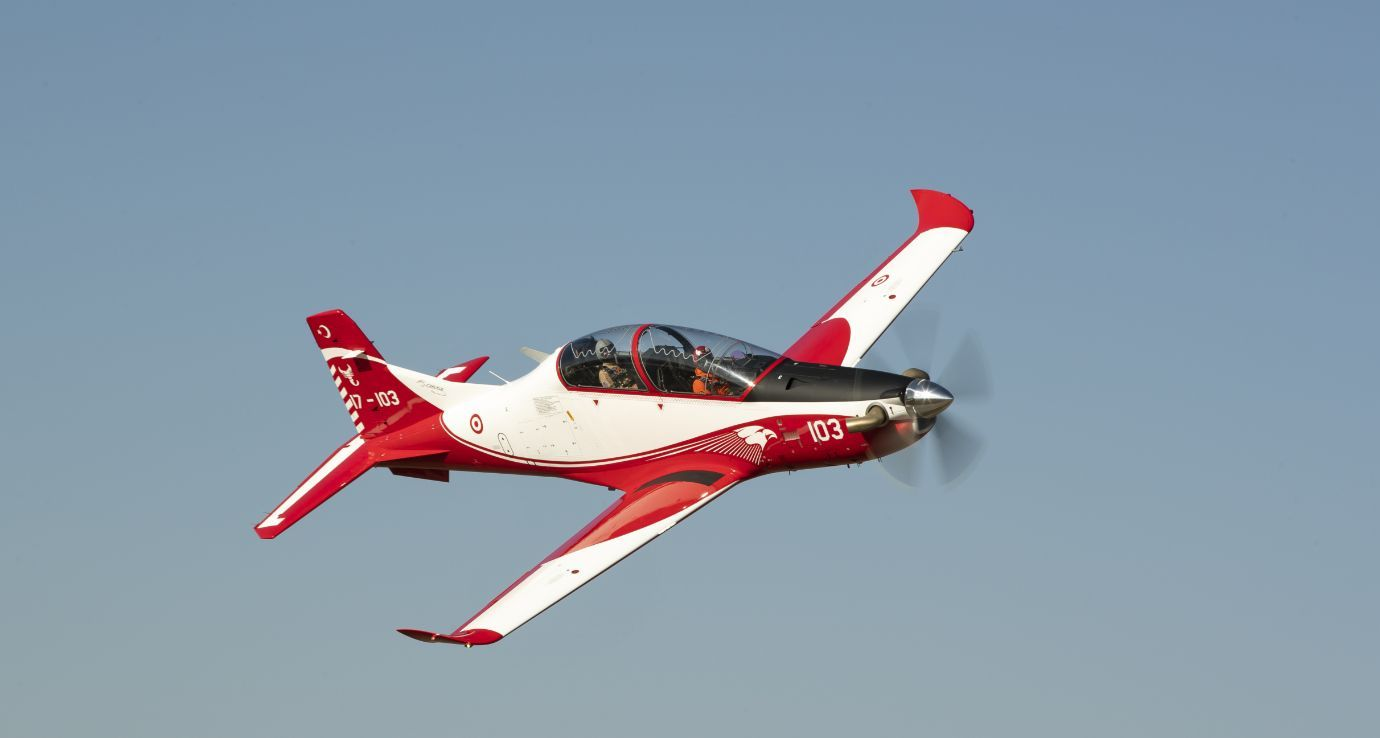
The HÜRKUŞ basic-trainer configuration uses a 1,600shp Pratt & Whitney Canada PT6A-68T turboprop and has a published maximum take-off weight of 3,300kg. Turkish Aerospace lists a maximum cruise speed of 288kt, a service ceiling of 39,270ft, a range of 589nm, and manoeuvre limits of +7g and -3g. The tandem-seat aircraft also incorporates ejection seats, an onboard oxygen-generation system, modern avionics, simulated combat-training functions, and a cockpit architecture designed to support progression through a military flying-training syllabus.
Those performance figures sit inside a much wider certification problem. A military trainer combines structural fatigue requirements, flight controls, propulsion, fuel systems, cockpit displays, crew escape, electrical equipment, software, electromagnetic compatibility, and training functions in a configuration that has to remain controlled once production begins. Each design change after certification must be assessed against that approved baseline rather than treated as an informal engineering update.
The certification organisation is therefore part of the programme’s industrial capability. Seven specialists from SSB’s Quality, Test and Certification organisation participated alongside 16 certification specialists representing SSB through TR Flightworthiness. Five Turkish Air Force specialists and 12 Ministry of National Defence certification personnel worked on the customer side, while Turkish Aerospace assigned 40 airworthiness specialists and another ten experts covering design and production-organisation approval.
That structure gives Türkiye more than an approved trainer aircraft. It develops the technical-authority experience required to assess compliance independently, approve changes, preserve certification evidence, and manage continuing airworthiness once fleets enter service. Those functions become increasingly important as a national aerospace industry moves from prototype development towards multiple domestically designed aircraft programmes operating over several decades.
The experience can also feed into other Turkish aviation programmes even where the certification basis differs substantially. Software assurance, electromagnetic effects, propulsion, structures, system safety, configuration management, and production oversight remain recurring disciplines across trainers, combat aircraft, helicopters, and uncrewed platforms.
For Turkish Aerospace, the certification milestone also reduces one of the major risks between engineering development and fleet delivery. A production line can only mature if the design baseline is sufficiently stable for manufacturing instructions, quality plans, supplier requirements, inspection criteria, and acceptance testing to be controlled consistently from one aircraft to the next.
The next milestones therefore move away from certification activity and towards industrial execution. Production deliveries, Air Force acceptance, fleet entry, modification control, and the ability to support the aircraft through service will show whether the technical framework built around HÜRKUŞ-II can sustain a repeatable military-aircraft programme rather than ending with the award of the certificate.