IN Brief:
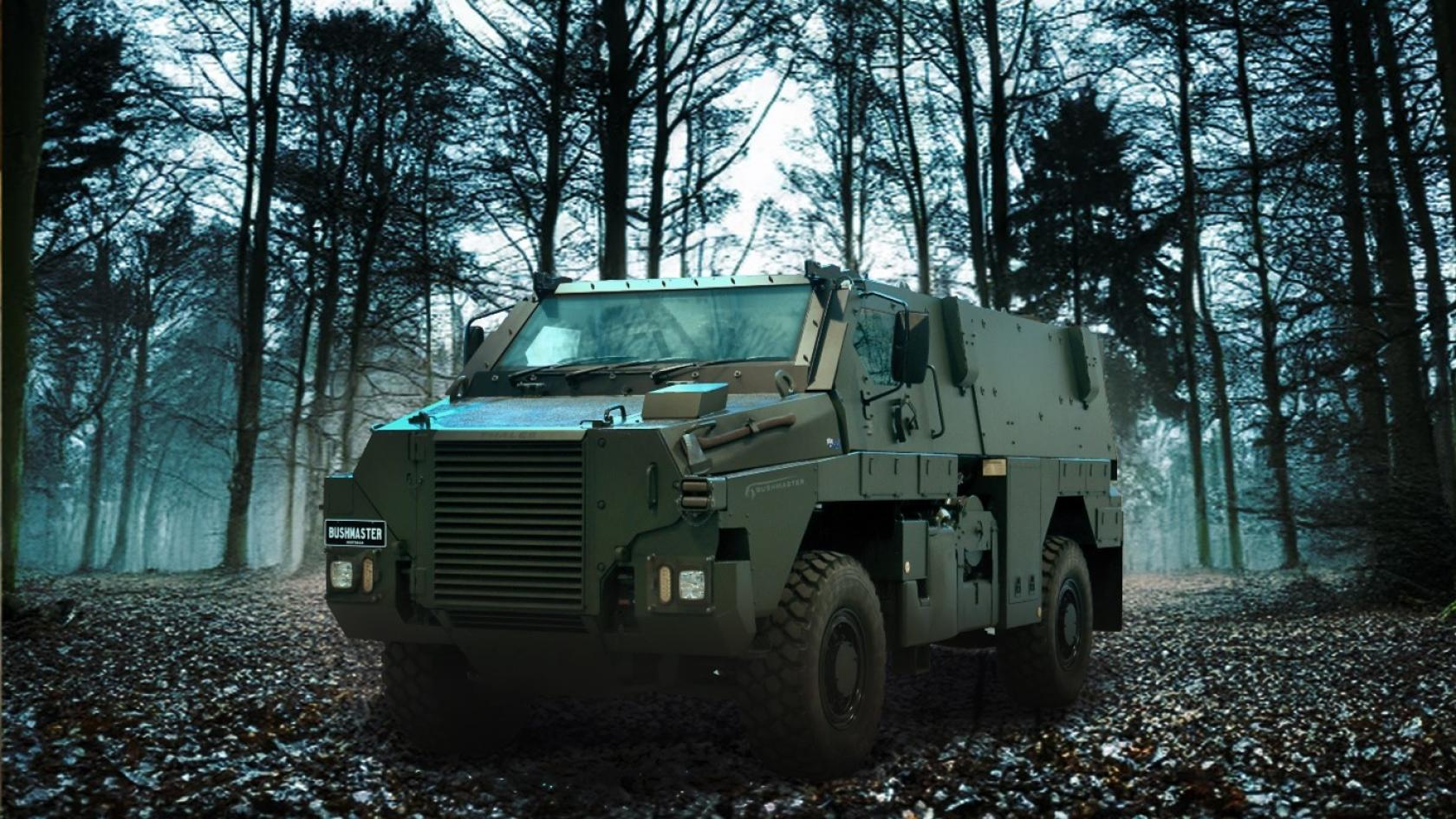
- LAND 4111 covers selected in service Command and Troop variants of the Bushmaster.
- L3Harris will carry out design, integration, installation and delivery over three years.
- Vehicle modification work will be conducted at L3Harris’s Indo-Pacific Regional Support Centre in Pinkenba.
L3Harris Technologies will design, integrate and install new command, control, communications, computers and intelligence equipment on selected Australian Bushmaster protected mobility vehicles under LAND 4111.
The three year programme covers candidate in service Command and Troop variants. L3Harris will complete the design work, vehicle integration, installation and delivery from its Indo-Pacific Regional Support Centre in Pinkenba, Queensland, giving the programme a domestic engineering and modification base.
LAND 4111 is modifying vehicles already in service rather than designing the communications architecture alongside a new platform. Existing power distribution, equipment racks, cable routes, antennas and crew positions therefore set physical boundaries around the new C4I installation.
Command variants and Troop variants also perform different functions, so a repeatable installation does not necessarily mean an identical equipment layout. The engineering baseline has to define which components are common, which change by variant and how those differences are recorded for later maintenance and software updates.
Additional communications equipment has to be integrated without blocking crew access or creating maintenance problems around existing vehicle systems. Radios, processors, displays and network equipment all need electrical power and cooling, while antenna placement affects both physical clearance and radio performance.
Cabling can become a significant part of a vehicle modification because data, power and radio frequency connections have to pass through an armoured structure without compromising existing systems. Harness design also determines how easily equipment can be removed, replaced or fault tested once the vehicle returns to service.
L3Harris is responsible for an end to end C4I solution rather than supply of a single radio. The contract therefore covers how the individual communications and computing elements operate together inside the vehicle and how information can move between the modified Bushmaster and the wider Australian Defence Force network.
Interoperability depends on agreed interfaces and message formats as much as on the individual radio hardware. A vehicle may carry several communications paths for different ranges or networks, and the integration has to present those systems in a configuration the crew can operate without manually recreating the same information across separate devices.
Software baselines will need the same control as physical installations. Two vehicles fitted with nominally identical hardware can behave differently if radio firmware, network settings or mission software diverge, so acceptance records have to capture both the installed equipment and the software state delivered with it.
Pinkenba will also have to turn the engineering design into a repeatable modification process. Vehicle preparation, equipment installation, cable routing, software loading and acceptance testing need controlled work instructions so that throughput can increase without creating configuration differences between vehicles completed at different points in the programme.
Testing after installation has to confirm more than whether each unit powers on. Communications paths, antennas, network connections and crew interfaces have to work together inside the vehicle, while the completed installation must not introduce faults into existing electrical or electronic systems.
The contract does not disclose how many Bushmasters will be modified or the value of the programme. L3Harris refers to selected vehicles from candidate Command and Troop variants, so the award should not be read as an immediate replacement of C4I equipment across the entire Bushmaster fleet.
A three year delivery period gives the programme a defined window for moving from engineering into repeated vehicle modification. The rate will depend on the number of approved configurations, the availability of vehicles for modification and the time required to complete installation and acceptance at Pinkenba.
The first useful programme measures will be the approved vehicle configuration and the transition from design work into serial installations. Once those are established, delivery numbers and modification intervals will show whether the C4I package can be fitted consistently across selected Bushmasters without allowing hardware or software variation to accumulate through the fleet.