IN Brief:
- Le Vigilant conducted the first M51 firing from an SSBN in the M51.3 configuration.
- The unarmed firing validated the submarine’s ability to operate the weapon system after its IPER maintenance period.
- DGA Essais de missiles tracked the complete flight, including with the test and measurement ship Monge.
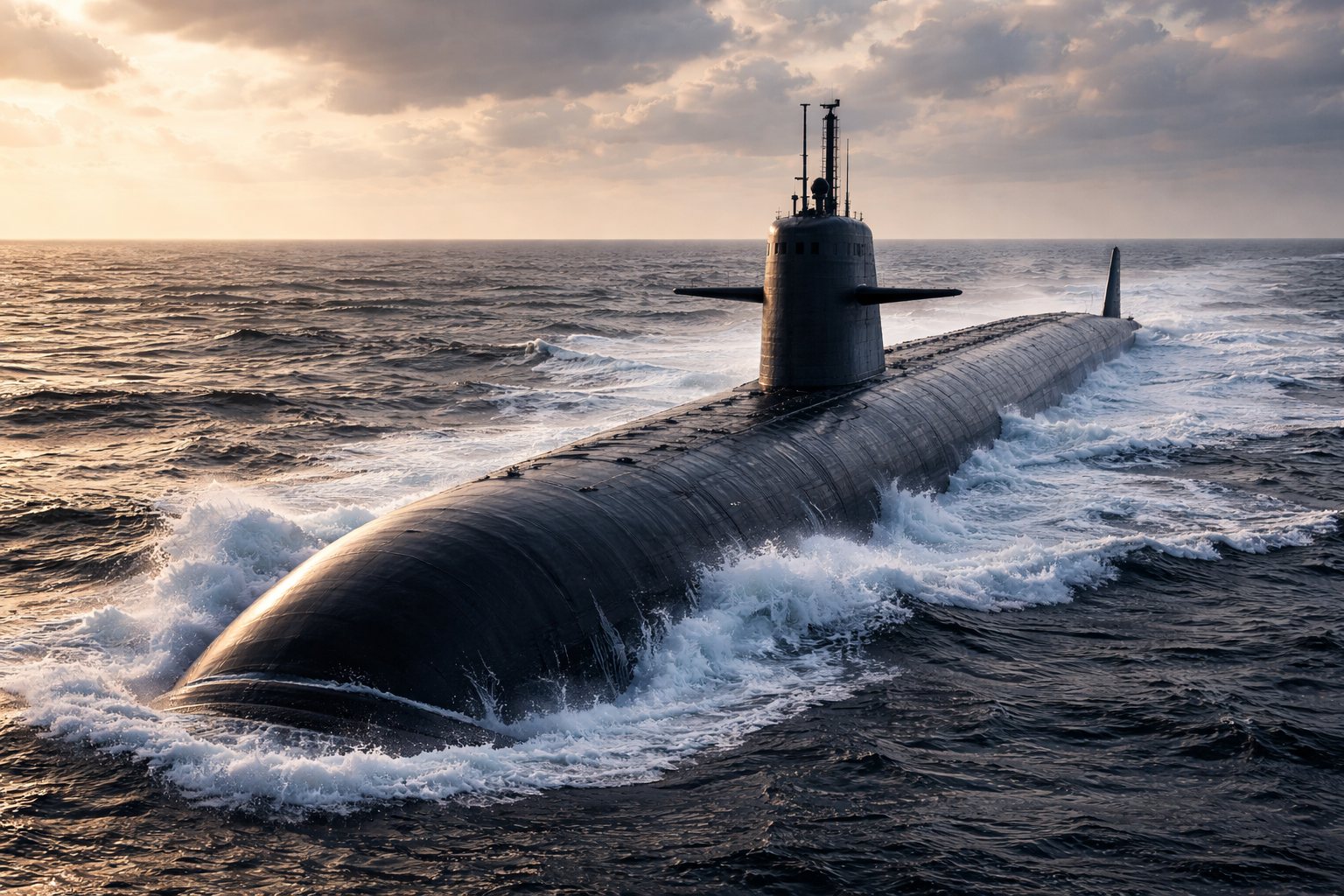
France has completed the first acceptance firing of an M51 strategic ballistic missile in the M51.3 configuration from a nuclear powered ballistic missile submarine, using Le Vigilant to validate the weapon system after the vessel’s scheduled deep maintenance period.
The missile carried no nuclear warhead. DGA Essais de missiles tracked it throughout flight using its test infrastructure, including the measurement ship Monge, providing the instrumentation needed to compare the firing with the parameters set for the acceptance test.
Le Vigilant had completed its indisponibilité périodique pour entretien et réparations, or IPER, before the firing. The maintenance period involves extensive work on the submarine, making a subsequent weapon system test part of proving that the relevant ship systems have returned to the required operating condition.
The firing tested the submarine’s ability to operate M51 rather than qualifying M51.3 as a new missile. France placed the M51.3 version into operational service on 24 October 2025 after a development programme that began in 2014, so the missile configuration had already completed the programme work required for entry into service.
A submarine launch depends on equipment aboard both the missile and the vessel. Command functions, navigation data, launch tube equipment and the interfaces that prepare the missile have to operate in sequence before the weapon leaves the submerged submarine and begins powered flight.
The M51 is a three stage solid propellant system with a mass above 50 tonnes and a length of about 12 metres. ArianeGroup is the prime industrial contractor for the missile on behalf of the French defence procurement agency, covering development and production as well as support across the weapon’s service life.
Solid propulsion allows the stages to remain fuelled during deployment, but long term storage aboard a submarine still requires controlled maintenance and configuration. The ship, launch equipment and missile have to remain within approved limits throughout periods when the weapon is carried at sea and when the submarine undergoes major maintenance.
IPER can involve systems that support or interact with the missile installation even when the missile itself is not being modified. Acceptance firing after the maintenance period provides evidence from the complete chain rather than relying only on dockside checks of individual components.
Tracking by DGA Essais de missiles supplies independent measurement of the flight. Instrumentation ashore and at sea can record trajectory and other test data throughout the event, allowing engineers to determine whether the missile and weapon system behaved within the limits set for the acceptance firing.
M51.3 is the third operational version of the missile. The French Ministry of the Armed Forces states that it improves range, accuracy and penetration capability compared with previous versions and carries the TNO-2 oceanic nuclear warhead in operational service, although the Le Vigilant acceptance firing itself was conducted without a nuclear payload.
France is already developing the next increment. The DGA awarded ArianeGroup the development and production contract for M51.4 in August 2025, with the fourth version intended for both the current Triomphant class submarines and the future third generation ballistic missile submarines.
Successive M51 versions allow propulsion, guidance and other technologies to evolve without replacing the whole submarine weapon architecture at once. The DGA also identifies continuous development as a way to retain the specialist industrial skills needed to design and manufacture strategic missiles over programmes measured in decades.
Le Vigilant’s firing connects that long development cycle with the maintenance cycle of an individual submarine. M51.3 was already operational; the test demonstrated that this particular submarine could again operate the system after IPER.
Further acceptance activity will follow the maintenance and configuration requirements of the fleet rather than a commercial production rhythm. Each firing provides system level evidence across submarine, missile and test infrastructure that cannot be reproduced completely through component checks at the dock or factory.