IN Brief:
- The agreement covers SM-3 Block IB interceptor production and sustainment over five years, with two option years.
- Raytheon identifies Tucson, Arizona, and Huntsville, Alabama, as the principal production locations.
- The missile is intended to intercept short- to intermediate-range ballistic missiles during midcourse flight.
Raytheon has secured a five-year agreement, with two additional option years, covering production and sustainment of Standard Missile-3 Block IB interceptors for US missile defence. The potential contract value reaches $6.3 billion, providing a longer planning horizon for an established system used by naval and land-based missile-defence operators.
Announced on 8 October, the agreement is intended to replenish inventories and sustain manufacturing output. Raytheon identifies its facilities in Tucson, Arizona, and Huntsville, Alabama, as the principal locations for production under the award. The announcement does not disclose a committed missile quantity, annual production rate, or the value attributable to each option year.
The SM-3 Block IB is designed to engage short- to intermediate-range ballistic missiles during the midcourse phase of flight. At that stage, a ballistic missile travels outside the atmosphere along much of its trajectory. The interceptor uses a kinetic engagement approach rather than relying on an explosive warhead to defeat the target.
Midcourse interception places demanding requirements on sensors and the wider defence architecture. The engagement process depends on timely detection, sufficient information to generate a track, and the ability to assign and launch an interceptor while the intended intercept geometry remains feasible. Those functions involve systems beyond the missile itself, including combat management, tracking sensors and communications.
The Block IB missile belongs to the Standard Missile family, but its mission is different from that of the SM-6. The latter is a broader air and missile-defence weapon with a separate procurement programme. The October agreement should therefore not be confused with the $24.4 billion SM-6 production arrangement Raytheon disclosed earlier in the month.
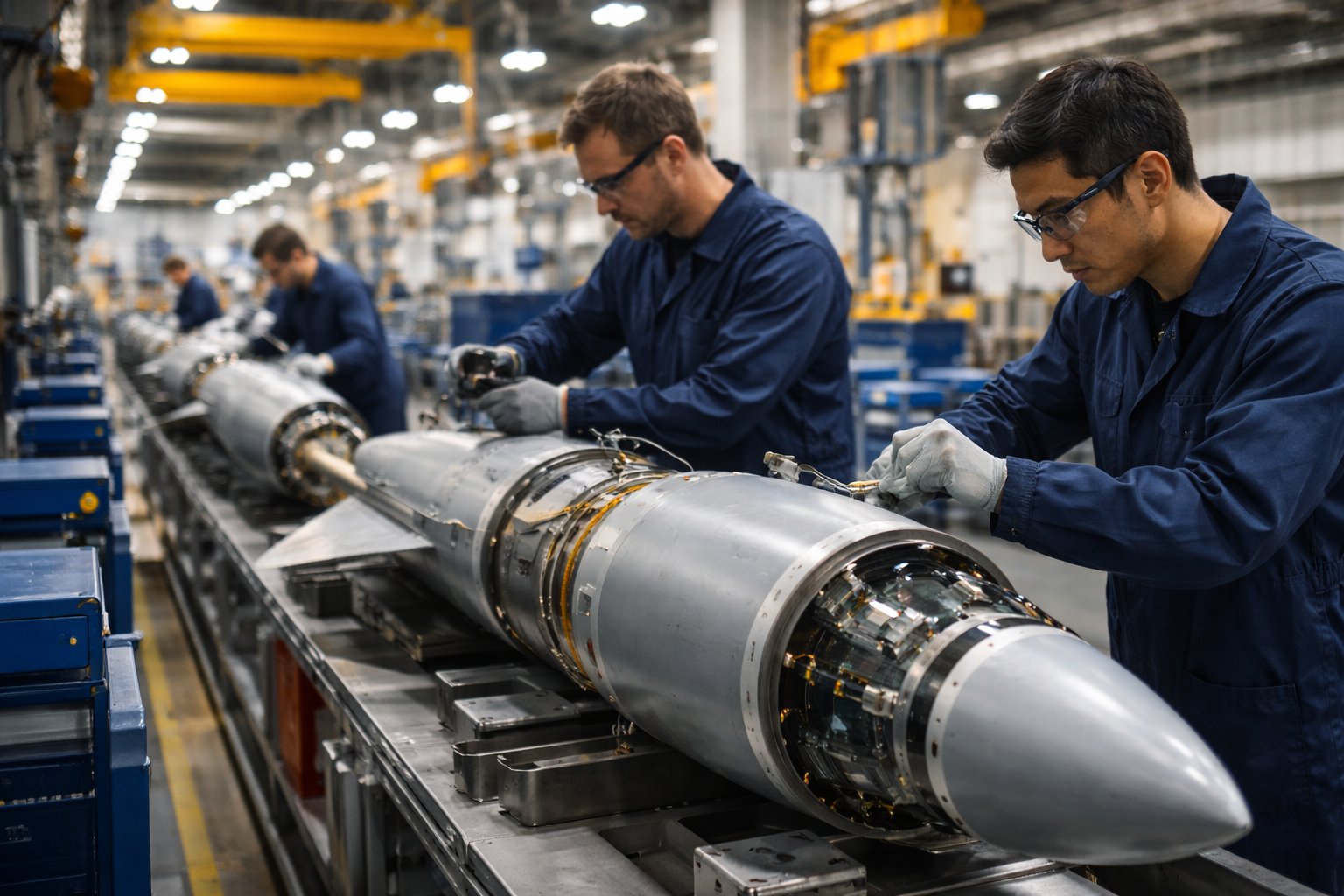
Sustainment is also part of the new SM-3 agreement. Maintaining a missile inventory over time is an industrial task as well as a procurement exercise. It requires production of components to controlled specifications, inspection and acceptance of completed rounds, management of shelf-life and serviceability requirements, and an effective supply chain for parts that may be produced by specialist manufacturers.
For solid rocket motors, guidance electronics and other missile subsystems, manufacturing repeatability becomes important when output is increased. Small variations in material preparation, processing, assembly or testing can create problems that are difficult to detect after a weapon has been sealed into its final configuration. Qualification processes are intended to establish acceptable manufacturing limits and provide evidence that production items match the approved design.
Raytheon states that it has invested in expanding capacity for critical munitions, including the Standard Missile family. The five-year ordering horizon could support decisions about equipment, staffing, subcontracts and manufacturing throughput. Nevertheless, the release does not identify a new factory opening, specify tooling expenditures for SM-3 Block IB, or disclose changes in production yield. Those outcomes should not be assumed from the award value.
A longer contract period also affects the smaller firms supplying specialised components and materials. Suppliers need enough visibility to decide whether they can reserve capacity, recruit skilled personnel or invest in production equipment. Some missile components have long qualification cycles and relatively limited alternative sources, restricting how rapidly demand can be met simply by placing additional purchase orders.
Raytheon says SM-3 Block IB was first used in combat in 2024. Operational employment establishes that the missile is in active service, but it does not remove the need to continue testing and configuration control as suppliers, manufacturing methods and support arrangements evolve. Any changes affecting a critical component must be assessed against its authorised design and performance requirements.
The programme is relevant to both the US Navy and the Missile Defense Agency, as well as international partners operating compatible missile-defence systems. Compatibility, deployment configuration and inventory ownership vary between customers, so the announcement should not be read as confirmation of specific export quantities or a delivery schedule for individual allies.
This multi-year arrangement reflects the importance of repeatable industrial output for complex defensive munitions. Development of a capable interceptor is only the first part of maintaining an effective missile-defence architecture. The ability to replace expended rounds, preserve readiness and sustain manufacturing over several years ultimately determines how that capability can be maintained in service.
Raytheon will now have to execute production and sustainment work within the contractual arrangements while managing component availability and acceptance requirements. Further contract disclosures may clarify quantities and production timing, but the announcement’s established result is a multi-year manufacturing framework worth up to $6.3 billion, rather than a verified expansion to any particular annual missile output.
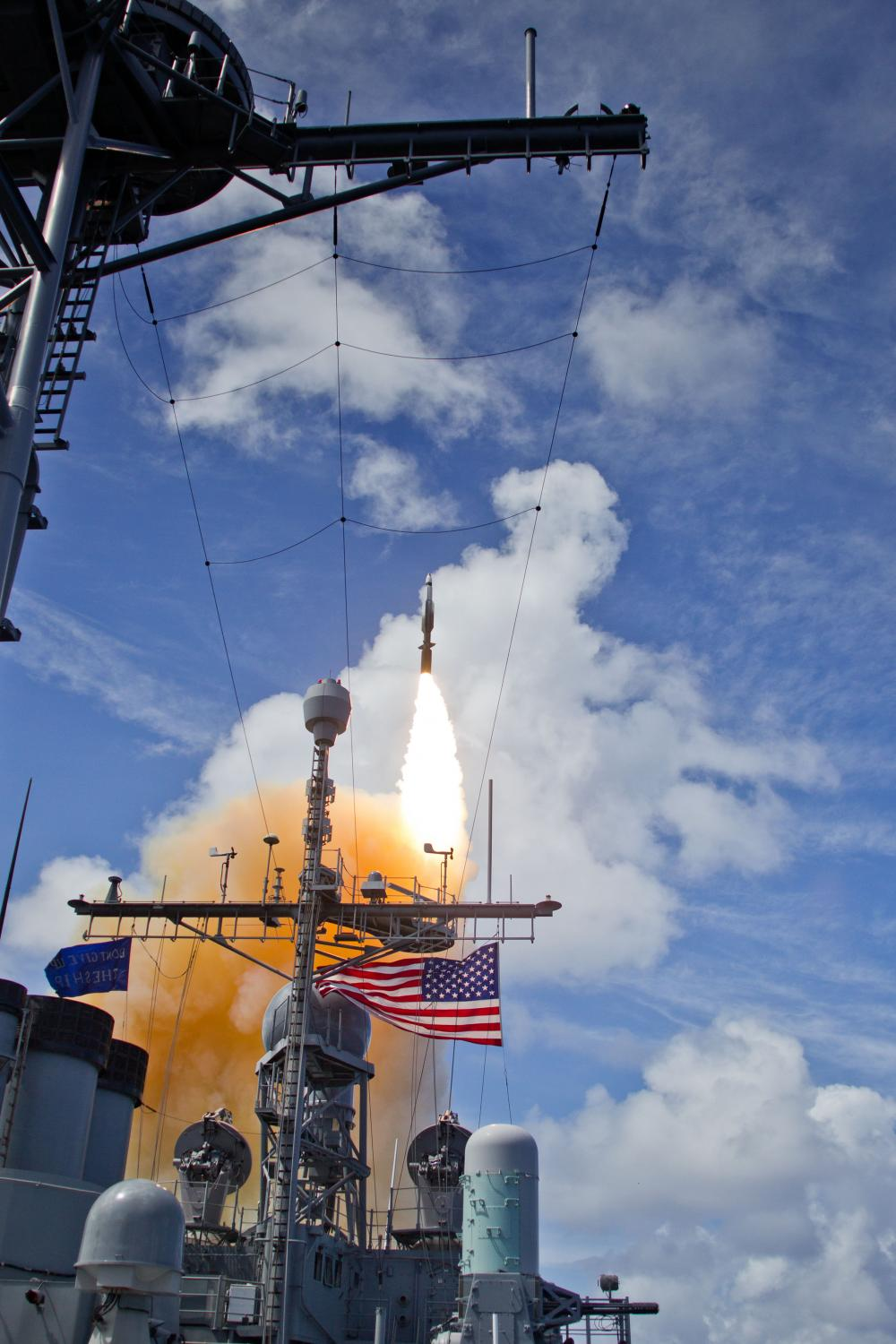
Featured image: SM-3 interceptor launch during missile defence testing; illustrative of the SM-3 family.