IN Brief:
- Germany's Bundestag Budget Committee approved procurement of four additional MEKO A-200 DEU frigates on 8 October.
- Four ships already on order have entered the implementation phase, according to shipbuilder TKMS.
- The proposed follow-on series would draw on existing supply chains and the wider German maritime industry.
TKMS has welcomed German parliamentary approval for the procurement of four additional MEKO A-200 DEU frigates, creating a route to extend an existing naval construction programme while preserving continuity for shipyards and suppliers. The Bundestag’s Budget Committee approved the proposed follow-on procurement on 8 October.
Four frigates are already on order and the programme has entered its implementation phase. The new parliamentary decision is therefore an important procurement milestone, but it should not be confused with delivery or commissioning of the additional ships. The announcement does not set out a new contract value, definitive delivery dates or detailed construction schedule for the follow-on vessels.
TKMS says it had already invested in preparing for the MEKO A-200 DEU programme with industrial partners. Continuing a production series can allow designers and manufacturers to preserve established processes, retain specialist staff and avoid some of the disruption associated with stopping and restarting a complex shipbuilding line.
Warship construction is a highly integrated undertaking. The hull structure, propulsion systems, electrical distribution, command systems, sensors and weapons must fit within a constrained space and weight envelope while meeting demanding requirements for stability, survivability, maintenance and crew operation.
For a ship class built in series, the engineering baseline has particular value. The first hulls require detailed design work, production planning, tooling and qualification of manufacturing methods. Later vessels can benefit from that initial investment, provided that major design changes are managed and the same industrial capabilities remain available.
Series continuity does not eliminate the need to control changes. Electronic components can become obsolete, customer requirements may evolve and equipment suppliers may introduce revised product versions between hulls. A shipbuilder must keep the design, procurement records and configuration of each ship aligned so that equipment can be installed, tested and supported after delivery.
The MEKO approach emphasises modularity in naval design, an established principle intended to make integration and future changes more manageable. Modularity, however, does not make major equipment substitutions automatically interchangeable. Foundations, power loads, cooling demand, communications protocols and access for maintenance must all be accommodated within the vessel design.
Additional ships affect an industrial network far wider than the final assembly yard. Steel fabrication, cable harnesses, automation, drive systems, pumps, valves and specialist defence electronics may come from different suppliers, each operating to their own manufacturing cycle. Production planning has to accommodate the longest-lead components if the final ship construction schedule is to remain coherent.
Germany’s maritime supply chain also includes companies carrying out qualification, inspection and acceptance work. A naval programme must demonstrate that installed equipment meets the specifications for which it was ordered. Acceptance testing becomes especially important where shipboard systems have been assembled and commissioned by different contractors.
TKMS chief executive Oliver Burkhard said the company had laid the foundations for rapid series production with its partners. That is a statement of industrial preparedness, not a published assurance that the four additional ships will enter service by any particular date.
Maintaining continuity can reduce the risk of losing scarce skills. Naval welding, electrical installation, systems integration and combat-system commissioning rely on technicians whose expertise develops through repeated work on a defined platform. Gaps between programmes can force employers to retrain teams or rebuild relationships with specialist subcontractors.
Financial and parliamentary authorisation also interacts with the pace of engineering expenditure. Suppliers must know when to order materials and reserve production capacity, while a shipbuilder needs confidence that the agreed specification and payment arrangements allow work to proceed. A budget committee decision advances that process without necessarily completing every contractual step.
Production sequencing remains critical for large naval modules. Fabrication of hull blocks must be coordinated with machinery installation, cable routing and planned access openings. Installing equipment too late can demand rework, while premature outfitting can obstruct subsequent construction activities. An extended run of similar ships allows lessons from earlier builds to inform those decisions, although any efficiency gains depend on the final programme arrangements.
The proposed four additional frigates represent a major extension of the class rather than a separate prototype effort. For the German Navy, the programme is intended to address an approaching capability requirement; for industry, it establishes a potential longer operating horizon for an existing platform.
Further disclosures will be needed to establish contractual terms, build locations and milestone dates for the additional vessels. The confirmed October development is parliamentary approval to proceed with procurement, alongside TKMS’s commitment to use the industrial foundations established for the first four ships.
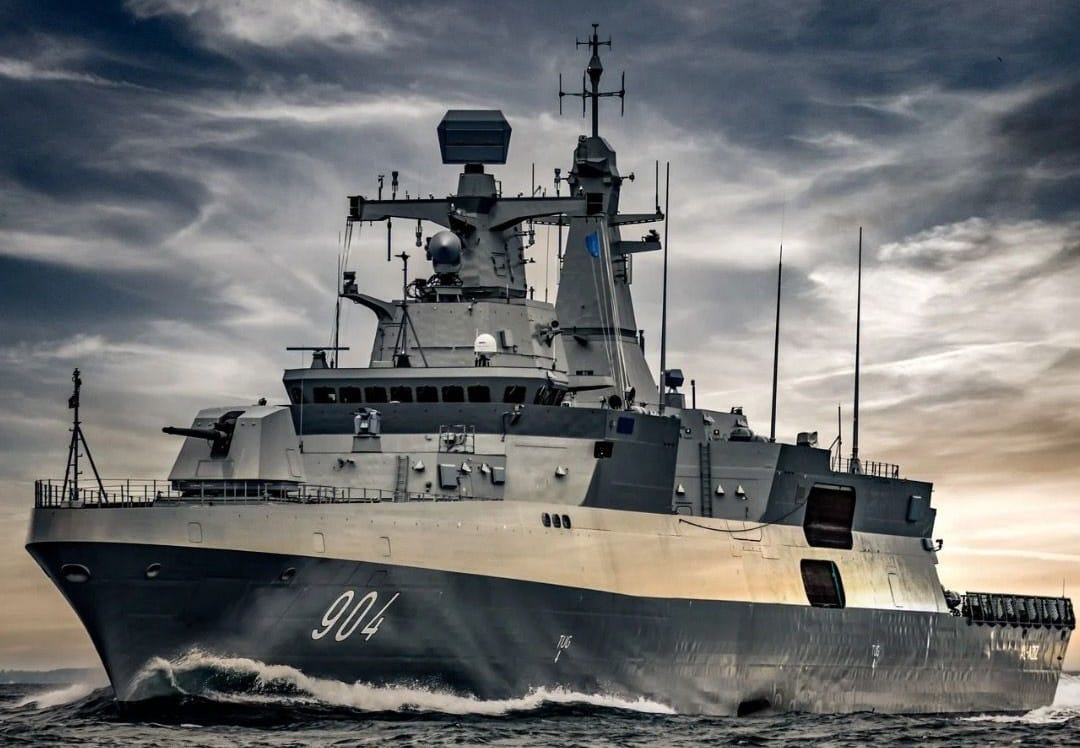
Featured image: MEKO A-200 frigate class (illustrative), not a vessel in the additional German order.