IN Brief:
- The Airbus U740 Valkyrie completed its first European flight using rocket-assisted launch and reached speeds of up to Mach 0.8.
- Airbus and Kratos are developing the aircraft for collaborative operations with crewed fighters, including the Eurofighter.
- Integration and testing of Airbus’s MARS autonomous mission system remain ahead of the proposed 2029 operational capability target.
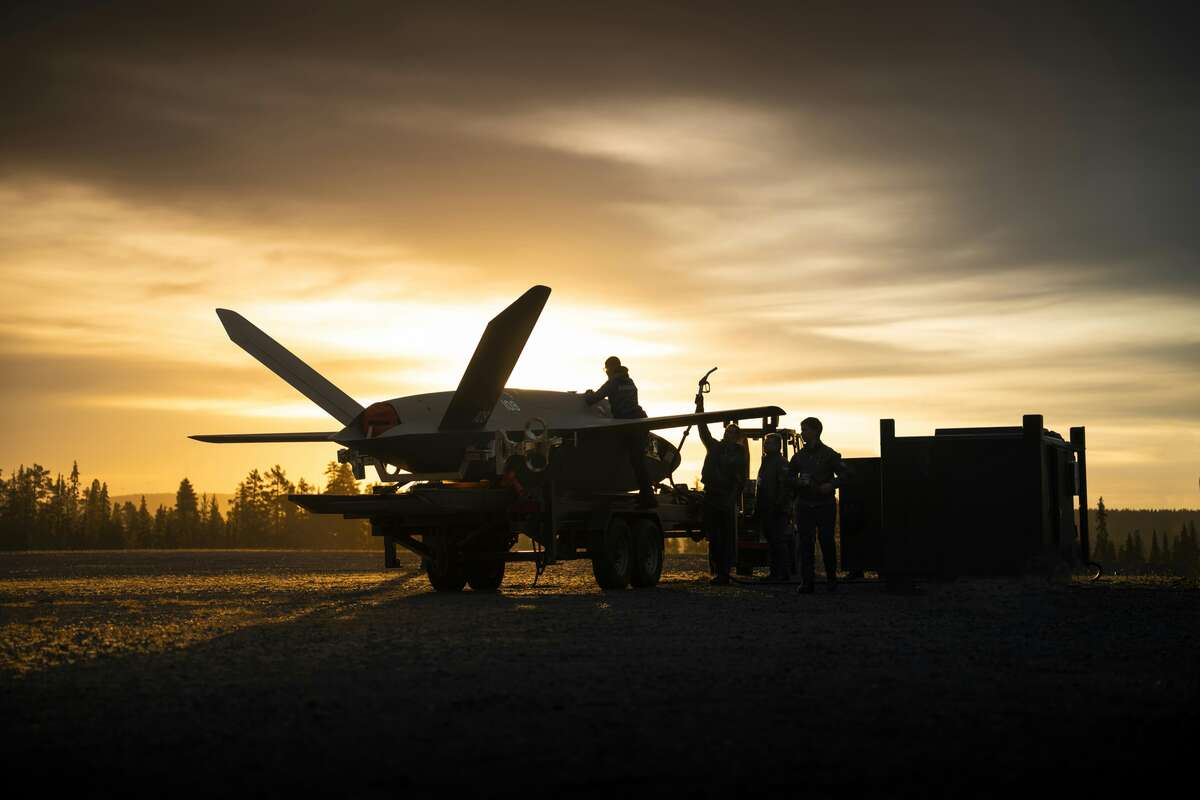
Airbus and Kratos Defense & Security Solutions have completed the U740 Valkyrie’s first European flight, successfully launching and manoeuvring the uncrewed aircraft ahead of the next phase of mission-system integration for prospective European military use.
At a test facility in northern Europe, the aircraft took off using rocket assistance without a runway, flew at different altitudes and reached speeds of up to Mach 0.8. Airbus also reports changes to mission instructions during the flight. These were objectives of an initial aircraft sortie; the company has not reported an airborne demonstration of its complete MARS autonomous mission system or a collaborative mission with a crewed fighter.
The U740 is based on the Kratos XQ-58 Valkyrie, which first flew in the United States in 2019. Airbus has acquired aircraft from Kratos and is adapting the platform around European systems integration and mission-control requirements. Its proposal targets a collaborative combat aircraft capability for Germany and other European air forces by 2029, although that remains a programme objective rather than a delivered or contracted fleet.
The aircraft measures approximately 9.1 metres long with an 8.2-metre wingspan and a maximum take-off weight of about three tonnes. Airbus gives the design a range exceeding 5,000 kilometres and a service ceiling of 45,000 feet. It has an internal weapons bay and external payload stations, providing physical scope for different mission equipment, but the first European sortie should not be interpreted as a weapons integration or release test.
A rocket-assisted departure removes the need for a conventional take-off run but imposes different requirements on the launch sequence, separation and initial flight-control response. Airbus also identifies runway operations as an option for the platform. The choice of launch method affects supporting ground equipment and basing arrangements, although neither option establishes that an operational deployment system has yet been qualified for a European customer.
Alongside the flight programme, Airbus is developing the Multiplatform Autonomous Reconfigurable and Secure mission system, or MARS, as the European mission-control architecture for the aircraft. Its AI-supported MindShare software is designed to distribute tasks and coordinate activity across several participating platforms. The company intends to retain control of mission software, applications and related system hardware in Europe; that industrial arrangement remains distinct from the airframe’s American origin.
Collaborative operations require the mission system to connect aircraft state, available sensors, assigned tasks and authorised human commands without disrupting the underlying flight controls. A command originating aboard a crewed aircraft must be received, checked against mission constraints and translated into actions that the uncrewed vehicle can execute safely. Reliable links, time synchronisation and the management of lost or degraded communications will have to be demonstrated during integration, rather than assumed from the first flight.
Separating the flight platform from the mission system also influences the industrial arrangement. Kratos contributes an aircraft with established flight experience and manufacturing processes, while Airbus brings European integration, software and combat-system knowledge. The combination is intended to avoid developing an entirely new aircraft before testing collaborative functions, although extensive integration and qualification are still required before an air force can use it operationally.
Airbus has identified teaming with Eurofighter aircraft as a potential use case. In that arrangement, a crewed fighter could assign tasks to an uncrewed aircraft operating at a distance, using it to extend sensing or mission reach while maintaining decisions within the authorised command hierarchy. Such operations depend on robust interfaces and representative demonstrations; the latest flight did not establish that a full Eurofighter–Valkyrie teaming mission had been completed.
Upcoming integration work must connect the aircraft’s flight-control system with MARS while preserving the boundary between autonomous mission decisions and safety-critical commands. Recorded flight data will be needed to trace changes in task assignment through the mission software to the aircraft’s response, including periods of degraded communication. The first European sortie provides an aircraft test baseline for those later mission-system trials.
Bringing the aircraft from an initial sortie to military service will require documented configuration control as the mission system and payloads evolve. Safety-critical flight functions must remain stable when software is revised, and the two partners will need clear responsibility for integration evidence, maintenance data and subsequent upgrades. These assurance requirements have not been discharged by the first European flight.
Airbus’s 2029 readiness ambition depends on completing MARS integration, proving collaborative operation under representative flight conditions and securing acceptance for an intended military configuration. Subsequent trials, rather than the initial rocket-assisted sortie, will show which of those remaining tasks the Airbus–Kratos partnership has completed.