IN Brief:
- AeroVironment and Elsight have announced an integration partnership for the Mayhem 10 launched-effects platform.
- Elsight’s Halo connectivity technology can combine satellite, cellular and point-to-point radio links within one managed communications layer.
- The companies have not published integrated-system acceptance results, a customer procurement value or delivery numbers for this collaboration.
AeroVironment and Elsight have begun work to integrate Elsight’s Halo communications technology into the Mayhem 10 launched-effects aircraft. The partnership is intended to manage satellite, public and private cellular, and point-to-point radio connections through a single communications layer. The companies confirm integration activity is under way, but have not disclosed completed platform qualification, an aircraft procurement order or a delivery schedule for the combined system.
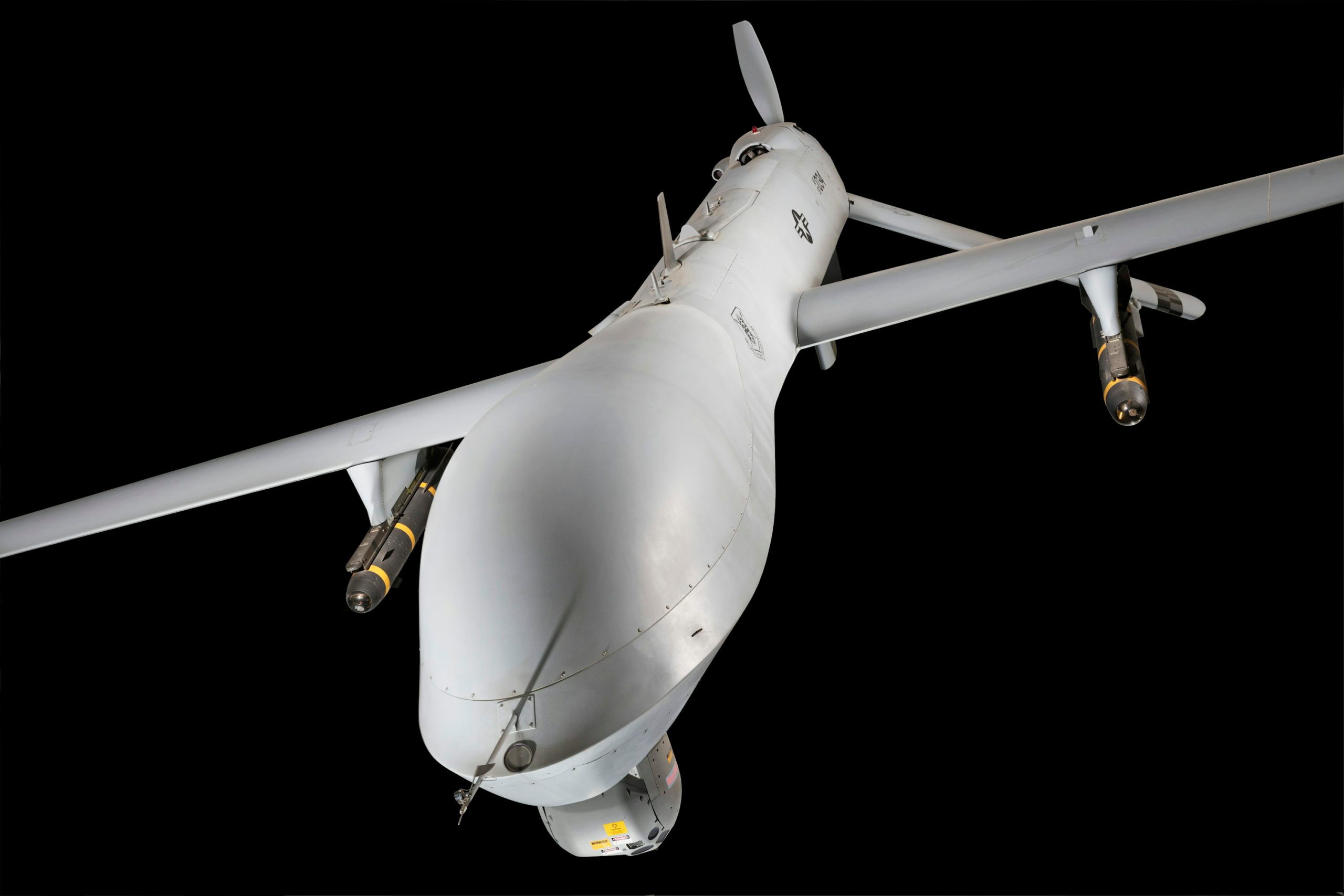
Mayhem 10 is a modular aircraft system introduced by AeroVironment in April 2026 for several mission payload types, including reconnaissance equipment, communications relay modules and electronic warfare capabilities. The platform is designed for employment from ground, air and maritime launch arrangements. Its open systems approach is intended to accommodate different equipment and software without redesigning the whole air vehicle whenever a mission requirement changes. Adding a third-party connectivity system is therefore an extension of the published architecture rather than the introduction of an entirely new airframe.
Elsight supplies Halo, a communications product that manages multiple network links as one logical connection for an uncrewed system. Its technology is designed to aggregate available channels and steer data according to connection conditions. Rather than assigning all traffic to a single link until it fails, a multi-link approach can use more than one bearer and adjust their contribution as performance changes. Actual availability depends on which networks exist in the operating area and on their capacity, coverage and restrictions.
Satellite, cellular and point-to-point radio each impose different operating constraints on an airborne system. Satellite links can extend coverage beyond terrestrial networks but need compatible terminals and service access. Cellular operation depends on the networks and frequencies available in the area, while direct radio connections face line-of-sight, antenna and spectrum limitations. The proposed connectivity layer would adjust its use of available links rather than require crews to manage each connection separately, although no Mayhem-specific handover performance has been released.
Communications resilience should not be confused with immunity to disruption. A system can lose access to several networks at once, and some proposed links may be unavailable in a particular mission. Switching or bonding channels also imposes integration demands on data interfaces, software, antenna arrangements and onboard electrical supply. The two companies have not released Mayhem-specific test measurements for latency, packet loss, transition times or availability, so any performance improvement remains a development objective rather than an independently verified outcome.
Halo’s existing documentation describes link aggregation and management functions, but a standard product’s published capabilities do not establish their performance when installed on Mayhem 10. Integration must account for the aircraft’s network interfaces, data priorities, radio installations and electrical power budget. The October announcement identifies the network types the partners intend to combine, without publishing the final antenna configuration, software architecture or flight-test results.
AeroVironment’s April Mayhem 10 specification describes a 10 lb (4.5 kg) modular payload, approximately 50 minutes of endurance and 100 km operating range. Those figures refer to the aircraft configuration published at launch. They are not performance results for an Elsight-equipped variant, and fitting additional network hardware may change the space, mass or power available to other equipment. No revised payload or endurance figure has been published for this collaboration.
Mayhem 10 was introduced with AeroVironment’s Tomahawk Grip control equipment and AV_Halo COMMAND software. Despite its similar name, AV_Halo COMMAND is not Elsight’s Halo connectivity product. The new integration must therefore be treated as work involving two separate products, with the interfaces between flight control, mission data and network management still to be described publicly.
Manufacturing implications will depend on whether the integration becomes part of a common aircraft configuration or a customer-specific option. In either case, work on a repeatable installation generally requires controlled hardware interfaces, software version management, verification procedures and documentation for production and maintenance teams. Those tasks are distinct from demonstrating that an individual prototype can establish a connection. The companies have not identified a delivery quantity or a factory modification programme for Halo-equipped Mayhem 10 systems.
The companies say integration is already under way using Mayhem 10’s modular architecture. The platform was designed to accommodate third-party technology through defined interfaces, but repeatable aircraft assembly requires controlled component selections, installation instructions and configuration testing. Neither partner has identified a factory modification programme, an initial production lot or a customer-specific option for the connectivity equipment.
Testing of the combined communications arrangement will establish how it manages link loss, network changes and competing data demands in the intended aircraft environment. Until those results or a customer order are disclosed, the confirmed development is an integration partnership involving a launched-effects platform and an existing multi-network product, with operational and production outcomes still unverified.