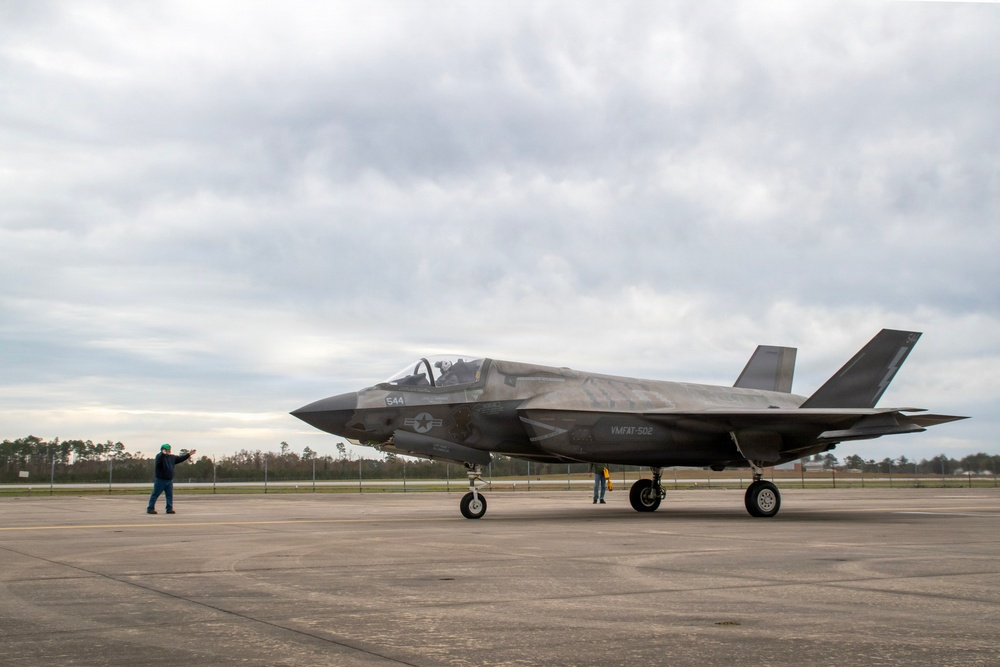
IN Brief:
- The $16,111,551 modification adds test, cyber and specialised repair infrastructure supporting the F-35 Integrated Core Processor.
- Work will be split equally between McKinney, Texas, and Palm Bay, Florida, with completion expected in January 2029.
- Air Force and Navy aircraft procurement funds cover the award; it does not purchase new F-35 aircraft or specify additional processor quantities.
Lockheed Martin has received a $16,111,551 modification to an existing US Navy delivery order for F-35 Integrated Core Processor test capability, cybersecurity modernisation and specialist repair infrastructure. The funding covers engineering and support equipment associated with the aircraft’s avionics. It does not purchase additional F-35s, announce a processor redesign or specify a quantity of new processor units.
The firm-fixed-price award also includes programme management, planning, readiness reviews and introduction-to-service activity. Work is divided evenly between McKinney, Texas, and Palm Bay, Florida, and is expected to finish in January 2029. Naval Air Systems Command at Patuxent River, Maryland, is responsible for the contract, which was issued as a non-competitive modification to a previously awarded delivery order.
The US Air Force will contribute $8,055,775 in fiscal 2026 aircraft procurement funding and the Navy will contribute $8,055,776. Both amounts are to be obligated at award. The government has not divided the contract price between test systems, cyber work and repair infrastructure, nor identified a set of operational air bases where the resulting capabilities will be installed.
The Integrated Core Processor is a central component of the F-35’s Technology Refresh 3 (TR-3) computing architecture. TR-3 introduces additional processing and memory capacity to support the software and mission-system developments that follow it. Changes to a central computing element require coordinated testing of its interfaces and dependent software, because correct operation of one module in isolation is not sufficient evidence that an aircraft-level function works as intended.
Ground test equipment must reproduce the relevant electrical and software interfaces, load approved firmware and generate repeatable conditions in which engineers can investigate faults. Some checks can isolate a processor module, while others need to assess its behaviour with connected equipment or simulated signals. The notice specifies avionics test capability but does not identify the new benches, test coverage or acceptance procedures being purchased.
Specialised repair infrastructure provides a route for equipment to be diagnosed, restored and returned to service within an approved technical process. Repairs may involve different acceptance checks from initial production, because the maintenance organisation must prove that an individual repaired unit meets the applicable configuration and performance standard. There is no public basis to assume that the contract transfers all repair activity to the two named sites or establishes new depot capacity of a particular size.
Cybersecurity modernisation forms a separate part of the contract. Facilities that store aircraft software, configuration information and maintenance records need controlled access and processes that verify authorised software versions before equipment is returned to service. The award does not disclose a vulnerability, name a particular protection product or establish that any new accreditation has already been granted. It is an infrastructure requirement, not evidence of an identified compromise.
Configuration control connects the testing, repair and cybersecurity requirements. Equipment returning from repair has to be matched to its approved hardware revision, software load and maintenance history; a working component with the wrong configuration may still be unsuitable for installation. Changes to processor interfaces can also require corresponding updates to test procedures and diagnostic tools. The modification does not publish the specific baselines to which these facilities will be qualified.
TR-3 development has faced separate problems with supplier output and software stability. The US Government Accountability Office reported that the Integrated Core Processor’s earlier design immaturity contributed to late deliveries, but said programme officials considered the design mature by July 2025 and no longer the cause of TR-3 delays. That history helps explain the attention paid to testing and sustainment, without establishing that the October modification was ordered to remedy any particular previous defect.
The contract also falls within a wider sustainment programme that has struggled with spare parts, industrial capacity and readiness. In June 2026 the GAO identified continuing F-35 readiness shortfalls and warned about the scale of investment needed under the Joint Program Office’s revised sustainment approach. Those findings concern the overall fleet. The government has not attributed any improvement in fleet availability to this specific $16.11 million processor support action.
McKinney and Palm Bay are the locations assigned for contract performance, not necessarily the sites where fleet maintenance will ultimately occur. Engineers working on test capabilities will have to coordinate interfaces, controlled technical data and acceptance standards with organisations that manufacture, integrate and repair F-35 equipment. Neither the number of workstations involved nor their final operational locations are disclosed.
The award is a modification to delivery order N0001926F2222 under an existing basic ordering agreement. That contracting structure is separate from new-aircraft production lots or decisions on future combat-system upgrades. Its scope remains the test, security and repair capabilities needed to support a defined avionics component, alongside associated engineering and programme services.
January 2029 is the announced completion target for the funded work. Acceptance of test and repair infrastructure will provide the next identifiable milestone, but there is no published deployment timetable, system quantity or performance gain attributable to this modification.