IN Brief:
- Redwire has secured approximately $13.8 million in Stalker UAS purchase orders for the US National Guard.
- Camp Shelby and Fort Indiantown Gap are among the planned training locations for the Army’s new 15X specialist role.
- Stalker is a Group 2 aircraft, but the ordered aircraft numbers and specific configuration have not been disclosed.
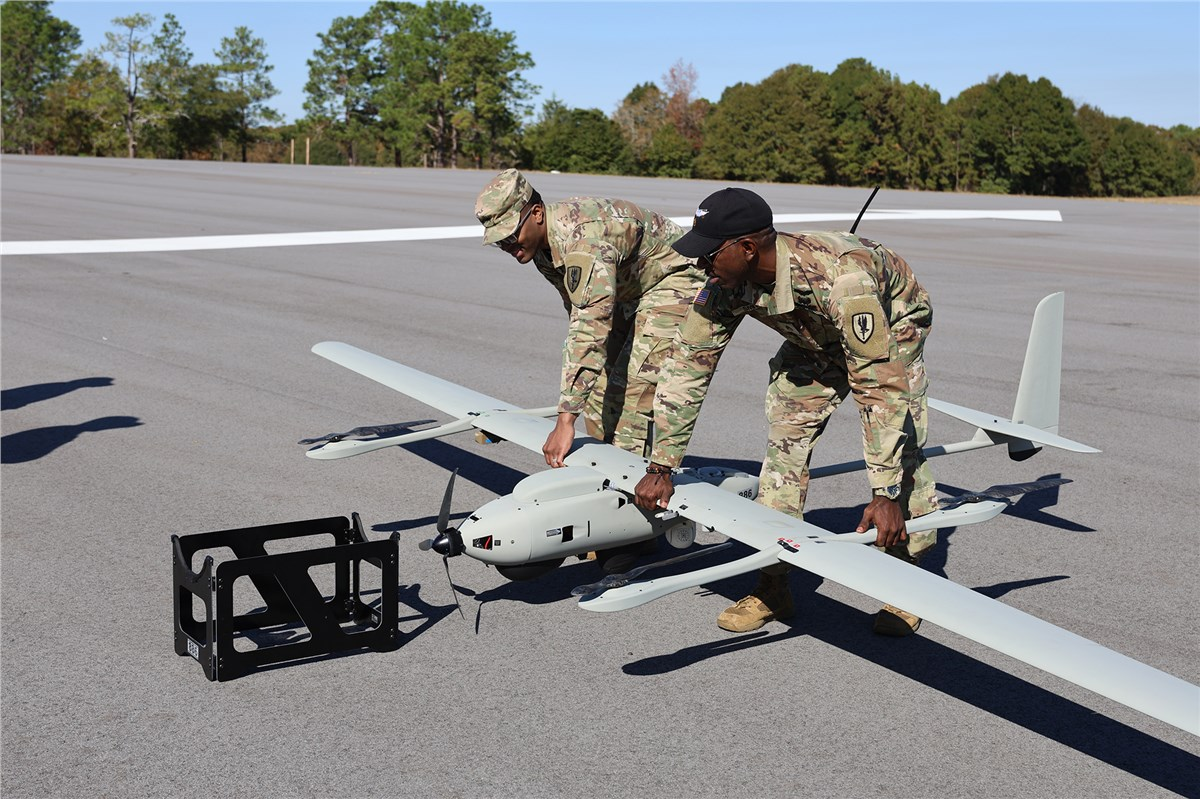
Redwire has received additional purchase orders worth approximately $13.8 million to supply Stalker uncrewed aircraft systems for US National Guard training. The Group 2 aircraft will support the Army’s emerging 15X Tactical UAS Specialist role, which brings aircraft operation and field maintenance into a single training pathway.
The National Guard Bureau intends to introduce Stalker at regional training locations including Camp Shelby, Mississippi, and Fort Indiantown Gap, Pennsylvania. Redwire has not published the number of aircraft ordered, their exact configurations or a delivery timetable. The announcement therefore establishes new procurement and intended use, rather than confirming that instruction has begun at either site.
Training will cover complex flight operations, maintenance and the use of different mission payloads. The combined syllabus reflects the practical relationship between operating a tactical aircraft and keeping it serviceable: propulsion, power supply, control links, sensors and ground equipment have to function together before an approved flight can take place. Personnel must also recognise when a fault exceeds the servicing work permitted at their level.
The Army’s 15X specialist role is intended to prepare soldiers to work with uncrewed systems spanning Groups 1 to 3. Stalker itself sits in Group 2, giving trainees experience with a modular tactical platform rather than a universal example of every aircraft in those categories. Equipment interfaces and maintenance procedures vary between models, so qualification on one aircraft cannot automatically be treated as qualification on another.
Stalker’s modular design allows different mission equipment to be integrated with its avionics and ground-control system. A payload change can alter electrical demand, communications settings, weight distribution and the tasks presented to a crew. Maintaining a reliable configuration record therefore forms part of practical instruction, alongside route planning, flight monitoring and recovery procedures.
Redwire’s published information for Stalker Block 30 describes autonomous vertical take-off and landing, networked avionics and alternative battery or solid oxide fuel-cell power. It lists more than eight hours of endurance for the fuel-cell configuration, subject to equipment and operating conditions. Those figures concern the Block 30 product family and do not establish that the National Guard has ordered a particular Block 30 variant or power option.
The manufacturer’s wider product documentation also describes multi-payload integration and ground-control arrangements that can support more than one aircraft. These capabilities provide potential training in managing several vehicles, communications handovers and different sensor configurations. The October purchase-order statement does not specify which of these features will be installed or taught under the National Guard programme.
Aircraft intended for repeated training sorties must be inspected and maintained between launches. Electrical connectors, propulsion equipment, sensor mounts and structural components can be affected by handling and recovery, making fault isolation and approved repair procedures essential for fleet availability. Redwire has not published the National Guard’s maintenance syllabus or the limits of authority granted to newly trained 15X specialists.
Introducing aircraft at a training site also requires suitable ground-control equipment, servicing arrangements, spare parts and access to test or flight areas. The purchase orders confirm Stalker systems for the intended role, but they do not itemise ground stations, replacement equipment or other support elements. The precise composition of the $13.8 million package consequently remains undisclosed.
Redwire has already secured separate Stalker business from other US military customers during 2026. A May order worth $15 million supported the Army Aviation Center of Excellence’s advanced individual training, while other orders concerned US Navy and Marine Corps programmes. The latest purchase orders relate specifically to the National Guard Bureau and should not be combined with those earlier amounts as if they formed one contract.
Using a common platform at several regional training centres could help the National Guard develop consistent instruction and maintenance records. That potential depends on the equipment and course content being standardised, and on instructors having access to the same approved documentation and software baselines. The company’s statement identifies the intended training role, but not the rollout sequence or syllabus at each location.
Repeated instructional use puts a different demand on sustainment from occasional demonstration flights. Aircraft availability depends on rapid checks, controlled replacement of worn components and a supply of consumables and spares, while configuration changes must be reflected in teaching material. This recurring support burden is part of the industrial value of the programme, although no separate long-term maintenance contract has been disclosed.
Redwire’s orders establish additional Stalker procurement and a specified training application as the Army develops its combined operator-maintainer role. Aircraft counts, configuration and delivery milestones remain unavailable. Their publication, followed by the introduction of courses at the named centres, would provide the first clearer measures of how the new training fleet is being fielded.