IN Brief:
- KNDS and RITEK reported the formal start of Leopard 2A8 NO manufacture at Levanger on 15 October.
- The plant is allocated 37 of Norway’s 54 tanks and is rated for capacity of up to 36 vehicles a year.
- The factory opened in April; completed Norwegian-built tank quantities and acceptance results have not been disclosed.
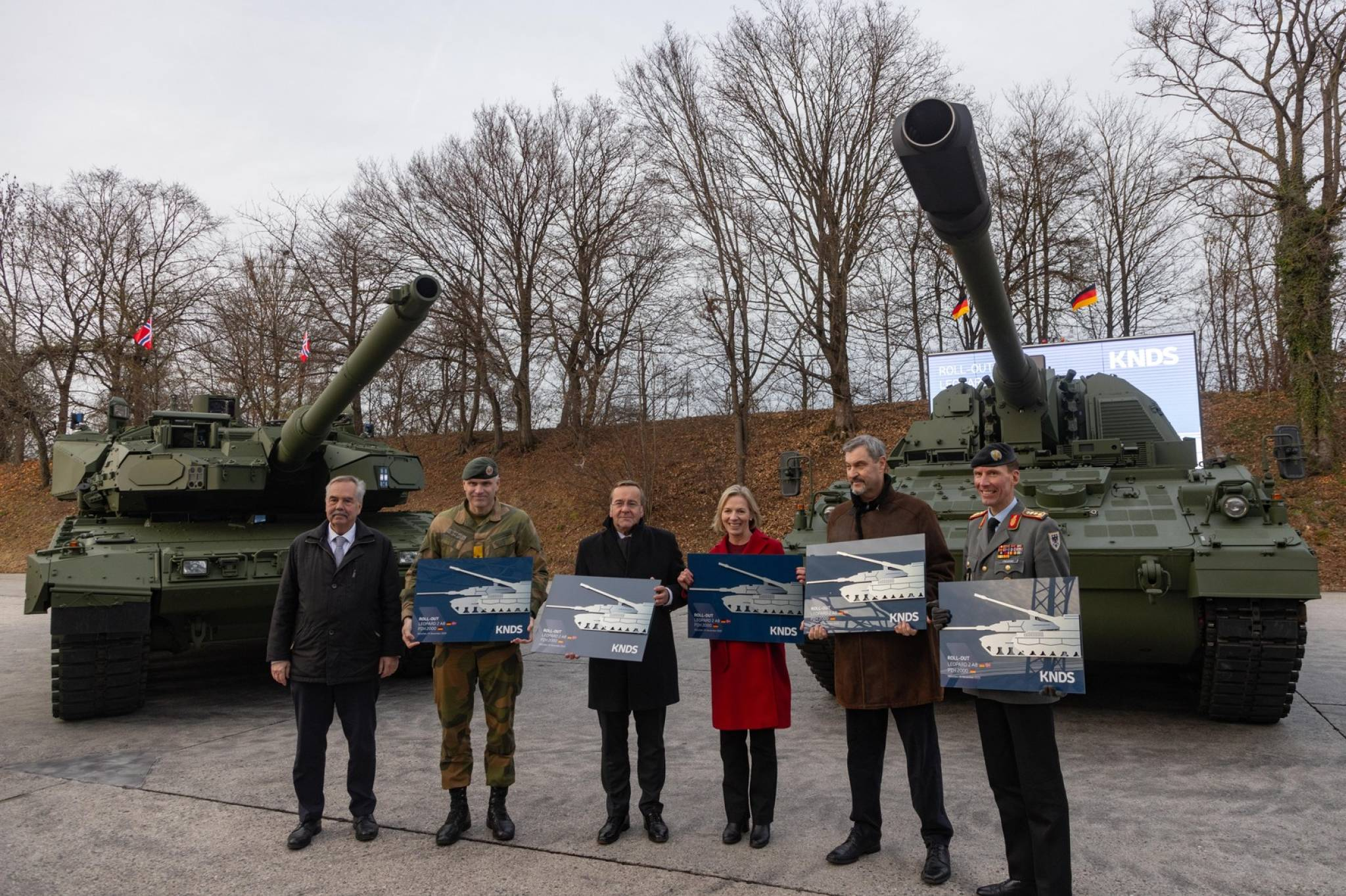
KNDS Deutschland and Norwegian vehicle specialist RITEK have started manufacture of Leopard 2A8 NO main battle tanks at Levanger. The production start, disclosed on 15 October, follows the April opening of the factory and testing infrastructure. Norway has ordered 54 tanks, with 37 allocated to the Levanger line and 17 to production by KNDS in Germany.
Construction and fitting-out of the integrated production and testing infrastructure took 18 months, according to KNDS. The company rates the facility for a maximum output of 36 tanks annually, although that figure is installed capacity rather than a confirmed annual delivery schedule for the Norwegian Army. The October start establishes that manufacture has begun; the company has not disclosed the number of locally completed vehicles or the planned production ramp-up.
RITEK brings experience in vehicle service and maintenance to a programme that also requires new assembly and testing capabilities. Production of a modern main battle tank involves combining heavy mechanical structures and running gear with the powertrain, turret, sensors, electronic controls and protection systems. Those elements need functional and environmental checks after integration, particularly where equipment from several suppliers must operate together. Public announcements do not allocate every manufacturing step or subsystem to a particular partner, and Norwegian assembly should not be interpreted as wholly Norwegian production of every component.
Levanger’s test infrastructure includes a laser track, steep inclines and an immersion pool, allowing different characteristics to be assessed at the same site. Gradient tests examine mobility under demanding traction and load conditions, while water trials can reveal sealing or installation issues. Optical and electronic systems require their own alignment and functional verification before vehicle acceptance. KNDS has not published the specific test sequences, acceptance criteria or results for tanks emerging from the Norwegian line.
KNDS also identifies geothermal energy as part of the site’s supply infrastructure, but has not quantified the resulting energy or emissions figures. Factory utilities form only one part of production readiness: reliable tooling, controlled assembly processes, spares availability and trained personnel are necessary to maintain consistent vehicle quality. Once a tank has been assembled, its complete electrical, mechanical and electronic configuration must meet the Norwegian customer’s requirements before handover.
Norway is replacing ageing Leopard 2A4 vehicles with the new Leopard 2A8 fleet to support its mechanised forces. Programme information identifies an updated electronics architecture and an active protection capability supplied by Rafael, intended to detect and respond to certain incoming threats. KNDS has also described cooperation with Kongsberg on modernising vehicle electronics and transferring information between onboard systems and other platforms. These are programme design characteristics rather than capabilities proven by the October production-start announcement.
Integrating active protection equipment introduces additional demands on the vehicle. Sensors and processing hardware need electrical power, physical mounting space and compatible communication interfaces, while a defensive response must work within the platform’s safety and control arrangements. Cable routing, electromagnetic compatibility and the relationship with other electronic systems therefore form part of the engineering task. The detailed acceptance procedure for Norway’s locally built configuration has not been released.
The local manufacturing footprint may also support future fleet maintenance, as the factory and its workforce gain familiarity with the platform’s installed systems. Assembly skills alone, however, do not establish which repairs or overhauls can be performed at Levanger after delivery. Sustained support depends on access to spare parts, technical documentation, specialist tooling, diagnostic facilities and the contractual allocation of work between RITEK and KNDS.
Other European Leopard programmes are expanding on different industrial schedules. Lithuania has begun construction of an assembly and support facility, while RENK has agreed further transmission deliveries with KNDS. Neither changes the Norwegian production allocation. The new Levanger milestone concerns factory operation under an existing 54-vehicle order, rather than an increase in the fleet requirement.
Two of Norway’s Leopard 2A8 vehicles were delivered in Germany at the end of April, around the inauguration of the Levanger facility. Norwegian defence information places the introduction of the new fleet into Army service from 2027, with completion of deliveries targeted for 2028. Initial handovers, domestic manufacture, verification and service entry are distinct steps, so the start of work at Levanger should not be mistaken for completion of the Norwegian programme.
Manufacture has started at Levanger, but the completion and acceptance of the first locally assembled tank have not yet been reported. KNDS has disclosed the factory capacity and the allocation of 37 Norwegian-built vehicles; completed quantities, customer acceptance results and any change to the fleet delivery schedule remain undisclosed.