IN Brief:
- Sydney's expanded hub combines Bluebottle production and engineering with a 24-hour global operations centre.
- The 40 additional Australian Navy vessels form part of an A$176 million contract announced in March 2026, not a new October award.
- Ocius opened a separate Auckland maritime maintenance facility earlier in October through its New Zealand subsidiary.
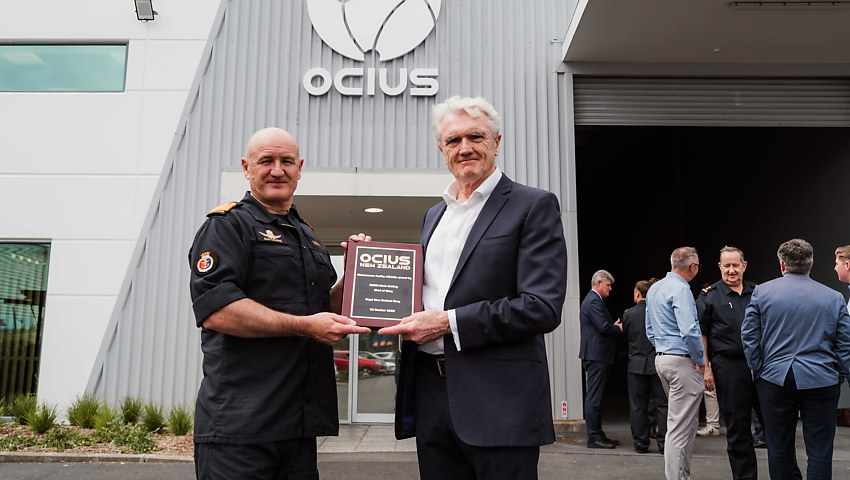
Ocius Technology has opened an expanded engineering, manufacturing and maintenance hub for Bluebottle uncrewed surface vessels in Sydney, together with a 24-hour global operations centre. Australia’s Minister for Defence Industry, Pat Conroy, opened the facility on 16 October. The event marks an increase in industrial and mission support capacity, not a new Australian contract for 40 additional vessels: that order was announced in March.
The Sydney operation brings production, research and development, maintenance and mission coordination into one expanded hub. Ocius says the operations centre can monitor and coordinate several missions simultaneously, including deployments beyond Australia, although it has not disclosed a numerical limit on supported vessels or the centre’s staffing pattern. Dedicated development areas will support work on Bluebottle sensors, autonomous functions and mission systems. The company describes a workforce of more than 130 people and additional space for future growth, without putting a firm figure on the newly opened site’s annual production capacity.
The Sydney facility will support production of 40 additional Bluebottles ordered under the Australian Government’s A$176 million investment announced on 11 March 2026. That award is intended to increase the Royal Australian Navy’s operational fleet from 15 craft to 55, drawing on Australian suppliers and a second production location in the Hunter region of New South Wales. Opening the hub in October advances the capacity needed to fulfil that existing programme; it does not mean that all 40 craft have been completed, delivered or formally accepted.
Bluebottle is an uncrewed surface vessel designed for extended maritime surveillance without the regular refuelling cycle associated with conventional powered patrol craft. Its renewable energy arrangement draws on solar, wind and wave energy to support propulsion and onboard systems. Ocius says its vessels have remained continuously at sea for more than six months during past deployments; that experience should not be treated as an endurance guarantee for every sensor payload or sea condition. The company also manufactures a hybrid version that supplements those energy sources with a diesel generator.
The energy system affects more than the time between port visits. Low acoustic output is useful when the vessel carries underwater listening equipment, since noise from the platform can complicate acoustic detection. Bluebottle can carry modular sensor packages and act as a maritime information node, collecting data on surface and subsurface activity and relaying relevant observations to other assets. The availability of electrical power, prevailing conditions, sensor load and communications links still determine what an individual deployed craft can sustain over a long mission.
Ocius has identified maritime intelligence, surveillance and reconnaissance as a principal defence use for the platform. In Royal Australian Navy service, Bluebottles have supported Operation Resolute around Australia’s maritime approaches, providing persistent coverage that can cue further investigation by crewed aircraft or vessels. They do not replace the verification and intervention functions of a crewed ship. Distributed sensors are particularly useful when surveillance has to continue across a wide operating area but routine inspection would impose substantial steaming time and crew demands.
The new global operations centre is intended to support that dispersed operating model. Coordinating multiple uncrewed platforms requires mission planning, vessel status monitoring and a way to respond when sea conditions, mechanical performance or communications availability change. Remote oversight is also relevant to handling data from separate surveillance locations without treating every boat as an independently crewed patrol. Ocius has not provided technical performance figures for the new centre, so its operational capacity cannot yet be quantified beyond the announced ability to coordinate simultaneous missions.
The new Sydney hub should not be confused with Ocius’s Auckland maintenance opening earlier in October. Auckland is the company’s first overseas advanced maritime maintenance facility, operated through Ocius New Zealand to provide support for vessels in that region. Sydney, by contrast, brings a wider range of design, production, maintenance and mission coordination functions together at an Australian site. The two announcements concern different facilities in different countries, rather than a single opening described twice.
The March 2026 Australian investment identified opportunities for domestic suppliers and additional employment as production grows. The October opening confirms the Sydney facilities are operating, but does not independently establish that all anticipated jobs have been filled or all production targets achieved. Ocius also refers to potential international orders; without signed awards or disclosed quantities, those prospects should not be added to the Australian Government’s existing 40-vessel commitment.
Production throughput and vessel acceptance under the March order will now provide the clearest measures of the Sydney expansion. Continued Bluebottle operations will also test how effectively the newly opened operations centre supports simultaneous maritime missions. Auckland’s support capacity and any future export orders have their own milestones, distinct from completion of Australia’s additional 40-vessel programme.