IN Brief:
- Saab, FMV and the Swedish Armed Forces have completed initial sea trials of a large uncrewed underwater demonstrator.
- The original SEK 60 million development contract was publicly announced on 29 August 2025, and the trial milestone followed on 16 October 2026.
- Additional software, sensors and autonomous functions require development and evaluation; no operational fleet order has been announced.
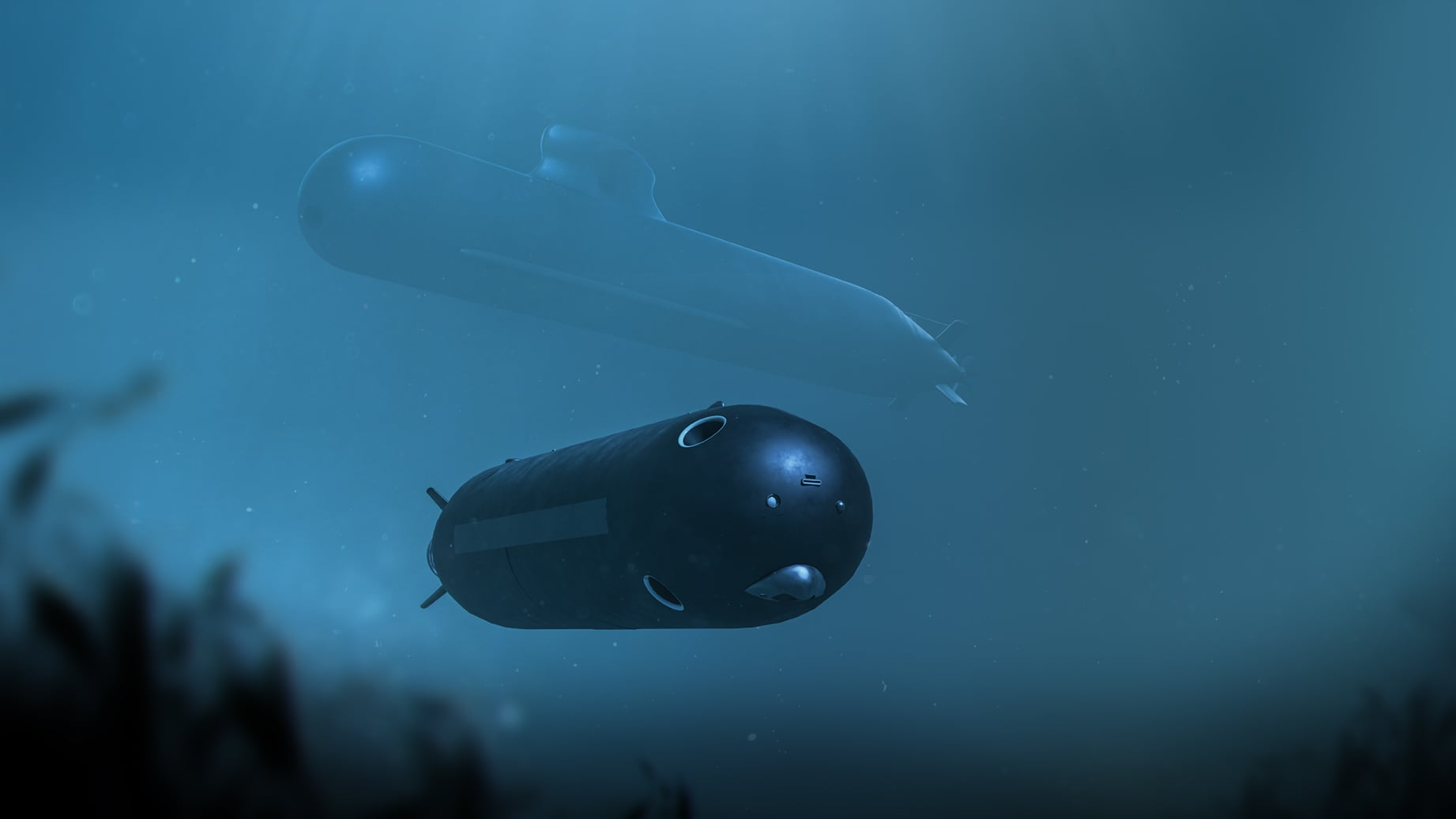
Saab, Sweden’s Defence Materiel Administration (FMV) and the Swedish Armed Forces have completed initial sea trials of a large uncrewed underwater vehicle demonstrator and closed the project’s first development phase. The vehicle has been built and launched for evaluation, with more advanced software, sensors and autonomous functions still to be developed. It is not an operational naval platform, and Sweden has not announced a production fleet or a service entry date.
Saab publicly announced its SEK 60 million FMV development contract on 29 August 2025. Under that agreement, the company is responsible for the design, construction and testing of the Large Uncrewed Undersea Vehicle (LUUV), with FMV leading the project in cooperation with the armed forces. The August 2025 announcement envisaged initial sea trials in summer 2026; the 16 October 2026 update confirms that initial trials have taken place. The public record supports those dated milestones, without establishing an exact duration between contract signature and launch.
At the centre of the vessel’s automation architecture is Autonomous Ocean Core, Saab’s software-based control system for uncrewed surface and underwater platforms. The system provides the basic vessel control functions on which mission-specific behaviours and payload integration can be built. It is intended to make autonomous functions adaptable across different craft rather than tying every operation to a bespoke control system. This architecture gives engineers a shared starting point for subsequent work, though it does not establish that every future payload or mission has been proven on the present demonstrator.
Operating underwater imposes constraints different from those faced by remotely operated surface craft. Communication links are more limited through seawater, navigation cannot routinely depend on a continuous satellite position fix while submerged, and energy and propulsion choices determine how long sensors can remain active. An autonomous controller must therefore manage preplanned activity and vehicle states while allowing for the occasions when a direct connection to an operator is not available. Saab has not disclosed the LUUV’s endurance, propulsion type, dimensions or detailed navigation configuration in its latest announcement.
Autonomous Ocean Core’s published architecture supports vessel control, defined mission points and changes between operational modes. Its wider product description covers mission manoeuvring, more precise vector control, direct fallback control and station keeping. These are characteristics of the software platform, not independently verified proof that the LUUV used every mode in a particular sea trial. Integrating a mature control framework reduces one development task but still leaves platform-specific behaviour, sensor interfaces and fault handling to be validated.
The demonstrator has been designed to help develop future underwater capabilities that could operate alongside existing naval platforms, including submarines. Such cooperation could include collecting information in an area of interest and passing useful observations to a wider force when communication conditions allow. FMV identifies surveillance, situational awareness and the protection of critical infrastructure among potential applications of large autonomous underwater systems. The current project is an evaluation platform; no operational mission record or weapons fit has been announced.
The project draws on Swedish expertise in submarine design, underwater sensors and vessel autonomy, but the demonstrator’s purpose remains experimental. FMV and naval users can use the trial results to assess the suitability of sensor interfaces, navigation behaviours and autonomous control in relevant environments. A successful initial trial is a milestone in engineering integration, not proof that the platform has met the reliability, sustainment and qualification requirements of operational service.
FMV identifies further trials and evaluation in relevant environments as the next stage. Saab expects subsequent work to develop software, sensors and more advanced autonomous capabilities, using the demonstrator to guide technical decisions. That process may inform a future acquisition, but the parties have not published a production quantity, delivery schedule or completed operational qualification. Saab’s description of a functioning demonstrator applies to this development phase, not to a fully fielded naval capability.
The LUUV programme uses Autonomous Ocean Core, which Saab introduced before the present demonstrator work. Reusing a control architecture can reduce the need to recreate baseline manoeuvring and mission management functions, while testing still has to establish its behaviour on a particular underwater vehicle. FMV has not released measured endurance, navigation accuracy, sensor performance or failure-response results from the initial trials; those remain appropriate subjects for the next development stage.
The completed sea trials provide Sweden with a physical platform and an initial body of test evidence for further underwater autonomy work. FMV will continue evaluation before deciding what, if any, operational capabilities should be acquired. There is no confirmed procurement of an operational LUUV fleet, and no basis for treating launch of the demonstrator as entry into military service.