IN Brief:
- Boeing confirmed German officials had withdrawn from the prospective direct MQ-28 purchase route.
- The German defence ministry did not state its reasons or announce a replacement aircraft.
- Earlier supplier partnerships and the Australian MQ-28 programme are distinct from any unawarded German acquisition.
Germany’s defence ministry has informed Boeing that it does not intend to pursue direct procurement of the MQ-28 Ghost Bat under the acquisition approach previously being discussed. Boeing confirmed the notification on 16 October. The ministry did not publicly explain its reasons, citing restrictions on comment about potential procurement projects. The notification concerns a proposed purchase route: there is no evidence in the available statements that Germany cancelled an awarded MQ-28 production contract or selected a replacement aircraft.
Boeing had been promoting the Australian-developed aircraft alongside a German industrial partnership as a potential answer to the country’s collaborative combat aircraft requirement. Germany had stated an ambition to field such a capability by 2029, but that goal should not be treated as an approved MQ-28 delivery schedule. Subsequent reporting indicates Berlin may use a longer competitive testing and acquisition route; the defence ministry has not confirmed a new programme baseline or a date for a production award.
Boeing said it remained ready to support Germany with next steps. A German ministry spokesperson declined to discuss the decision’s basis, referring to procurement law and parliamentary procedures. The two statements substantiate withdrawal from the prospective direct-buy arrangement, not a termination notice against an existing supply contract. They also do not establish whether Boeing could participate in later competition or whether specific bilateral industrial agreements have changed status. Any such conclusion would require a further announcement from the parties concerned.
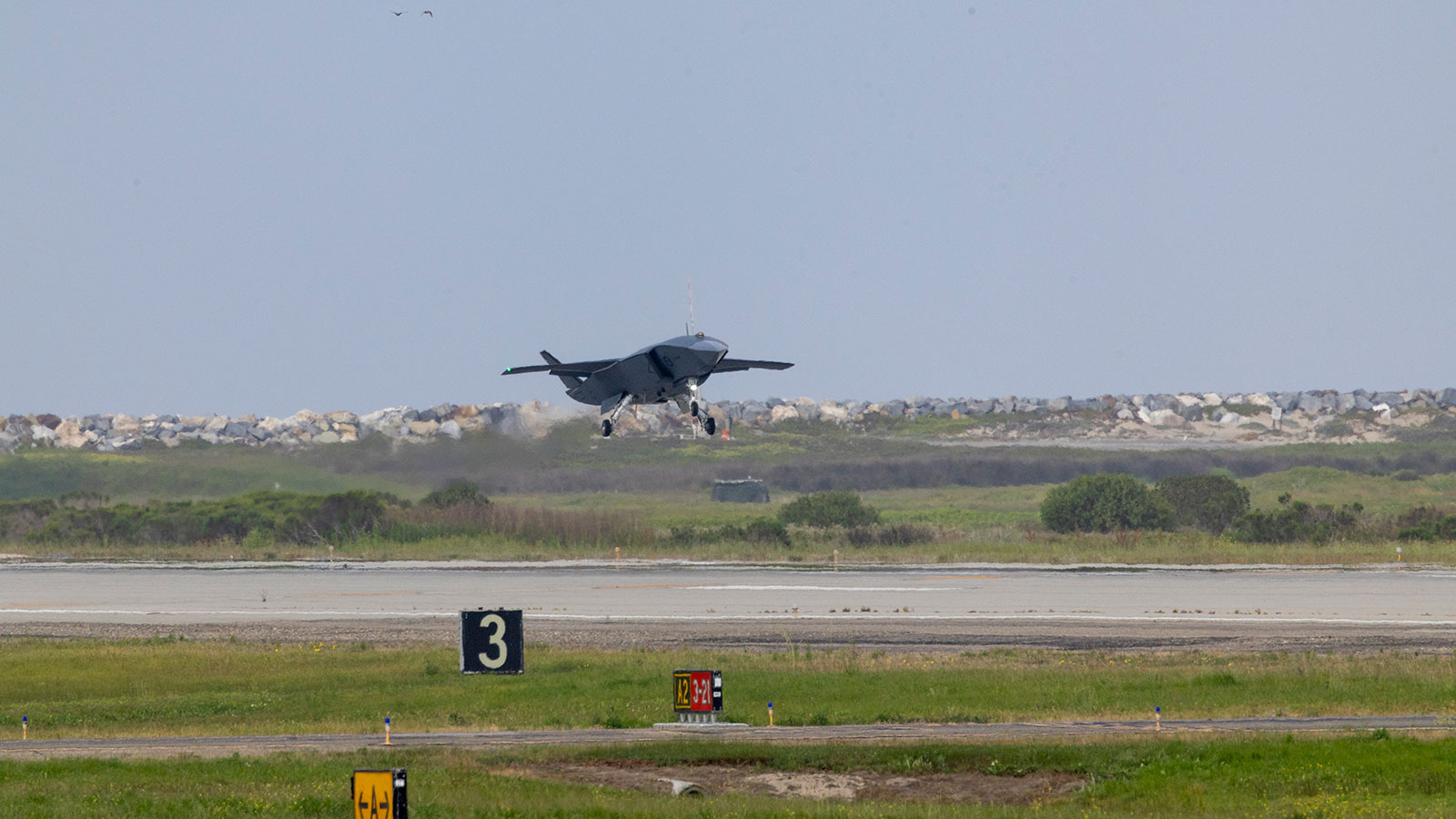
The Ghost Bat was developed in Australia as an uncrewed aircraft intended to work with crewed combat jets. Collaborative combat aircraft can extend sensing, communications and mission options without carrying a pilot into the same operating area, but practical integration depends on secure command links, aircraft autonomy and compatible weapons and sensor interfaces. A wingman concept is consequently more than an airframe procurement: a customer must acquire or integrate the software, control architecture, mission payloads, training arrangements and the sustainment system needed to operate it.
Boeing’s previous offer involved German industrial partners including Rheinmetall, Diehl Defence, Rohde & Schwarz and Hensoldt, covering potential systems integration, weapons, secure communications, sensors and support. Those arrangements prepared an industrial proposition for a possible national order. They are distinct from an executed German government contract for MQ-28 aircraft, and the ministry’s notification does not by itself cancel every supplier memorandum, cooperation activity or development arrangement. None of the companies has been shown to have a German production order that the 16 October decision terminates.
At the ILA Berlin Air Show in June, Boeing also described options to increase MQ-28’s payload and range. Its roadmap included a longer wing allowing more fuel or mission stores, internal weapon stations and beyond-line-of-sight connectivity. A roadmap feature is not the same as a German national configuration accepted for service. The intended integration of domestic weapons, encrypted communications and national mission software would still need testing, qualification and agreement on technical responsibility, regardless of which base airframe Germany ultimately chooses.
Airbus and US manufacturer Kratos are pursuing a Valkyrie-based collaborative aircraft with a proposed European mission system, while German developer Helsing has announced its CA-1 Europa concept. Other manufacturers could also compete. The aircraft vary in testing maturity, autonomy architecture and proposed national industrial involvement. A prototype flight or company schedule does not demonstrate that Germany has selected an aircraft, especially while the defence ministry has not disclosed a new formal acquisition baseline.
An already developed airframe could shorten some engineering stages, but German requirements for control of mission software, weapons integration and secure communications would still need contractual access and technical qualification. A locally led design could give Germany more responsibility for those interfaces but would also require airframe testing and stable production processes. The ministry has not said which ownership, cost, schedule or technical criteria now govern the procurement route, so the change cannot be interpreted as a definitive choice of national industrial model.
Reporting about Germany’s next steps has mentioned possible competitive testing from 2027 and a later entry into service in the early 2030s. Those are reported possibilities, not a schedule confirmed by the ministry in its statement to the publication. Whichever programme follows must still demonstrate autonomous flight behaviour, secure command links, cooperation with piloted aircraft, platform safety and integration of national payloads and weapons before operational acceptance. The trade-offs cannot be resolved from a single supplier notification.
Boeing’s confirmation changes the outlook for the previously proposed direct MQ-28 purchase and associated industrial bid. It does not terminate the Australian Ghost Bat programme, cancel a contracted German aircraft order, or constitute a German procurement award to a competitor. The next testable steps are a published German acquisition route, any formal invitation to industry, demonstration results and a decision identifying the eventual contractor and national integration work.