IN Brief:
- EBC will act as general contractor for a major phase of Davie’s Lévis shipyard modernisation.
- The works have an estimated value exceeding C$500 million and include four buildings, a launch platform and utility infrastructure.
- The construction will proceed alongside current shipyard operations, supporting longer-term capacity for Canadian government vessel programmes.
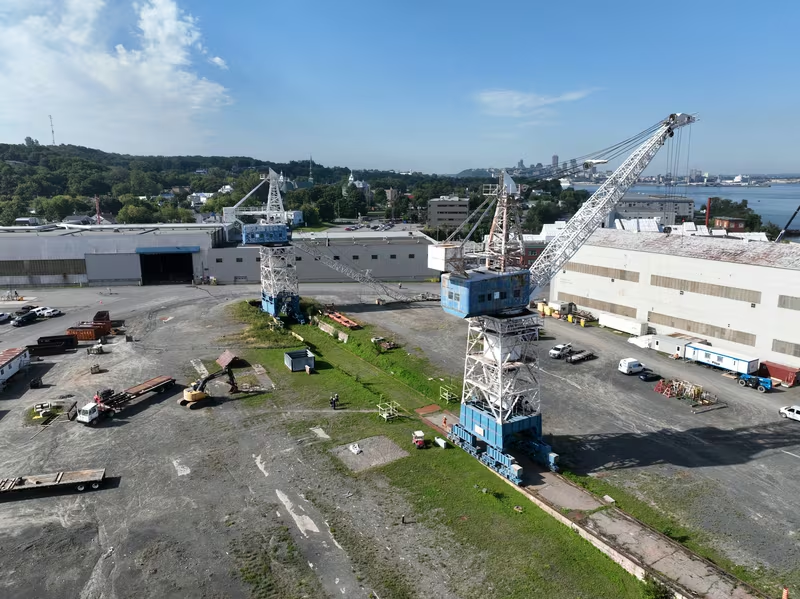
Davie has appointed Québec construction company EBC as general contractor for a major phase of its Lévis shipyard modernisation, covering four new buildings, a vessel launch platform and supporting civil engineering works. The project has an estimated construction value exceeding C$500 million and is intended to improve the flow of materials, ship sections and workers through the yard.
The agreement was announced on 20 October as part of a wider investment programme already underway at the site. EBC will manage construction coordination, supervision, site safety and the integration of works into the shipyard’s operating schedule. Davie intends to continue shipbuilding and other industrial activities while the new facilities are developed.
The planned structures include a steel fabrication shop, an assembly hall and an outfitting shop, alongside a fourth building for offices, changing facilities, mechanical rooms and staff services. Their roles are different but connected, allowing work to progress from preparing materials to assembling larger structures and installing equipment.
Davie and EBC also plan a launch platform and substantial civil engineering and utility infrastructure. These systems will have to support the movement of heavy components as well as the power, services and access requirements of an industrial site with existing buildings and maritime facilities.
The stated C$500 million-plus figure describes the estimated construction value of this phase. The companies have not published a final fixed-price contract amount, a detailed building-by-building budget or the total value of every investment included in the wider shipyard programme.
Steel fabrication is one of the initial stages of large vessel production. Plate and structural sections must be prepared to the dimensions and material specifications of the design, with cutting, forming, welding and inspection performed according to controlled processes.
An assembly hall provides space for combining smaller structural components into larger sections or blocks. The size and weight of those assemblies influence the lifting equipment, handling routes and working areas required around the production system.
Outfitting involves installing specified equipment and services into the vessel. Depending on the design and manufacturing sequence, machinery, pipework, electrical systems and other components may be fitted before separate blocks are joined. Completing suitable work earlier can reduce the amount that must later be performed in confined spaces.
These processes depend on consistent interfaces between facilities. A bottleneck in lifting, transport or equipment installation can restrict throughput even when a fabrication shop has capacity available. The design of internal routes and the coordination of activities are therefore important to how effectively the additional buildings will be used.
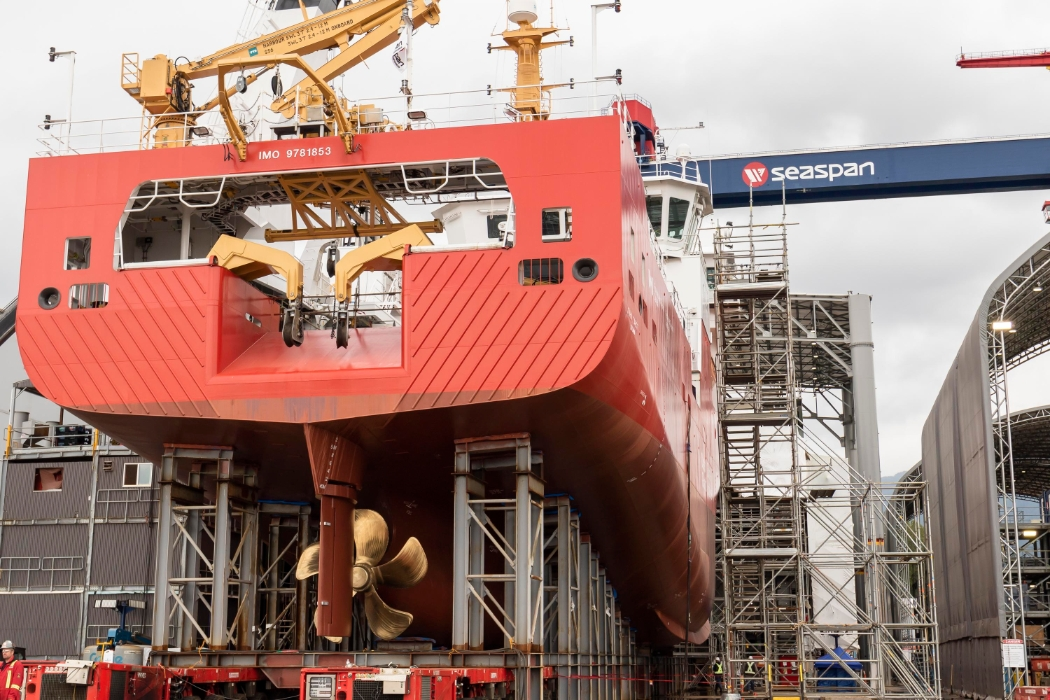
The launch platform has a different role from the fabrication and assembly areas. It will support the transfer of vessels towards the water at the appropriate point in construction. Davie has not published its detailed design, the transfer method it will use or the maximum vessel dimensions the platform will accommodate.
Construction at an active shipyard requires careful sequencing. Heavy deliveries, excavation and building work must be managed alongside existing operations, with contractors and production teams sharing access routes and infrastructure. EBC’s responsibility for schedule integration reflects the need to prevent one activity from unnecessarily obstructing another.
Site safety requirements are likewise complicated by the proximity of construction work to ongoing industrial processes. Planning must account for workers, vehicles, cranes and temporary services, while the arrangements for modifying utilities may need to be coordinated with equipment that must remain available to the operating shipyard.
The October agreement follows earlier modernisation, including the renovation of Buildings 3 and 36 and improvements to maritime infrastructure. These works form part of a longer programme rather than being included automatically within the value of the newly announced EBC construction phase.
Davie joined Canada’s National Shipbuilding Strategy in 2023 and has since secured a major long-term workload. In August 2026 it announced a C$11.3 billion fixed-price contract for six programme icebreakers for the Canadian Coast Guard, with construction of the first vessel scheduled to begin in 2027.
That icebreaker award is a separate government shipbuilding contract. It should not be added to the estimated C$500 million-plus construction value as though the two figures represented payments for the same work. One concerns the acquisition of ships; the other is associated with infrastructure intended to support production.
Icebreakers impose demanding requirements on hull structures, propulsion equipment and integrated systems because they are designed to work in specified ice conditions. Production capacity therefore depends on specialised processes, engineering personnel, suitable equipment and timely supply of materials.
The new buildings are expected to provide additional working space and a more integrated route through production. Their effect on actual vessel output will nevertheless depend on equipment installed, workforce availability, programme schedules and the ability to coordinate activities across the completed site.
The companies have not disclosed a verified increase in annual shipbuilding output attributable to this agreement, or a confirmed completion date for every element of the construction phase. The next reportable milestones will be development of the four buildings, the launch platform and the supporting services while the existing yard remains operational.