IN Brief:
- Applied Intuition will initially deploy its Intelligent Perception System on five Arleigh Burke-class destroyers.
- The system uses cameras and infrared sensors to detect, track and classify surface contacts and assist bridge personnel.
- Onboard data processing and offboard model updates build on the earlier Data Edge Collection Kit prototype programme.
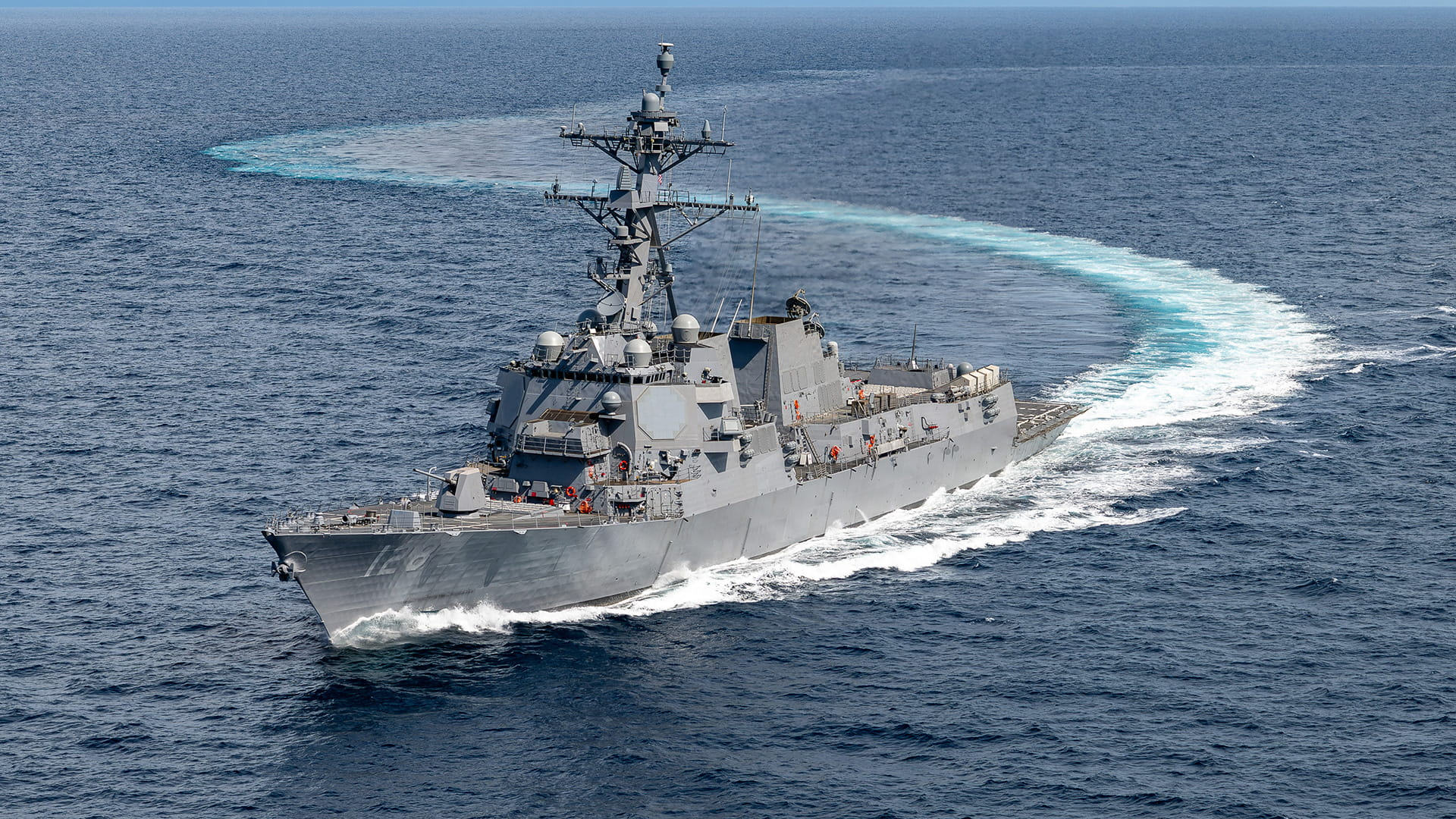
Applied Intuition has secured a US Navy contract to deploy artificial intelligence perception and supporting data infrastructure aboard surface ships, with an initial installation planned for five Arleigh Burke-class destroyers. The company announced the award on 22 October under an initiative involving Navy robotic and autonomous systems and mission systems organisations. Its first delivered capability is intended to assist sailors monitoring their surroundings, rather than to replace bridge personnel or automate weapons employment.
Applied Intuition’s Intelligent Perception System (IPS) will use the company’s Acuity platform to process shipboard camera, infrared and other navigation sensor feeds. The supplier describes automated detection, tracking and classification of surface contacts, with visual overlays, predicted trajectories and alerts for vessels on hazardous courses. Those are planned operator-support functions rather than authorisation for autonomous weapons engagement. The five-destroyer deployment is an initial installation scope, while expansion to other vessels remains a wider programme ambition.
The award follows the Navy’s Data Edge Collection Kit (DECK) prototype work, which gathered large amounts of shipboard visual data for analysis and model training. Applied Intuition is extending that pipeline by putting perception models on vessels through its Data Engine and linking onboard operation with infrastructure ashore. Recording data for development is not identical to relying on a model during navigation watchkeeping, where false alerts, omissions and operator workload have immediate practical consequences.
Camera and infrared imagery provide different kinds of observations, and the availability of usable information changes with lighting, weather, sea clutter and viewing angle. Perception software must associate observations with contacts, update their estimated position and movement, and decide when to present a classification. Applied Intuition also refers to fusion of passive and active navigation sensors, although it has not disclosed the complete sensor interfaces or processing configuration selected for the first five ships.
Sea clutter, weather, glare and other vessels can obscure a contact or distort measurements, making classification harder even when cameras and other sensors remain operational. An automated label therefore remains a decision aid requiring appropriate human interpretation. The supplier describes overlays, detection and alerts for watchstanders; there is no basis in the announced contract for claiming that the software independently identifies lawful targets or commands naval weapon systems.
Applied Intuition’s Data Engine combines onboard processing with collection and offboard analysis intended to improve later software versions. A repeatable development pipeline requires records of the sensor inputs, model version, annotations and validation results so engineers can investigate unexpected detections and compare an updated model with its predecessor. The company has not disclosed the Navy’s formal acceptance procedures or how it will measure false positives and missed contacts across different operating conditions.
Satellite bandwidth is a practical limit when collecting high-volume imagery from ships at sea. Applied Intuition says its system is designed to manage constrained links and retain machine-readable records of surface contacts, allowing selected information to be shared without assuming continuous transfer of every raw sensor feed. The statement gives no data rate, storage limit or satellite service specification. The balance between local processing, data retention and transmission will therefore depend on the installed equipment and network conditions.
The company expects software updates to be delivered remotely, allowing refreshed models to be deployed without returning a ship to port solely for that purpose. That capability still requires testing and configuration control. An updated model can behave differently from an earlier version, so engineering teams need to verify performance against representative conditions and confirm that the relevant sensors and processors remain compatible. The company has not described the Navy’s acceptance regime, the frequency of updates or the cyber approval process for fleet release.
The same computing and data infrastructure could later support other models, but the announced initial application is shipboard perception and improved navigation awareness. Reuse would still require compatible sensors, sufficient processing capacity, cybersecurity approval and ship-specific testing. The initial five Arleigh Burke-class destroyers are the concrete deployment scope described in the company’s release; potential wider fleet uses should not be presented as systems already fitted or approved.
Applied Intuition has not disclosed the contract value, the identities of the first five destroyers or an installation completion date. The award nonetheless marks a change from the DECK data collection prototype towards an onboard perception capability linked to a maintained model development process. Shipboard installation and subsequent evaluation will determine how that capability performs during ordinary navigation operations and whether the Navy widens deployment.