IN Brief:
- Spirit Defense, a Boeing company, will become a fuselage design and manufacturing partner for the FQ-42 Vengeance.
- General Atomics received its US Air Force FQ-42 production contract in June 2026.
- The companies have not disclosed a Spirit production rate, the number of fuselages ordered or the partnership’s commercial value.
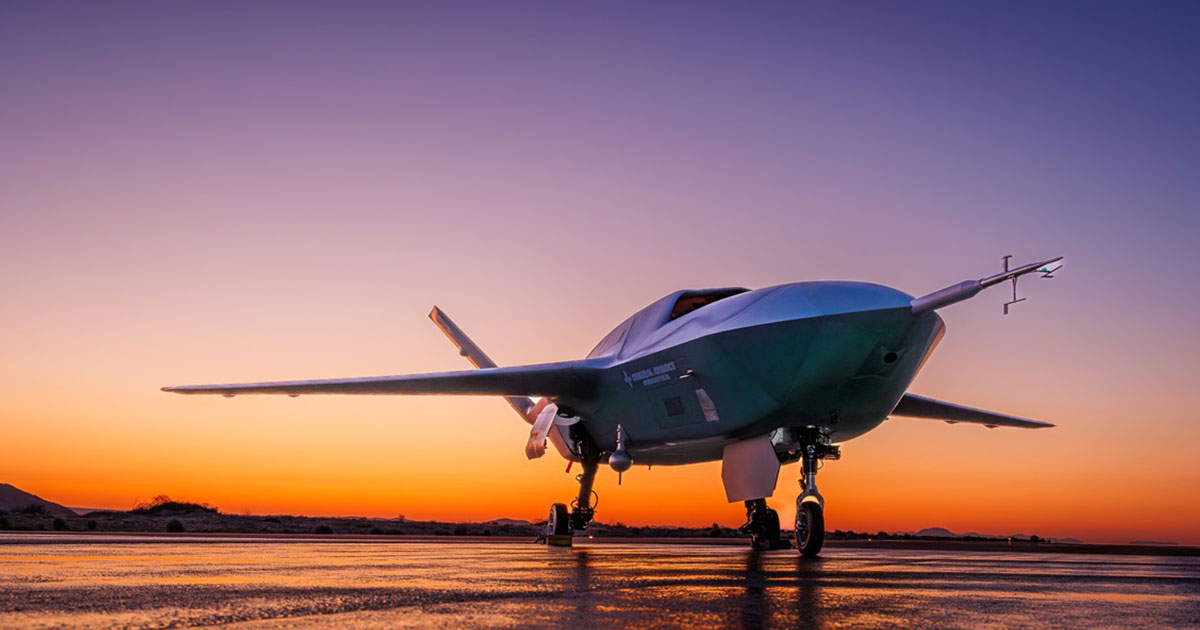
General Atomics Aeronautical Systems has appointed Spirit Defense as a fuselage design and manufacturing partner for its FQ-42 Vengeance uncrewed combat aircraft, bringing an external aerospace producer into a programme previously led through the company’s own manufacturing operations. The agreement was announced on 23 October, following the US Air Force’s award of an FQ-42 production contract to General Atomics in June. Neither partner has disclosed a value for the arrangement or the number of airframes Spirit will supply.
Based in Wichita, Kansas, Spirit Defense is a Boeing company with aerospace design, manufacturing and lifecycle support capabilities. GA-ASI has specified a fuselage design-build assignment: Spirit will contribute to the central aircraft structure, while General Atomics remains responsible for the FQ-42 programme. No final assembly transfer, production location for individual fuselages or supplier contract value has been disclosed. The division of responsibility matters because an additional structural supplier does not necessarily become the manufacturer of the complete aircraft.
The FQ-42 is a purpose-built, uncrewed fighter developed for the Air Force’s CCA initiative. The service is pursuing aircraft that can operate alongside crewed platforms with mission systems and autonomy software suited to different tasks. General Atomics has described the FQ-42 design as modular, allowing integration of mission equipment and software as requirements evolve. Its new fuselage partner joins at a point when the industrial question is moving beyond producing development aircraft towards repeating manufacture with consistent quality and an assured supply of components.
Adding a fuselage supplier requires close control of the aircraft configuration. Structural assemblies must meet specified geometry, materials and interface tolerances so that the propulsion installation, wings, internal equipment and maintenance openings align at final integration. Approved drawings, tooling, inspection records and change control have to remain consistent between the organisations. Neither partner has detailed its production processes or quality acceptance plan, so the announcement does not support claims about particular manufacturing technologies or completed qualification steps.
The industrial benefit also depends on how assemblies move through the wider production system. Extra plant capacity can shorten a bottleneck only if subcontracted structures reach final assembly with the right documentation, quality and timing. Late delivery can interrupt downstream installations, while premature output creates storage and handling demands. GA-ASI describes the partnership as reducing single points of failure, an objective tied to supply continuity rather than a published increase in aircraft deliveries.
Spirit’s participation begins at the design-build stage, allowing manufacturing constraints to be addressed before repeated fabrication. That involvement may help engineers reconcile structural interfaces, equipment access and achievable tolerances, provided any design changes are controlled by the aircraft programme. General Atomics has not supplied a drawing release schedule, Spirit qualification date or number of production fuselages. The available evidence establishes the intended workshare without revealing how mature the associated production documentation has become.
General Atomics says it has manufactured its own uncrewed aircraft since 1992, including the MQ-9 Reaper, Gray Eagle and MQ-9B family, making the Spirit assignment a significant departure from its previous approach. That history gives the latest decision a defined industrial context: a company accustomed to producing its own aircraft is adding a separate manufacturing source as demand moves towards a larger fleet concept. The company says the added capacity will strengthen resilience and reduce the risk associated with a single production point.
The FQ-42 also depends on autonomy software, mission equipment and flight systems that must be integrated with its airframe. GA-ASI says its software architecture has been demonstrated in live flight testing on multiple aircraft and is designed for human-machine teaming. Those demonstrations are relevant to the wider programme but do not themselves establish that Spirit-built fuselages have passed inspection, that a scaled production line is operational or that the aircraft has entered routine squadron service.
General Atomics is also discussing export opportunities for its wider Gambit family of uncrewed combat aircraft. It says prospective international customers may be able to undertake indigenous manufacturing or integrate their own sensors and equipment. Those discussions are separate from the confirmed Spirit Defense partnership and are not announced foreign aircraft orders. Any future industrial participation would have to be matched to the platform variant, the customer’s requirements and the regulatory arrangements governing the relevant technology.
The partnership’s next measurable stages will be the approval and production of fuselage assemblies, their integration into completed aircraft and deliveries against the Air Force programme. GA-ASI has not identified a Spirit output rate, fuselage order quantity or delivery timetable. What was confirmed on 23 October is a new structural manufacturing partner for the FQ-42, distinct from the Air Force production award General Atomics received in June.