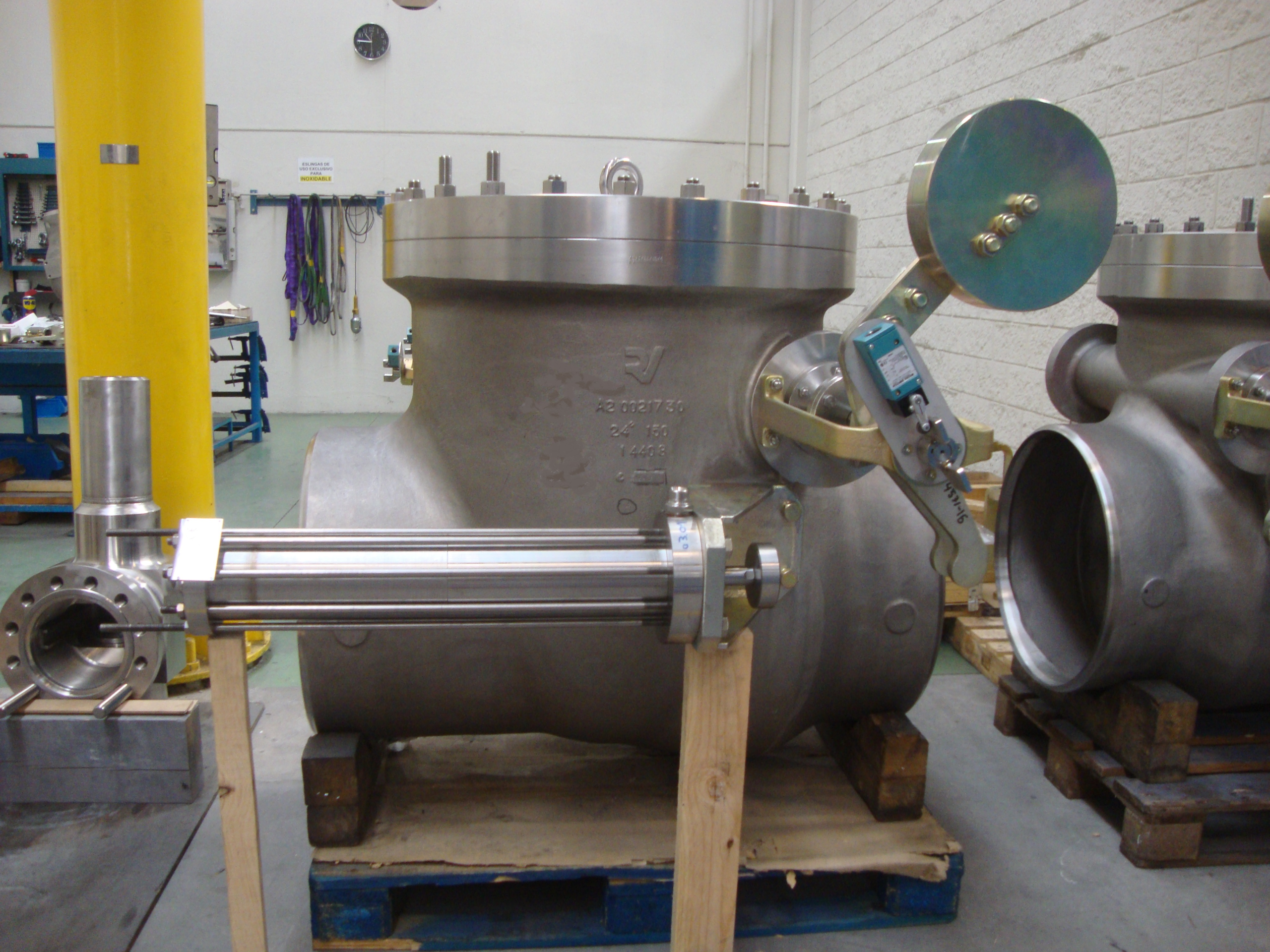
IN Brief:
- Bechtel Plant Machinery has awarded Curtiss-Wright naval equipment contracts worth more than $225 million.
- The work covers valves, pumps, and instrumentation and control systems for Virginia, Columbia, and Ford class vessels.
- Engineering, manufacturing, and testing are under way at facilities in New York and Pennsylvania through 2030.
Curtiss-Wright Corporation has received contracts worth more than $225 million from Bechtel Plant Machinery to supply equipment for three major US Navy nuclear-powered vessel programmes. The awards cover propulsion valves, pumps, and instrumentation and control systems, with engineering, manufacturing, and testing already under way at the supplier’s facilities in New York and Pennsylvania.
The awards support Virginia-class attack submarines, Columbia-class ballistic missile submarines, and Ford-class aircraft carriers. They cover equipment for new construction as well as fleet maintenance, rather than one vessel or a single delivery. Curtiss-Wright has not broken down the aggregate contract value by vessel class, equipment type, or number of units.
Bechtel Plant Machinery placed the awards, which Curtiss-Wright will fulfil through its Defense Electronics and Naval & Power segments. Engineering, production, and testing are already taking place at facilities in New York and Pennsylvania. Work is scheduled to continue through 2030, although the announcement does not set out vessel-by-vessel delivery dates.
The three ship classes have different roles, but their nuclear-powered machinery requires components that can control fluid movement and report plant conditions reliably. Propulsion valves perform specified isolation or flow-control duties, and pumps maintain the required movement of fluids through their assigned circuits. Instrumentation measures operating conditions, while control equipment gives the crew access to the information and functions needed to manage installed machinery.
Equipment serving different circuits cannot be treated as interchangeable simply because components share a general purpose. Pressure and temperature ranges, material selection, installation space, and maintenance provisions depend on the duty. Curtiss-Wright has identified the product families and vessel programmes involved, but has not assigned individual valve or pump designs to particular systems aboard the ships.
Instrumentation and control equipment links the measured condition of machinery to the operators responsible for it. Sensors, wiring, processing equipment, and displays must work within the specified operating environment and with the interfaces required by the ship design. Protective functions can also impose their own response and reliability requirements. The public contract description does not identify the architecture, number of control channels, or qualification standard of each assembly.
Long-lived naval equipment requires production records and configuration control to support installation, inspection, and later maintenance. Materials and manufacturing processes must be traceable to an approved design, while alterations have to be recorded so that replacement components remain compatible with the installed equipment. Specific acceptance requirements are determined under the applicable contracts; Curtiss-Wright has not published those test plans for the new work.
Maintenance supply is particularly relevant when a fleet contains both newer construction and vessels already in service. Replacement assemblies may need to fit machinery built to an earlier configuration, and scheduled maintenance depends on parts being available when the ship enters a work period. Fleet support is expressly included in the awards, but the supplier has not separated its value from the new-build equipment share.
The company has supplied the US Naval Nuclear Propulsion Program for more than six decades and says its products have supported every nuclear-powered submarine and aircraft carrier commissioned by the Navy. Its broader naval portfolio includes propulsion equipment, valves, pumps, motors, and control technology. That history establishes an existing supply relationship, while the November awards represent additional work within it.
Multiple vessel programmes also place different demands on manufacturing schedules. Equipment for a submarine undergoing construction may have to be delivered in a different sequence from replacement parts required during an overhaul, even where the supplier uses related fabrication and testing processes. Curtiss-Wright has not linked these contracts to a new facility, a stated workforce expansion, or a quantified increase in production capacity.
The awards therefore represent more than $225 million across several equipment categories and programmes, not a single-platform order or a measure of annual revenue. With neither class-specific values nor vessel quantities published, the total cannot be used to calculate equipment cost per ship. The production horizon nevertheless gives the supplier continuing work spanning the construction and service-support cycles of the three fleets.
The geographical split between the company’s New York and Pennsylvania sites has not been specified by product family. Fabrication, assembly, inspection, and testing need to follow approved configurations before completed components move into the applicable naval supply chain. Curtiss-Wright’s disclosure confirms that this work has started, while individual acceptance dates and the sequence of deliveries remain undisclosed.
Engineering and testing under the Bechtel Plant Machinery awards will continue through 2030. The next measurable developments will be equipment deliveries and acceptance against the Navy programmes’ requirements; no new vessel capability, change in ship numbers, or associated factory expansion was announced with the contracts.