IN Brief:
- New multi-million-dollar government orders cover portable Ranger counter-drone systems in Europe and Iron Drone Raider interceptors in Asia.
- Ranger addresses mobile detection and electronic mitigation, whereas Iron Drone Raider uses physical interception against threatening aircraft.
- Customer identities, individual contract values, equipment quantities, and delivery timetables have not been disclosed.
Ondas has secured government counter-drone contracts in Europe and Asia, covering two systems intended to defeat unauthorised aircraft through different methods. A major European police organisation has ordered portable Ranger counter-UAS equipment, while an unnamed government customer in Asia has ordered Iron Drone Raider autonomous interceptors. The company described the combined agreements on 4 November 2026 as worth multiple millions of dollars.
Ondas did not identify either customer or assign separate values to the European and Asian awards. It also withheld equipment quantities, delivery schedules, and the locations where the systems will operate. Both are described as contracts, rather than preliminary partnership agreements, but the public details are insufficient to establish how many sites or operational teams they will equip.
Ranger is the subject of the European police order. Ondas describes the man-carried system as providing drone detection, identification, tracking, and mitigation without a permanent installation. Its intended uses include mobile law enforcement, border security, special operations, and temporary protection of sensitive sites. That combination places a premium on transportable equipment and rapid deployment at changing locations.
A mobile counter-drone unit must provide its own power, sensing, control, and operator interfaces within a much smaller footprint than an installed site network. Radio congestion, nearby buildings, and the time available to position the equipment can alter the conditions in which it is used. Permanent systems can distribute their sensors and supporting infrastructure over a wider area; Ranger’s disclosed role is to give field teams an equipment package they can move and redeploy.
Ondas groups Ranger with its broader radio-frequency and cyber counter-UAS offering, although it has not published a detailed technical configuration for the European order. Detection and electronic mitigation depend on the signals available from a drone and its control arrangements. A craft operating autonomously without an active command link presents a different challenge from one using a recognisable radio transmission; the distinction helps explain the company’s parallel investment in physical interceptors.
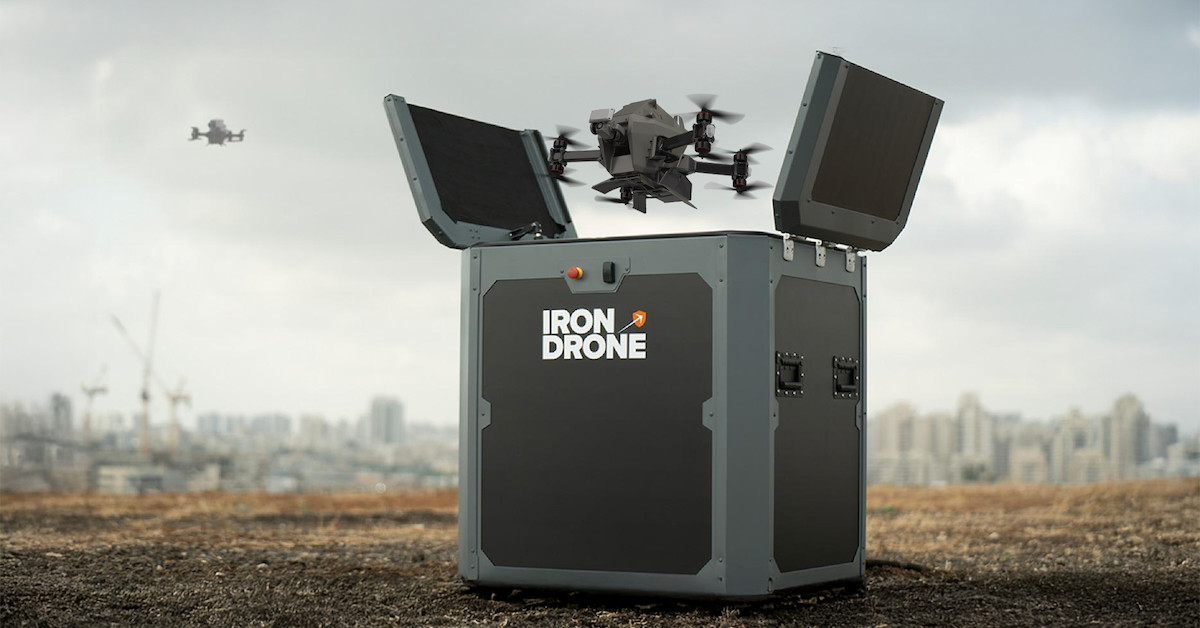
The Asian customer has ordered Iron Drone Raider, an autonomous interception system designed to stop hostile drones physically. An interceptor aircraft is launched towards the target and attempts capture, allowing the system to address threats that are less susceptible to radio-frequency disruption. Ondas has not identified the customer’s specific interceptor configuration or the supporting detection equipment included in the order.
Ondas’ earlier technical material describes radar supplying an initial target position to the Raider, which then pursues the aircraft with onboard sensing. A net captures the drone, and a parachute is intended to slow its descent. The system includes an operator interface and a launcher for interceptor aircraft. Those are documented characteristics of the product family, rather than a confirmed bill of materials for the Asian contract.
Physical capture and electronic mitigation have different constraints. An electronic measure may be ineffective against a drone that is not transmitting an accessible control signal, while an interceptor must physically reach the target within its own range, speed, endurance, and manoeuvring limits. Capturing a drone also introduces questions about where the combined aircraft will descend and whether the engagement can take place safely near people or sensitive installations.
Earlier government-led Raider pilots in Europe and Asia tested interception in contested navigation conditions and connections to third-party detection and command systems. Ondas disclosed those pilot programmes in August 2025. The November contracts are new business, but the company has not linked either buyer explicitly to the earlier trials. Performance reported from the demonstrations should therefore remain separate from acceptance results for equipment ordered this week.
An interceptor requires a usable target track, sufficient launch clearance, and an engagement path within the aircraft’s speed, range, and endurance. Net capture introduces a further safety decision over where the target may descend, while electronic methods depend on the operating spectrum and the legal authority to interfere with transmissions. Those constraints affect integration with local detection systems and the permissions held by the agency operating each counter-UAS capability.
The agreements sit within Ondas’ aerial security business, which also includes surveillance, sensing, and counter-UAS software. The group markets a wider portfolio spanning autonomous aircraft, ground systems, and other defence technologies. The two November orders identify specific Ranger and Raider products; any integrated architecture, additional sensors, or support services will depend on the undisclosed terms of the respective contracts.
Customer acceptance and deployment schedules have yet to be made public for either award. The European order gives police a portable detection and mitigation capability, while the Asian order specifies an autonomous physical interceptor. Further information on quantities, selected sensors, training, and installation requirements will determine the industrial scope beyond the confirmed multimillion-dollar contracts.