IN Brief:
- BAE Systems has detailed a $138 million US Navy contract for Virginia-class submarine propulsor work.
- The scope covers manufacturing assemblies, replacement parts, engineering and support through September 2032.
- The company reports meeting an annual output target of two propulsor sets; the wider submarine shipbuilding programme remains under capacity pressure.
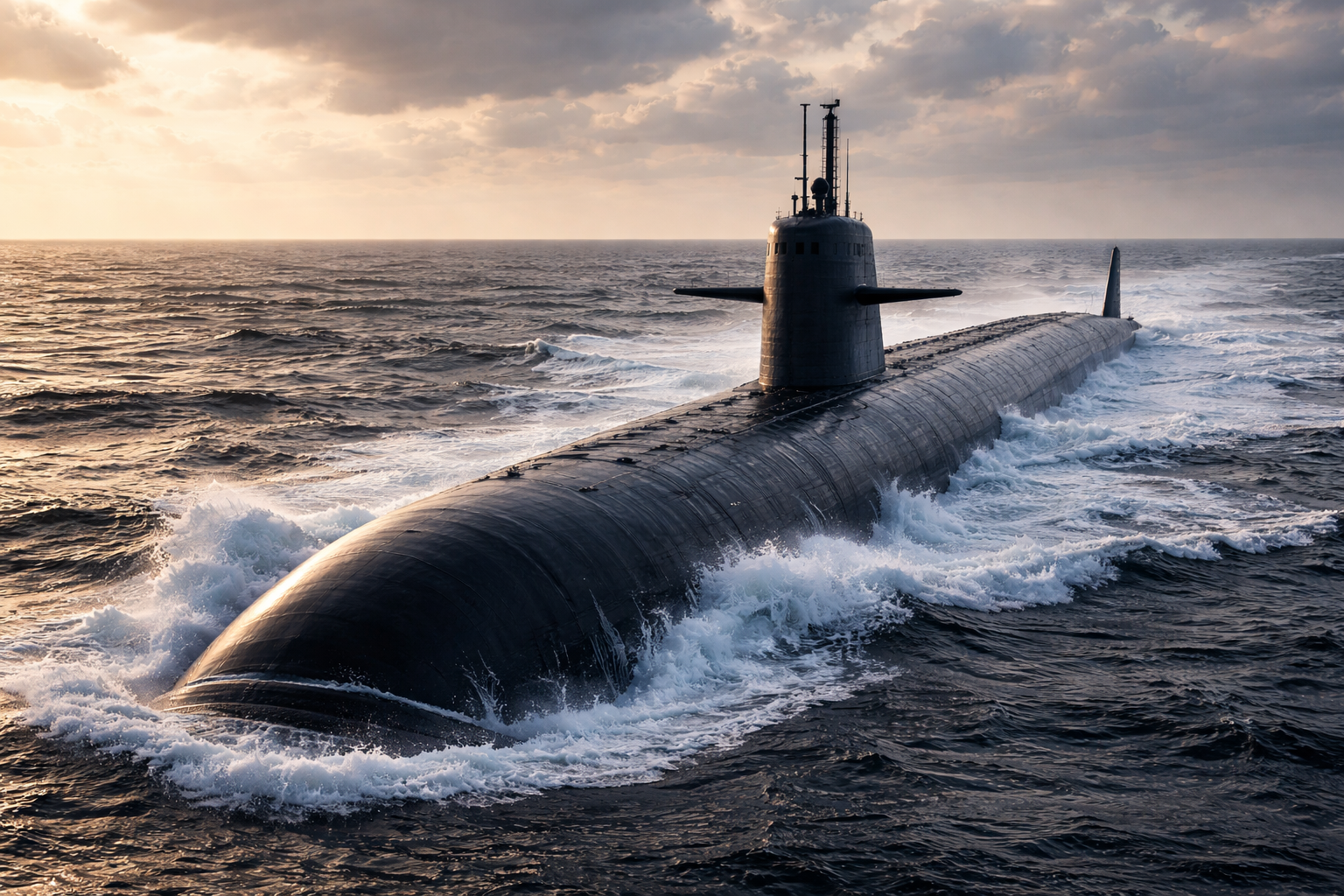
BAE Systems has detailed continued manufacturing work under a $138 million US Navy contract covering propulsors for Virginia-class nuclear-powered attack submarines. Its 12 November update confirms that the scope includes propulsor assemblies, engineering, replacement parts and associated support services, with an ordering period extending through September 2032.
The US federal award record dates the contract to 29 September 2026, with public notice issued on 20 October. BAE’s November development is its production update, not a new contract signing. The recorded value is $137,658,562, consistent with the manufacturer’s rounded $138 million figure, and the ordering period continues through September 2032.
BAE says it is meeting the Navy’s production goal of two Virginia-class propulsor sets annually. The company also states that it has supplied major propulsor assemblies for every submarine in the class to date. That established production role makes the agreement a continuing source of specialised engineering work rather than a first entry into the Virginia programme.
A submarine propulsor converts power delivered through the propulsion machinery into thrust through interaction with the surrounding water. Its mechanical form, surface condition, dimensional tolerances and relationship with the hull affect hydrodynamic performance. Defence customers also impose stringent assurance requirements because propulsion equipment has to operate reliably over extended service periods in conditions where access for repair may be limited.
BAE has not publicly described the geometry, detailed performance, acoustic characteristics, or specific production methods for the propulsor assemblies covered by this agreement. Its disclosed scope is manufacture of assemblies together with engineering services, replacement components, and support. The engineering requirements therefore can be discussed in general terms, but the contract does not establish a particular blade design or measured signature reduction.
BAE identifies Louisville, Kentucky; Jacksonville, Florida; and Minneapolis, Minnesota, as centres of manufacturing and engineering capability for the programme. Work across separate facilities requires common drawing revisions, materials traceability, inspected components, and configuration control so that supplied assemblies meet their assigned build and support requirements. The announcement does not give the division of work or production volumes at each location.
The company says it has invested in its facilities and production capabilities to support the Navy’s desired submarine manufacturing cadence. That target is frequently expressed as ‘1+2’: one Columbia-class ballistic missile submarine and two Virginia-class attack submarines each year. It is a wider shipbuilding objective rather than a claim that all three boats are currently being completed annually.
Propulsor output is only one part of submarine construction. Hull modules, nuclear propulsion equipment, electrical and combat systems, outfitting work, shipyard labour and test capacity must also be available in the proper sequence. Supplying two propulsor sets does not establish that two complete Virginia-class submarines can be delivered during the same year, since the other parts of the production chain may have different constraints.
Submarine construction faces capacity constraints beyond propulsor supply. A 2026 Government Accountability Office report recorded a Virginia-class building pace of approximately one submarine annually as of June 2025, compared with the Navy’s goal of two. The historical figure reflects material delays and shortages of experienced workers; it is not a measurement of the shipyards’ production rate in November 2026.
At component level, sustained annual output can improve workload planning because suppliers are able to schedule specialised machinery, maintain trained teams and procure long-lead materials against a continuing requirement. Those benefits depend on stable drawings, qualified sources and predictable acceptance schedules. A contract extending to 2032 offers a potential planning horizon, but the released material does not specify yearly order quantities across that period.
Replacement parts and engineering services broaden the programme beyond initial manufacture. Equipment supplied to naval vessels must remain supportable after the original production run, and a change to material, tooling or manufacturing process may require technical assessment before a replacement part is accepted. Maintaining approved documentation and inspection processes is therefore part of the continuing industrial commitment.
The contract covers assemblies, replacement parts, engineering, and support across an ordering period lasting until 2032. Its total value cannot be divided into a price per propulsor set because neither the government award record nor BAE’s announcement provides the number and value of individual orders or the allocation among services and hardware. This also prevents any reliable inference about the cost of a complete submarine propulsion system.
The industrial base must also serve maintenance and future fleet requirements. Shortages of parts or engineering capacity can affect vessels already in service, while production expansion places competing demands on specialist suppliers. The Navy has identified workforce development, supply chain capacity and advanced manufacturing investment as elements of its wider effort to accelerate shipbuilding and improve readiness.
BAE reports that it has reached the Navy’s target of two Virginia-class propulsor sets annually. Maintaining that output depends on the availability of qualified materials, skilled workers, production equipment, and acceptance capacity, as well as continuing demand from the submarine programme. Progress at a component supplier does not, on its own, resolve the separate manufacturing constraints faced by the shipyards.
The stated contract period runs through September 2032, with individual ordering milestones and propulsor configuration details undisclosed. The company’s current production figure is two sets annually, while the Navy’s wider ambition of one Columbia-class and two Virginia-class submarines each year requires coordinated output across many other major equipment suppliers and shipbuilding operations.