IN Brief:
- India received DSC A21 at Naval Dockyard Mumbai on 20 November 2026, the second vessel in a five-craft programme.
- Titagarh Rail Systems built the catamaran craft to Indian Register of Shipping naval rules, with hydrodynamic design work by NSTL.
- The new vessel will support diving, underwater inspection, salvage assistance, and coastal operations once brought into service.
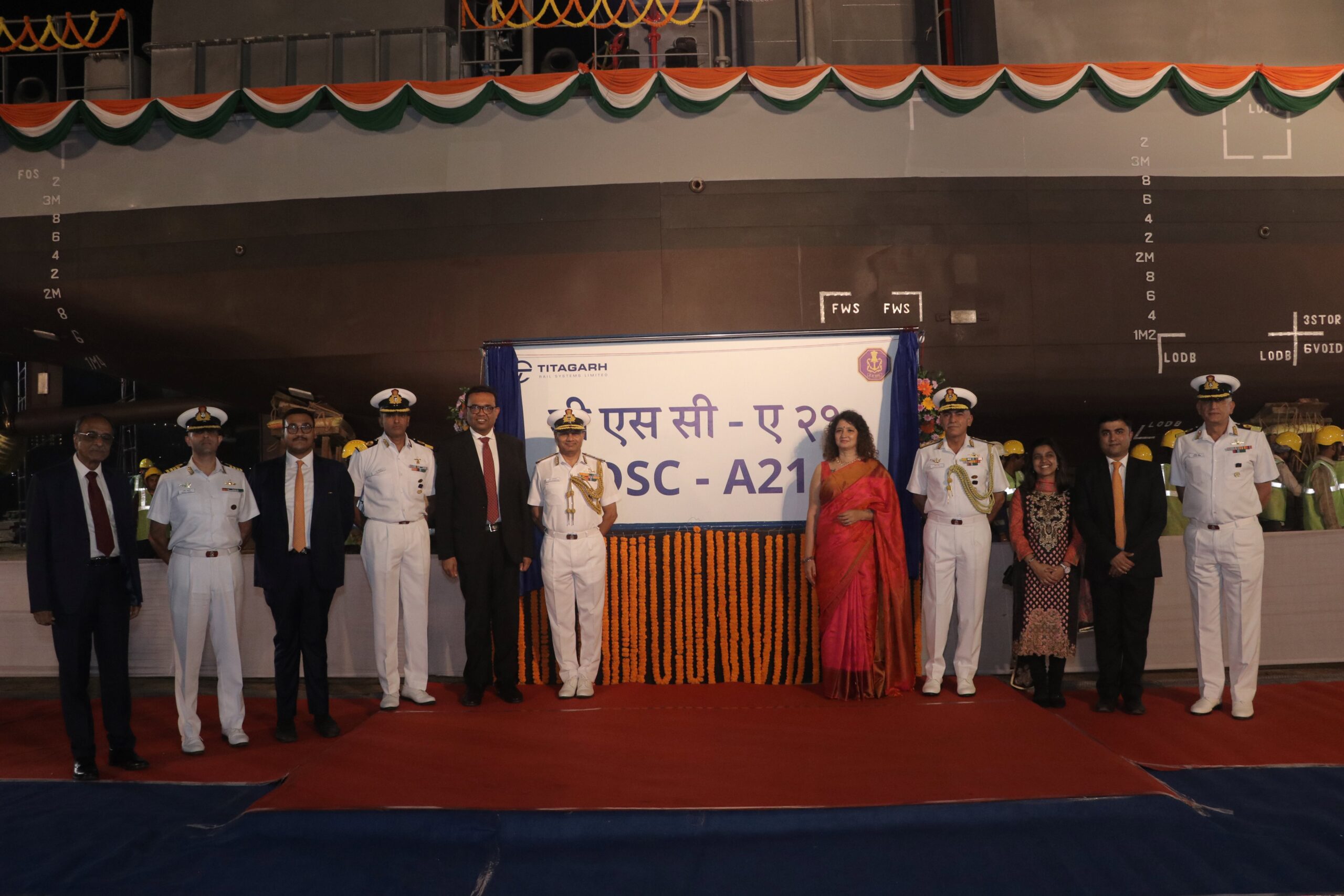
India’s Ministry of Defence received DSC A21, a new diving support craft constructed by Titagarh Rail Systems Limited, at Naval Dockyard Mumbai on 20 November. Built as Yard 326, the vessel is the second of five craft in a programme intended to strengthen the Indian Navy’s support for underwater engineering and coastal operations. Delivery represents a shipbuilding and acceptance milestone; the ministry has not identified a commissioning date for A21 or claimed that it has already entered operational service.
The Ministry of Defence signed the five-vessel contract with Titagarh Rail Systems Limited on 12 February 2021. The Kolkata manufacturer’s role covers construction of specialist harbour and coastal support craft, with naval classification and hydrodynamic design expertise supplied by other Indian organisations. Each delivery adds a hull to the programme, although the build and acceptance timetable for the remaining vessels has not been published in the November release. The programme therefore tests the continuity of smaller specialist shipbuilding as well as construction of larger combatants.
A21 is a catamaran approximately 30 metres long, with a displacement of about 300 tonnes, according to the ministry’s October 2023 launch record. Its two separated hulls support a broad working deck intended to accommodate diving equipment and personnel. The ministry identifies stability, additional deck area, and seakeeping as design advantages, which are especially relevant when teams must work from a vessel moving slowly in coastal waters. It has not supplied a detailed list of installed equipment, endurance figures, or specific operating limits for the delivered craft.
The vessel was constructed to relevant naval rules and regulations of the Indian Register of Shipping. The Naval Science and Technological Laboratory at Visakhapatnam undertook hydrodynamic analysis and model testing during the design phase. Such work addresses how a hull behaves in water under defined loading and operating conditions, including resistance and motions. For a twin-hull support craft, the interaction between the hulls and the vessel’s working stability is particularly important. The ministry does not provide the resulting test figures, so comparative performance claims would be premature.
Diving support, underwater inspection, salvage assistance, and coastal deployment are the vessel’s stated tasks. The ministry says A21 carries specialised diving equipment but does not identify the individual systems or their rated capacities. Underwater work may include inspections of hull fittings, propellers, intakes, moorings, and submerged harbour structures. Those tasks require controlled embarkation and recovery of divers and safe management of equipment on deck; no particular chamber, crane, or remotely operated vehicle installation should be inferred from the published description.
When ships need inspection after damage, fouling, or an engineering defect, access below the waterline becomes part of fleet maintenance rather than a separate combat operation. Harbour structures likewise require underwater assessment before some repairs can begin. A dedicated support craft provides deck space and a working platform for these activities, with a smaller logistical footprint than assigning a larger naval vessel. The ministry has not announced a home port or operational unit for A21, and its formal entry into service remains a separate milestone from delivery.
A21 was launched onto the Hooghly River at Titagarh on 30 October 2023, more than three years before this handover. The first craft, DSC A20, was delivered in September 2025 and commissioned at Kochi on 16 December that year. These dates distinguish launch, delivery, and commissioning, which represent different steps in outfitting, testing, acceptance, and entry into naval service. The second vessel’s delivery advances the five-craft programme but does not establish a commissioning date for A21 or a completion schedule for the remaining three hulls.
Building the second vessel under the same contract also requires repeatable hull fabrication, machinery installation, electrical integration, outfitting, and testing. A common design can reduce some engineering work between hulls, but each craft still needs inspection and acceptance against the applicable naval rules. The Indian Register of Shipping provides the regulatory and survey framework, while the Naval Science and Technological Laboratory undertook model testing during design. No revised delivery timetable has been issued for the three remaining craft, and it cannot be inferred from A21’s handover interval.
The programme identifies three separate industrial functions: Titagarh constructs the craft, the Indian Register of Shipping supplies the naval rules framework, and NSTL conducted hydrodynamic analysis and model tests. Their participation provides a domestic chain of design assessment, vessel construction, and compliance work. That does not establish that every piece of machinery or diving equipment is locally made, because the ministry has not published the complete bill of materials or supplier list. For long-term support, the navy will also need maintenance arrangements and spare parts for the delivered craft.
Once A21 is commissioned, its diving support and inspection role will complement the first craft, A20, already brought into naval service at Kochi. The support fleet’s practical capacity depends on usable equipment, trained personnel, maintenance availability, and where the craft are assigned, none of which is quantified in the delivery notice. Further verifiable milestones will be the vessel’s commissioning and the launch, acceptance, or delivery of the three other craft under the February 2021 contract.