IN Brief:
- Solus Power demonstrated its next-generation portable energy system at Chivenor.
- The programme involves UK Defence Innovation and technical collaboration with Dstl.
- A separate UKDI competition has allocated £2.45m for innovative power development.
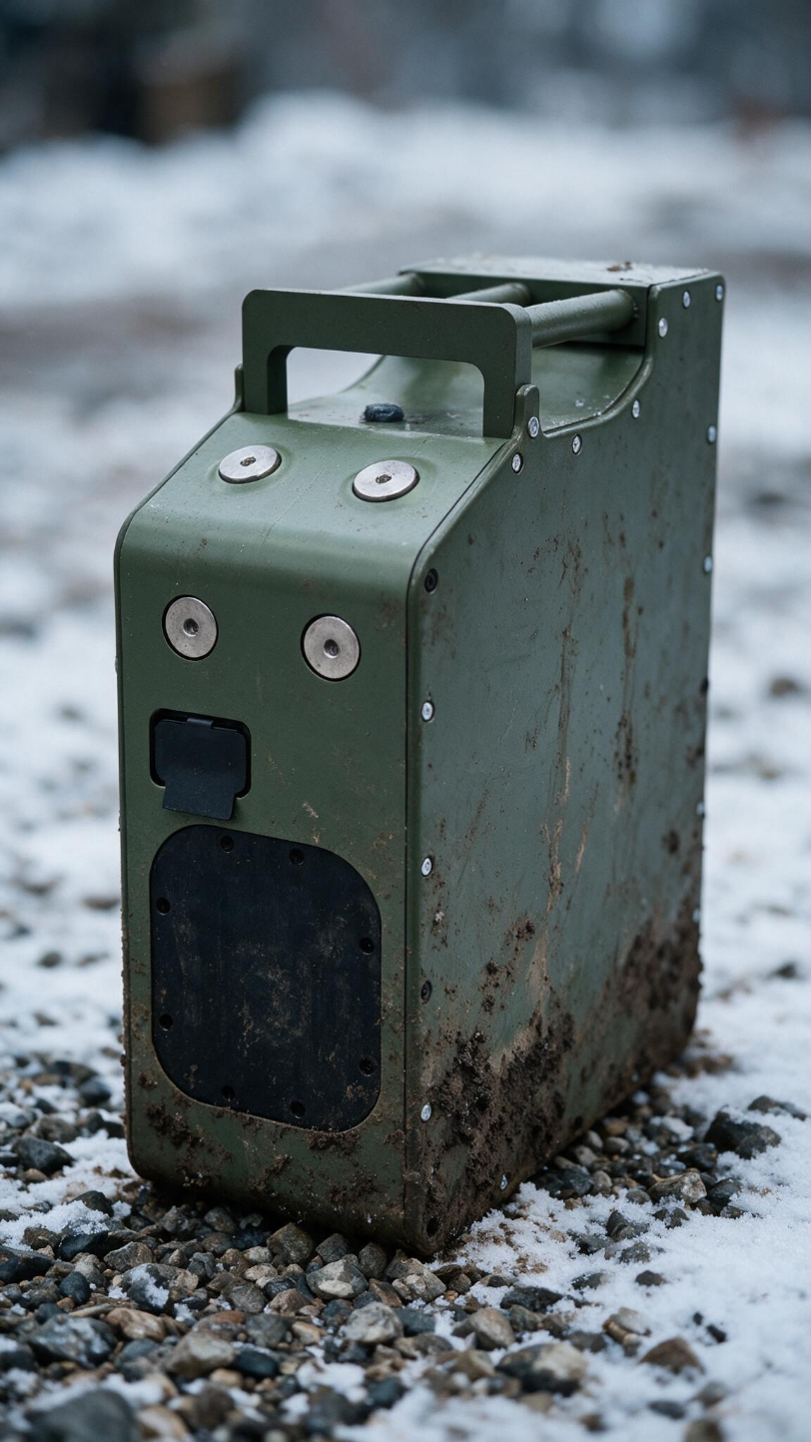
British battery technology developer Solus Power has demonstrated its next-generation Kratos portable energy system to Ministry of Defence (MOD) stakeholders at Royal Marines Base Chivenor, with further field evaluation planned in Norway. The company confirmed the development on 24 November.
Kratos is a ruggedised, modular energy storage product for applications where permanent electrical infrastructure cannot be relied upon. The latest version has been developed through an MOD-supported programme involving UK Defence Innovation (UKDI), with technical collaboration from the Defence Science and Technology Laboratory (Dstl) and support from the UK Commando Force.
The demonstration follows a development contract secured through the Defence and Security Accelerator (DASA) in 2025. The original project was financed through the Small Business Research Initiative, with Dstl providing technical advice and the Royal Navy’s Future Commando Force supporting the work. The original contract was intended to run from November 2025 to November 2026, placing the latest demonstration near the end of the planned development period.
Stas Leonidou, Founder and CEO of Solus Power, said: “The demonstration at Chivenor reflects the progress of our work with the MoD and provides a valuable foundation for the next stage of field evaluation.”
Established in 2020 and headquartered in London, Solus Power has developed portable lithium-ion battery products for both defence and civilian markets. Its earlier Kratos equipment was described as an off-grid charging and storage solution, while the company’s wider portfolio addresses the distribution of mobile electrical power. The business received approval from UK Defence and Security Exports to demonstrate its products to international delegations in 2025, before the DASA-funded project was announced.
A portable battery product combines an energy storage medium with electrical protection, charging electronics, an enclosure, and the interfaces required to connect equipment. Those elements have to be assessed as a complete product. Mechanical damage, moisture ingress, electrical faults, and temperature exposure are among the considerations relevant to the safety and durability of portable lithium-ion equipment in demanding industrial environments.
Product development also involves reconciling the electrical requirements of the intended equipment with the constraints of a portable enclosure. The manufacturer’s latest material does not specify the new unit’s rated energy capacity, mass, charging characteristics, or measured performance from the Chivenor demonstration. These omissions prevent comparison with other commercial battery products on an equivalent specification basis.
The evaluation is part of a broader government interest in energy technology. The MOD published its Defence Operational Energy Strategy in December 2023, setting out a framework for assessing the implications of the energy transition across defence. The strategy encompasses research into alternative energy technologies and the industrial relationships required to evaluate them.
On 15 October 2026, UKDI launched a separate Tactical Power Challenge on behalf of the British Army, supported by Dstl. Its documentation was updated on 17 November. The competition includes a technology development strand with £2.45m of funding, excluding VAT, intended to help advance proposals from technology readiness level four towards level six.
Those readiness levels distinguish laboratory validation from demonstration of a representative technology in a relevant environment. The progression is a useful reference for understanding the type of evidence government innovation programmes seek, rather than a rating assigned to Kratos by the MOD. The latter’s involvement in the separate competition has not been established.
Lieutenant Colonel Jake Calvert of the Royal Marines said: “The demonstration at Chivenor provides an opportunity to assess the technology and inform further evaluation.”
The dual-use scope of the company’s work introduces commercial opportunities beyond government procurement. Temporary electricity supply is also required in infrastructure maintenance, emergency response, and industrial locations without a permanent connection. Commercial applications would have their own requirements for electrical safety, certification, warranties, and servicing, which cannot be inferred from participation in a defence research programme alone.
Moving from a prototype to a repeatable product involves manufacturing documentation, consistent component sourcing, and appropriate inspection procedures. These activities establish whether the equipment produced for subsequent customers meets the design requirements demonstrated during development. Commercial orders and production capacity would need to be established separately from the current research contract.
Solus Power has confirmed that the next evaluation phase will take place in Norway, but has not released a timetable for the work or confirmed a subsequent manufacturing contract. Results from the additional trials will provide further evidence for the developer and its government partners as they assess the technology beyond the original funded development phase.