IN Brief:
- DRDO’s Defence Research & Development Laboratory has completed a 1,200-second full-scale actively cooled scramjet combustor test in Hyderabad.
- The test used indigenous liquid hydrocarbon endothermic fuel, high-temperature thermal barrier coating, and advanced manufacturing processes.
- The next industrial challenge is repeatable production of flight-worthy propulsion hardware, thermal protection, and qualified supplier capacity.
India’s Defence Research & Development Laboratory has completed a long-duration ground test of a full-scale actively cooled scramjet combustor, achieving a run-time of more than 1,200 seconds at the Scramjet Connect Pipe Test facility in Hyderabad.
The latest run builds on a January test that exceeded 700 seconds, extending India’s work on sustained high-speed air-breathing propulsion. For hypersonic cruise missile development, endurance is a central engineering threshold. A scramjet combustor must hold stable combustion while air flows through the engine at supersonic speed, with surrounding structures exposed to severe thermal and mechanical loading.
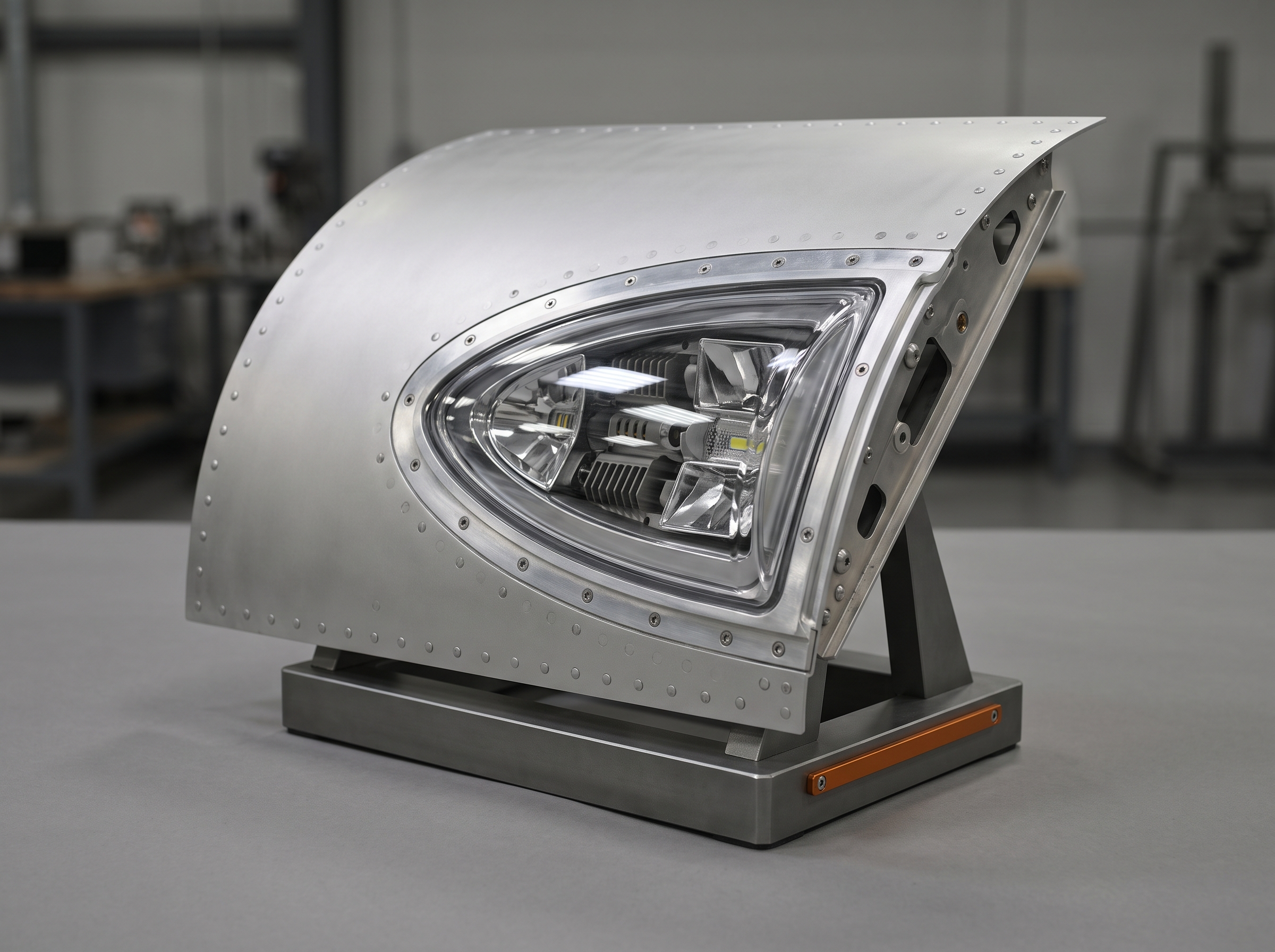
Designed and developed by DRDL, the combustor was realised with industry partners and tested using an indigenous liquid hydrocarbon endothermic fuel. The configuration also incorporated a high-temperature thermal barrier coating and advanced manufacturing processes, placing the test beyond a laboratory ignition milestone and closer to the physical demands of a flight-worthy propulsion system.
Hypersonic cruise missiles place a distinctive burden on the supply chain. Unlike ballistic systems, they require an air-breathing engine that can sustain propulsion through extreme temperature gradients while maintaining stable fuel-air mixing, combustion, and structural integrity. The fuel system, inlet, combustor geometry, coatings, and cooling channels form a single engineering problem rather than a set of detachable subsystems.
Active cooling is central to that architecture. At hypersonic speeds, thermal protection cannot rely only on passive insulation or high-temperature materials. The engine structure has to be protected while fuel behaviour remains predictable inside the combustion process, creating a close link between fuel chemistry, flow management, material selection, and manufacturing tolerances.
For manufacturers, the test points toward a phase in which process discipline becomes as important as aerodynamic design. Scramjet hardware requires precision-machined geometries, specialist joining, coated internal surfaces, inspection methods capable of detecting fine defects, and repeatable production of parts that cannot deform under flight-like heating. Components must also survive test cycles that expose weak points in welds, coatings, cooling passages, and interfaces.
India’s progress sits within a broader international acceleration around hypersonic production and test capacity. The US and Japan are dividing industrial responsibilities on counter-hypersonic interceptors through the Glide Phase Interceptor programme, while US test infrastructure is expanding through programmes such as Rocket Lab’s HASTE award. India’s work is on the offensive side of the same industrial contest, where the pace of ground testing, redesign, materials qualification, and flight trial preparation will shape how quickly demonstrators become deployable systems.
The next phase will be more demanding than a longer ground run alone. Flight hardware must tolerate vibration, acceleration, aerodynamic heating, inlet distortion, fuel-flow variation, and transitions between different flight regimes. Each of those conditions has to be reflected in qualification planning, with test data feeding material selection, structural modelling, cooling-channel design, and supplier specifications.
A wider industrial base will be needed as the programme advances. Precision machining companies, coating specialists, high-temperature materials suppliers, fuel-system manufacturers, instrumentation providers, test-rig operators, and non-destructive inspection specialists all sit behind a mature hypersonic propulsion chain. The combustor may be the visible component, but the production system behind it has to support rapid iteration without compromising safety or consistency.
For India, sovereign control over these industrial layers is strategically valuable. Hypersonic capability depends on laboratories, production partners, test facilities, and specialist suppliers that can absorb failures, repeat trials, and refine hardware without relying on fragile overseas access. The use of indigenous fuel and domestic industrial participation strengthens that position, although it also raises the bar for domestic quality control and volume production.
Long-duration testing also gives engineers a richer evidence base for future design decisions. A short burn can confirm ignition and initial stability, while an extended run exposes thermal soak, coating behaviour, cooling efficiency, structural fatigue, instrumentation drift, and component interactions over time. Each additional test of this type should produce data that moves the programme closer to a manufacturable engine rather than a single validated article.
The programme’s next industrial hurdle is repeatability. A successful 1,200-second test confirms a major step in endurance, but production credibility will depend on multiple runs, controlled variation between test articles, stable supplier performance, and a clear route from ground-test hardware to flight-qualified propulsion units. India has now extended the duration of its scramjet testing. The harder work is turning that endurance into a qualified propulsion chain that can be built, inspected, and sustained at defence scale.