
Features
-

This week’s UK Defence Investment Plan puts speed under scrutiny. As ministers commit £298bn over four years, SMEs and additive manufacturers say procurement reform will decide whether drone, autonomy, and munitions funding becomes usable capability.
-

Defence production moved deeper into Hannover Messe’s industrial technology mainstream. The fair’s Defense Production Area reflected a wider shift toward manufacturing readiness, secure digital infrastructure, resilient supply chains, and the ability to accelerate national defence capacity at shrinking notice.
-

GPS interference is now a systemic risk to global operations. In this IN Defence perspective, Neil Cawse, CEO of Geotab, argues that businesses must treat satellite positioning as a contested signal and build resilience through detection, redundancy, and sensor fusion.
-

Aerospace electronics face tighter performance, lifecycle, and radiation resilience demands. Ross Turnbull of Swindon Silicon Systems argues ASICs give aircraft and spacecraft designers tighter control over latency, obsolescence, and hardening.
-
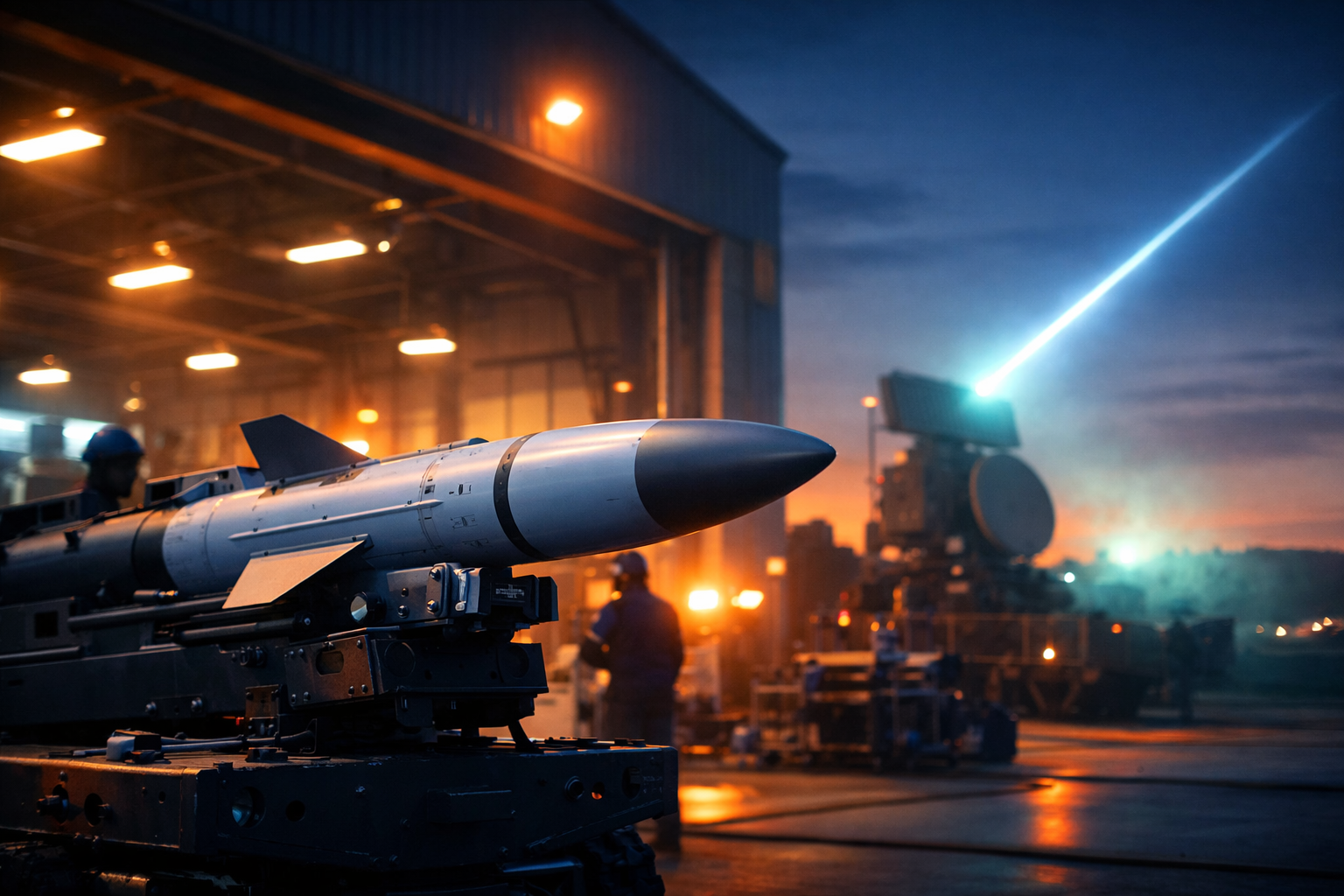
Britain is retooling air defence for cheaper, faster interception now. Skyhammer and DragonFire point to a wider industrial shift, where the real challenge is building the factories, supply chains, and integration capacity needed to sustain layered air defence at scale.
-

March exposed where defence ambition still outruns industrial reality. Missiles, helicopters, drones, and military space all pointed to the same contest: who can build credible capacity, and who is still mistaking procurement activity for industrial depth.
-

Belrise has bought a qualified path into British aerospace machining. Its Chester Hall acquisition adds approved capability in a supply chain where certification, traceability, and customer trust define value.
-

The first combat use of PrSM changes the programme’s context. What had been a modernisation effort centred on range, launcher compatibility, and test data has now entered operations, where production depth and force design matter at least as much as missile performance.
-

Aerospace is governed by complicated global supply chains, dual-use components, and evolving export rules. Simran Sethi, Product Manager, Global Trade Intelligence at Descartes explains the differences between International Traffic in Arms Regulations (ITAR) and Export Administration Regulations (EAR) and the five most common blind spots aerospace organisations confront.
-

Military mixed reality is finally being forced into engineering discipline. After years of oversized ambition, the post-IVAS market is converging on smaller displays, body-worn compute, tighter power management, and a more modular architecture built for soldiers rather than slide decks.