IN Brief:
- First Breach says new loading and inspection equipment has increased ammunition manufacturing capacity by approximately 175%.
- The operational equipment gives the Hagerstown site stated capacity of up to 20 million rounds per month.
- The company manufactures brass cups, cases, projectiles, lead components, and finished ammunition within the same Maryland operation.
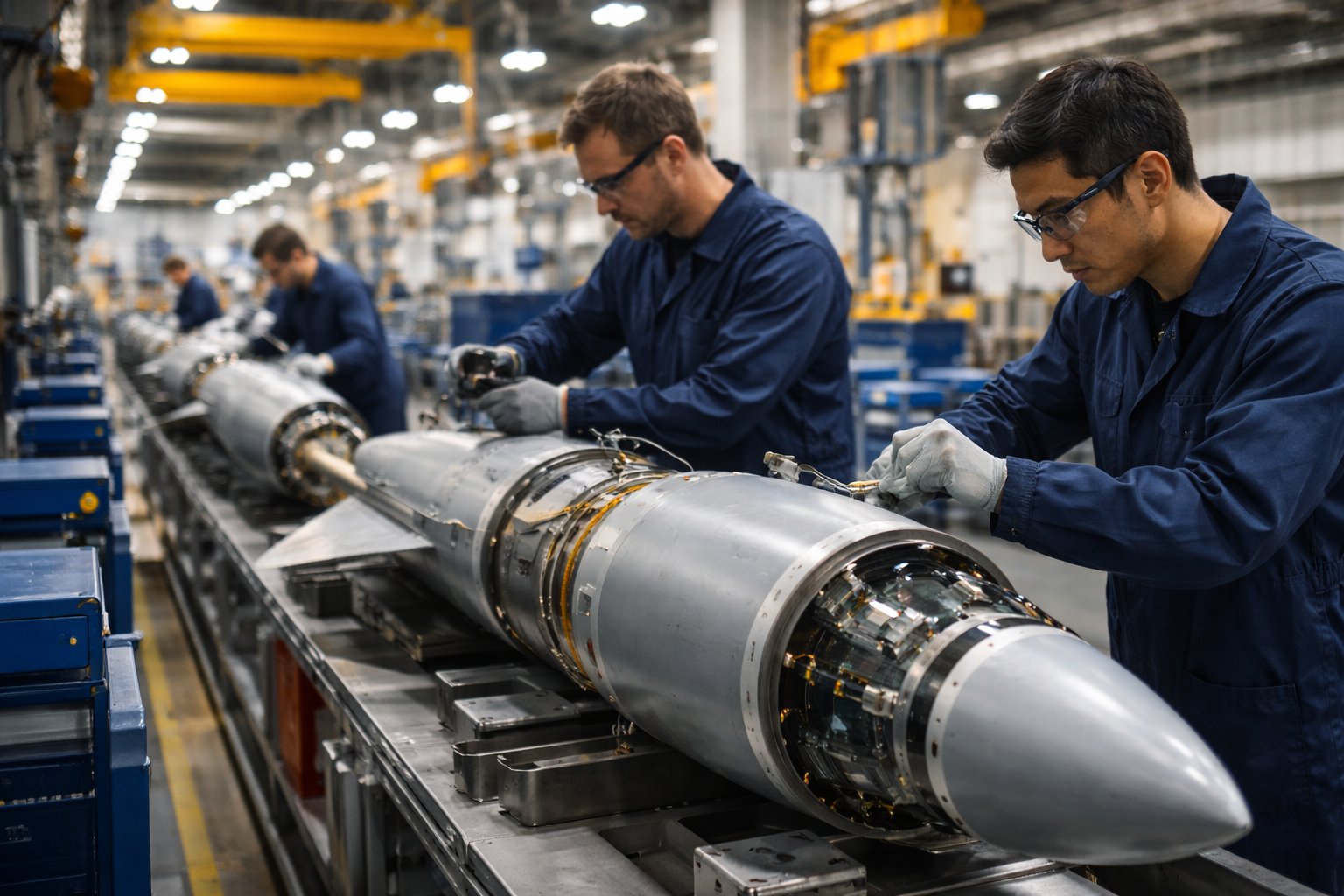
First Breach has installed and commissioned new ammunition-loading and inspection equipment at its Hagerstown, Maryland, manufacturing operation, increasing the company’s stated production capacity by approximately 175%. First Breach says the additional machinery gives the site capacity to manufacture up to 20 million rounds per month as it moves towards a 24-hour production schedule.
The equipment is already operational, separating the announcement from a capital-investment plan that may or may not reach production. First Breach has not disclosed the purchase value of the machinery, its current monthly production rate, or how much of the new maximum capacity is presently being used.
That distinction is important because installed capacity and actual output are different measures. A stated capacity of 20 million rounds per month describes what the manufacturing operation is intended to support under the appropriate conditions; it does not establish that 20 million rounds are already being produced, sold, or delivered each month.
The Hagerstown business is vertically integrated across several stages of small-calibre ammunition manufacture. First Breach says it produces brass cups, cartridge cases, projectiles, lead cores, lead wire, and completed ammunition in-house, giving the new loading equipment a direct relationship with several upstream processes operating at the same site.
That structure can reduce reliance on outside suppliers for some intermediate components, but it also means production has to remain balanced internally. Adding loading capacity provides little advantage if case manufacture, projectile output, lead-component processing, material supply, packaging, or inspection cannot maintain the same rate. The effective throughput of the factory remains determined by whichever production stage becomes constrained first.
Installing inspection equipment alongside loading machinery addresses one part of that problem. A higher loading rate without corresponding quality-control capacity can create a queue of completed ammunition awaiting inspection, while pressure to clear that queue can increase rework or quality risk if processes are not scaled together.
First Breach’s quality system is certified to ISO 9001:2015, which the company obtained earlier in 2026. Certification does not establish the ballistic performance of individual products, but it provides a formal quality-management framework covering controlled processes, documentation, corrective action, and continual improvement across the manufacturing organisation.
Jeffrey Low, chief executive officer of First Breach, said the new equipment provides the scale needed to respond to demand in the ammunition market. The company has not identified a specific defence customer or military contract associated with the additional capacity, so the expansion should not be attributed to a particular procurement programme without further evidence.
The Hagerstown operation occupies about 80,000 square feet in a former Fairchild aircraft manufacturing complex, with contiguous space available for expansion. First Breach is also developing uncrewed-aircraft activities at the site, although ammunition and UAS production remain distinct product lines rather than evidence that the same machinery is being used for both.
Moving towards 24-hour ammunition production introduces a second set of constraints beyond equipment installation. Additional shifts require trained operators, supervisors, quality personnel, maintenance coverage, material handling, packaging, warehouse capacity, and predictable deliveries of raw materials. Machinery running for a greater proportion of each day also leaves less idle time for preventative maintenance and changeovers.
Vertical integration can make some of those dependencies easier to control, although it transfers more of the balancing problem inside the factory. Producing a greater proportion of the cartridge internally means First Breach has to align its own component-manufacturing rates rather than simply ordering more finished cases or projectiles from an external supplier.
The 175% figure should also be read as the company’s stated increase in production capacity rather than as an independent measure of realised output. First Breach has not disclosed the baseline from which the percentage was calculated, so deriving a precise previous monthly capacity from the announcement would add more certainty than the release supports.
The next useful evidence will come from sustained operating data, customer awards, delivery volumes, and whether the plant can maintain quality while its loading equipment runs across additional shifts. Nominal production capacity is valuable because it creates room to respond to orders, but ammunition only enters the supply chain after upstream components, loading, inspection, packaging, and acceptance have all moved through the factory successfully.
For First Breach, the equipment removes one immediate constraint from that sequence and gives Hagerstown a substantially higher stated ceiling. Whether the 175% capacity increase becomes a comparable increase in delivered ammunition will depend on the less visible parts of the plant keeping pace.