
IN Brief:
- The German Navy completed two Naval LORA firings under its Operational Experimentation programme.
- IAI’s maritime configuration combines the LORA missile, naval launcher, and command-and-control equipment for precision strike.
- The firings provide operational test evidence but do not amount to a disclosed German procurement decision.
Israel Aerospace Industries has completed a dual operational firing trial of its Naval LORA ballistic weapon system with the German Navy as part of the service’s Operational Experimentation programme.
Two firing scenarios were conducted using an operational German vessel carrying the command equipment and launcher. IAI said both missiles followed their planned trajectories, navigated to their targets, and met the objectives established for the trial.
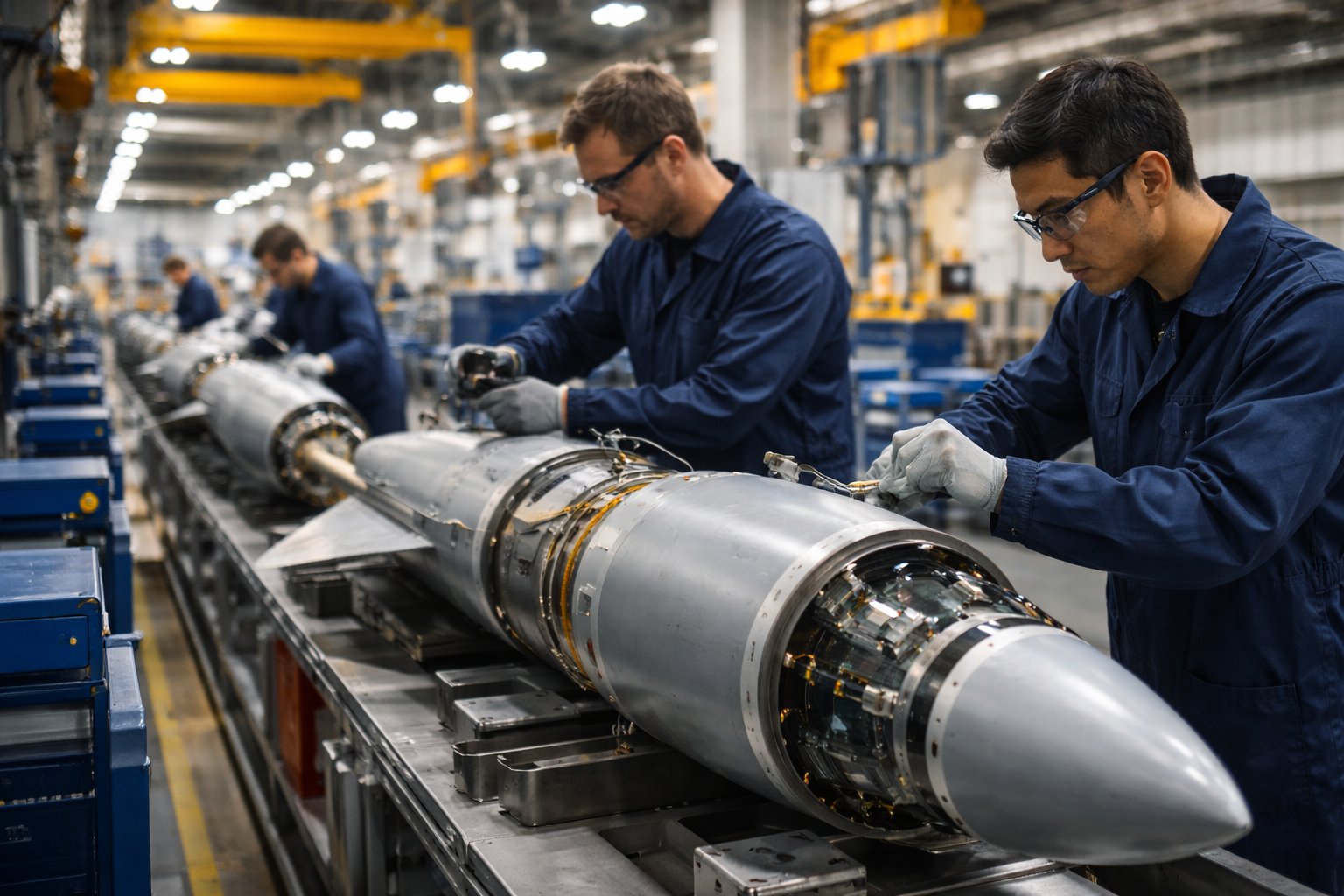
The Naval LORA configuration combines the LORA missile with a dedicated maritime launcher and command-and-control equipment. IAI lists the weapon at about 1,600kg and 5.2m long, with a stated range of 90km to 430km and GPS/inertial guidance. The company gives a circular error probable of 10 metres across the stated range.
LORA uses a single-stage solid rocket motor and is stored in a sealed canister, reducing the amount of routine handling required before launch. IAI says the system can be prepared for firing within minutes and is designed to reach a known target in less than ten minutes after a launch decision.
Integrating that capability at sea involves considerably more than securing a launcher to a deck. A precision-strike weapon has to connect with targeting data, mission planning, command systems, navigation information, safety architecture, and the wider combat system while remaining within a vessel’s weight, space, power, and survivability margins.
The German Navy conducted the firings through OPEX, an experimentation framework intended to evaluate new operational approaches and technologies under realistic conditions. The initiative feeds into the service’s Marine 2035 and Beyond planning and gives operational, acquisition, and technical organisations a route to examine equipment before deciding whether it warrants a conventional procurement programme.
The Naval LORA activity should therefore be distinguished from a purchase decision. Neither the IAI announcement nor the public material associated with this trial identifies an acquisition quantity, an in-service date, or a German ship class selected to carry the weapon. The firing provides test evidence; any fleet introduction would require a separate acquisition step.
That distinction is particularly important for a ship-launched ballistic weapon because the engineering consequences extend well beyond missile performance. A permanent installation would need to address launcher positioning, exhaust management, structural loads, command interfaces, targeting arrangements, communications, maintenance, magazine policy, crew procedures, and compatibility with other weapons already carried by the ship.
Germany’s longer-term naval planning includes a requirement to operate across the North Atlantic, North Sea, and Baltic while increasing the range and resilience of maritime effects. Long-range precision strike is one route to expanding the influence of individual ships, although fitting such a weapon has to be balanced against defensive missiles, sensors, aviation facilities, and other systems competing for finite space and weight.
Live firing produces evidence that modelling and shore testing cannot provide on their own. Handling procedures, command sequences, equipment behaviour, platform motion, communications, and the interaction between launcher and ship can all expose integration problems once a system is placed in an operational environment.
For IAI, the German trial provides a European naval reference for a weapon derived from the wider LORA family. Previous LORA firing activity has demonstrated the missile from maritime test arrangements, while the OPEX exercise places the dedicated naval configuration inside a German operational experimentation cycle.
The test also gives the German Navy a basis for assessing how a land-origin precision-strike technology could be incorporated into a maritime force structure. Questions around procurement scale, launcher architecture, targeting, and compatibility with NATO strike systems remain open because they were not part of the disclosed trial result.
OPEX is designed to expose those questions before a conventional programme hardens around a specification. The two successful firings have established that Naval LORA can be launched and operated in the German test configuration; the next significant milestone would be a funded acquisition or further integration work identifying how the weapon might be carried by an operational class.

