IN Brief:
- The Bundeswehr order follows a successful capability demonstration and moves the system into series production.
- HENSOLDT will integrate DaCAS software, ADLER III, video, communications, sensors, power, and targeting equipment.
- The carrying system was engineered around weight distribution, cable routing, and field ergonomics.
HENSOLDT has received a German series-production contract for an integrated dismounted joint-fires package combining air-support software, artillery command systems, sensors, communications, targeting equipment, power, and soldier-carried networking hardware.
The Federal Office of Bundeswehr Equipment, Information Technology and In-Service Support awarded the order after an earlier contract demonstrated the system’s capabilities. HENSOLDT will act as prime contractor, handling equipment procurement, system integration, and development of the software used for digitally aided close air support.
The equipment is intended for Joint Terminal Attack Controllers and Joint Forward Observers. Those teams request and direct close air support for ground forces while coordinating indirect artillery fire, placing several command, sensor, and communications functions into a package that must remain usable on foot.
Digital links connect aircraft and artillery
The Digitally Aided Close Air Support software provides the connection between a controller on the ground and supporting aircraft. A video downlink allows imagery from the aircraft to be transmitted to the joint-fires team, giving operators a shared view while retaining human control over the engagement process.
Ground-based indirect fire is incorporated through full integration of the ADLER III command, control, and fire-support system. Combining air and artillery coordination within one fielded architecture is intended to reduce reliance on disconnected equipment and create a more consistent digital route for requesting effects.
The package also includes communications equipment, electro-optical sensors for target measurement, laser target designators, intelligent power supplies, and networking components. Each part depends on the others: targeting data has little operational value if it cannot be transferred securely, while software and sensors become unusable when batteries, interfaces, or cabling fail in the field.
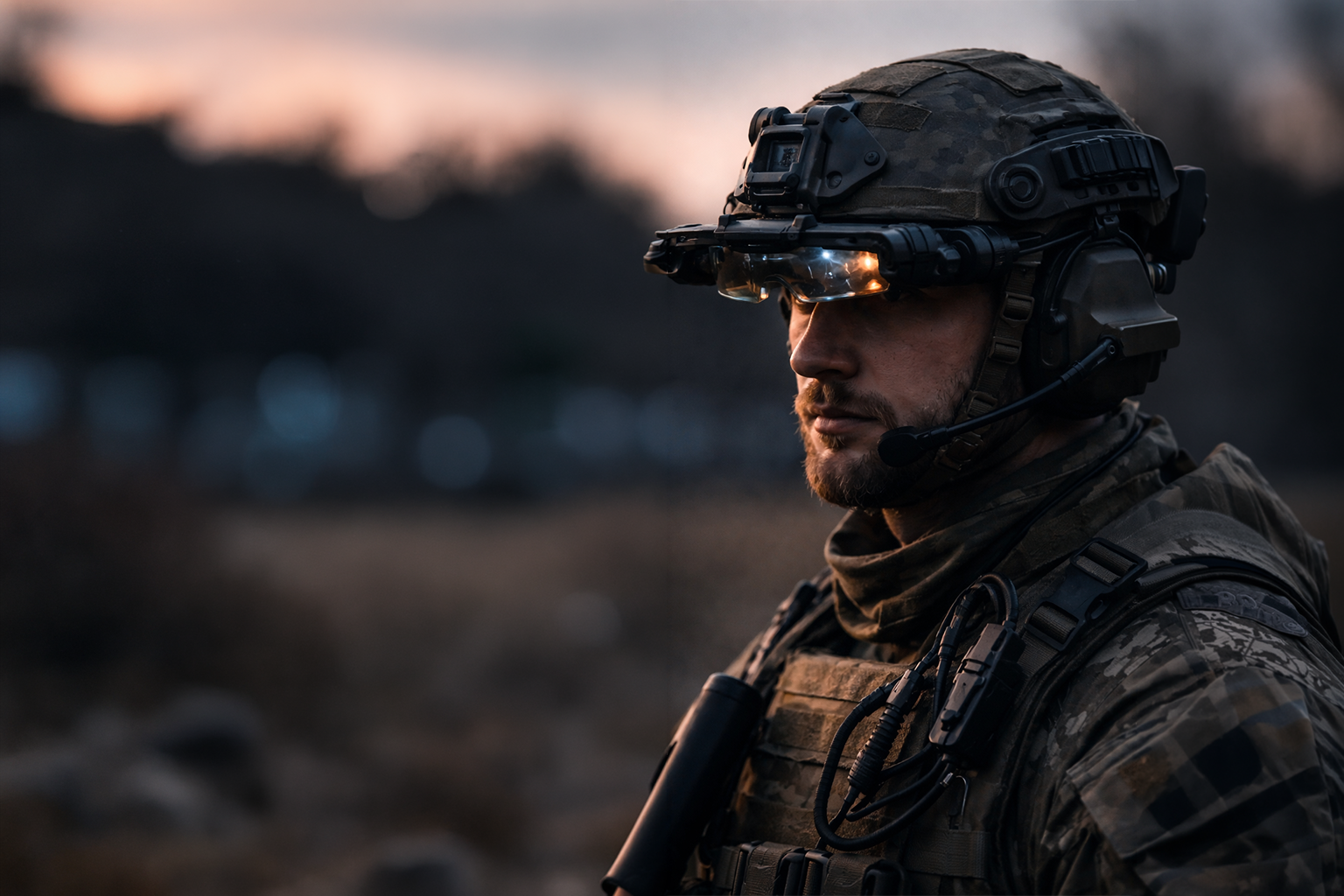
HENSOLDT was also responsible for the field-ready design of the carrying system. Weight distribution, cable routing, and component positioning formed part of the engineering work, recognising that integration for a dismounted user is a physical problem as well as a software task.
A technically capable system can still fail operationally if its load is badly balanced, connectors are exposed, or cables obstruct movement. Human factors therefore sit alongside communications performance, processing, and sensor accuracy in the production configuration.
The company has not disclosed the contract value, number of team sets, delivery timetable, or the suppliers responsible for individual components. The transition from demonstration to a series order nevertheless confirms that the programme has moved beyond an isolated prototype.
The absence of quantity and schedule data also means that the industrial scale of the order cannot yet be measured. Production planning will depend on the number of complete team sets, the rate at which equipment is delivered, and how much of the package is sourced from established suppliers rather than newly qualified components.
Series production raises the configuration burden
Serial delivery introduces requirements that are less visible during demonstrations. Every team set must be built to a controlled baseline, software versions must remain compatible with aircraft and artillery interfaces, and replacement equipment must match systems already issued.
Training, technical documentation, cyber assurance, and update management become continuing programme responsibilities rather than tasks attached to a single test event. Fielded software will need to accommodate changes in radios, aircraft sensors, data formats, and artillery systems without destabilising the certified configuration.
Modular hardware and software interfaces can make those changes easier, but they also require disciplined ownership of standards and integration evidence. As prime contractor, HENSOLDT will sit at the point where modifications must be assessed and introduced across the complete package.
The order supports the company’s broader move from supplying individual sensors towards integrating radar, optronics, electronics, cyber, communications, and software. HENSOLDT reported revenue of €2.46 billion in 2025 and employed around 9,500 people, giving it the scale to manage a programme in which the integration workload may exceed the complexity of any single component.
For the Bundeswehr, the series order gives practical form to multi-domain operations. A dismounted team must receive information from an aircraft, detect and measure a target, communicate securely, and request an effect from either the air or ground-based artillery.
The technical risk lies in the interfaces between those functions. A sensor, radio, application, or laser designator may perform correctly in isolation while the complete workflow remains slow, fragile, or difficult to operate under field conditions.
Through-life support will add another layer of complexity once equipment reaches units. Batteries, cables, displays, sensors, and communications devices will wear or become obsolete at different rates, while software changes may alter how the complete package is configured. A support system must therefore track both physical components and digital baselines throughout service.
Production will show whether the demonstrated design can be reproduced consistently, supported in service, and updated as the surrounding air and artillery networks change. HENSOLDT now carries responsibility for the software, hardware, ergonomics, and configuration disciplines on which the complete joint-fires package depends.