IN Brief:
- HII could award Path Robotics and GrayMatter Robotics up to $900 million across seven years.
- Autonomous welding, grinding, blasting, coating, assembly, and inspection must first pass Navy-grade qualification.
- Production is intended to begin with small steel structures before expanding to larger ship units and modules.
HII has tied up to $900 million of future shipbuilding work to the qualification of autonomous welding, surface preparation, coating, assembly, and inspection systems.
HII signed seven-year performance-based production agreements with Path Robotics and GrayMatter Robotics under its High-Yield Production Robotics programme. The arrangements are intended to move physical-AI systems from development trials into qualified production supporting US Navy aircraft carriers, submarines, destroyers, amphibious ships, future frigates, and uncrewed surface vessels.
The $900 million is a ceiling rather than an immediate order. HII intends to award work only as the two suppliers meet defined technology-readiness, manufacturing-readiness, cost, schedule, quality, and performance milestones. The structure provides a long-term demand signal without allowing unqualified machinery to bypass naval production controls.
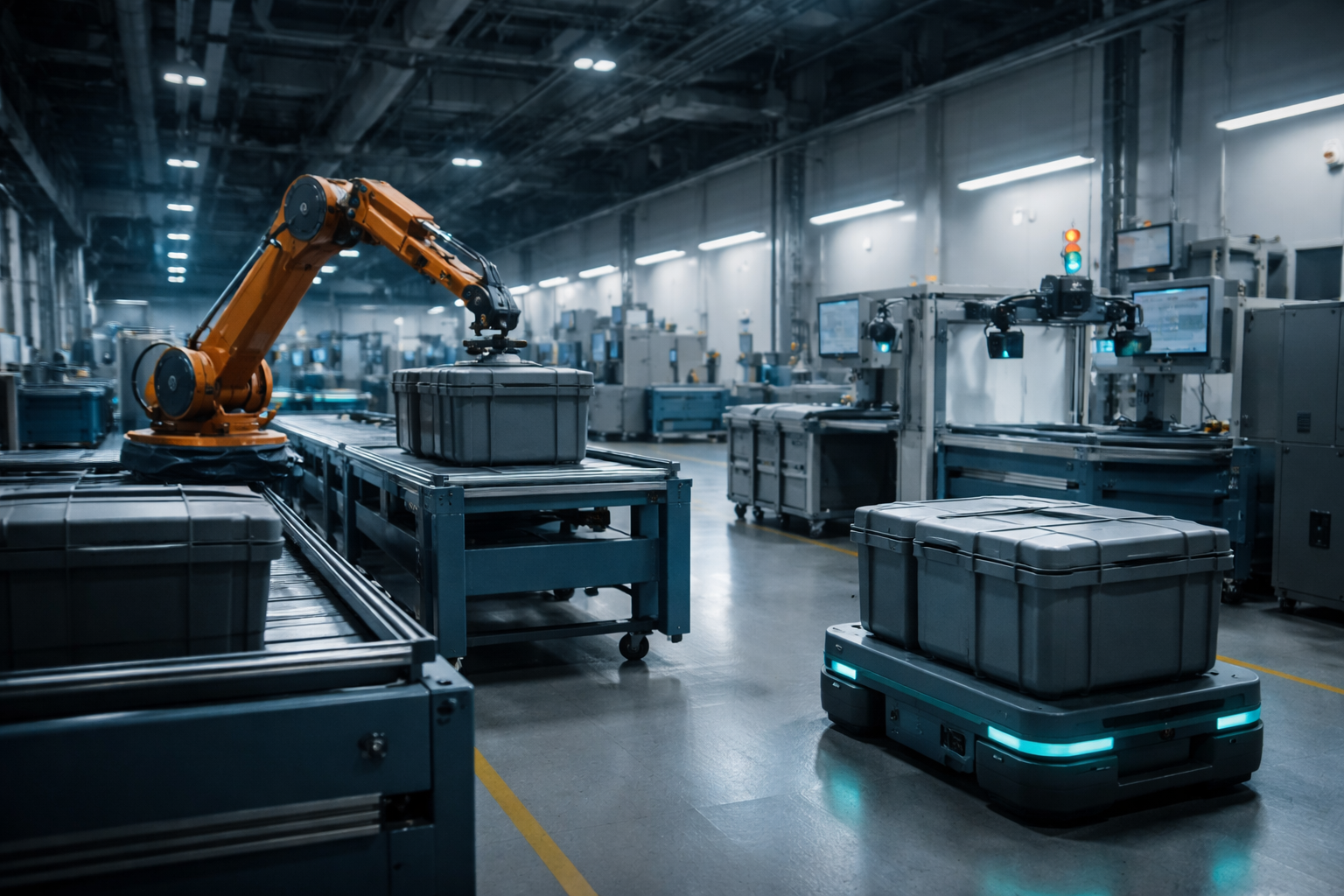
Development work will establish, validate, and qualify high-precision processes for autonomous welding, grinding, blasting, painting, assembly, inspection, and related fabrication tasks. HII then plans to integrate the approved systems into an autonomous production line.
Delivery will begin after the equipment has passed testing and oversight requirements. The initial workload will cover small steel structures, with larger units and modules following if the line continues to meet cost, schedule, and quality targets.
Eric Chewning, executive vice-president of maritime systems and corporate strategy at HII, said: “We are committed to making generational investments to develop new shipbuilding capability and to expand capacity.”
The conditional model addresses a familiar weakness in industrial automation: the point at which a controlled demonstration meets the variability of production. Naval structures are large, geometrically complex, and built in comparatively low volumes, with extensive differences between blocks, compartments, weld positions, coatings, and access conditions. A robot repeating one motion on identical parts has limited value against the high-mix work consuming labour across a warship programme.
Path Robotics is contributing systems built around machine vision, learning software, and adaptive welding. Its Obsidian platform is intended to handle variable welds beyond conventional fixed automation, while the mobile Rove system places robotic welding equipment on a quadruped platform so that the machinery can move to large structures rather than waiting for structures to arrive at a fixed cell.
GrayMatter Robotics focuses on surface preparation, coating, and inspection. Those tasks account for substantial labour hours and directly affect corrosion protection, coating adhesion, rework, and inspection release. The company’s edge-deployed, air-gapped architecture is also relevant where production data, drawings, and process records cannot be passed routinely to an external cloud service.
Qualification will demand more than proof that each machine can perform its advertised task. Weld procedures, consumables, joint preparation, heat input, penetration, distortion, and inspection evidence must remain within approved limits. Blasting and coating systems need controlled surface profiles, cleanliness, coverage, and environmental conditions. Inspection equipment must produce records that shipbuilders and Navy authorities can trace to the component and process step.
The production line will sit inside an assurance system rather than operate as an isolated technology demonstration. HII said the programme includes governance, joint-development, and execution frameworks, reflecting the need to control software versions, machine settings, operator interventions, maintenance, cybersecurity, and data retention across several suppliers.
The work also extends HII’s distributed shipbuilding strategy. The company plans to outsource more than 2.5 million hours of shipbuilding activity during 2026, a 30% increase from 2025, while expanding the network of assembly partners completing structures outside its principal yards before final integration.
Distributed production can release constrained yard space and move work closer to available labour, but it transfers pressure to drawings, tolerances, logistics, and configuration control. A module produced remotely must arrive in sequence, fit neighbouring structures, carry complete quality records, and avoid creating rework at the final yard. Robotics may improve consistency, but it cannot compensate for unstable design data or poorly controlled interfaces.
HII has already tested other automation routes, including Korean mechanised welding equipment at Ingalls Shipbuilding. The Path Robotics and GrayMatter agreements are distinct because they establish a staged route from qualification to contracted external production across a broader set of manufacturing processes.
The potential award value gives both suppliers a reason to invest in facilities, workforce, and equipment before full production demand arrives. HII, in turn, avoids treating the entire $900 million as guaranteed expenditure. Work expands only if the technology produces Navy-grade structures at the required cost and pace.
US naval shipbuilding needs additional throughput, but every new process must still produce traceable, inspectable structures able to withstand decades at sea. The HYPR programme will be judged by accepted ship units, not the apparent sophistication of the machinery. Any productivity gain that merely moves delay or rework elsewhere in the build will leave the underlying capacity problem intact.