IN Brief:
- A €317 million amendment adds WASS countermeasures and expanded logistics to the four-submarine programme.
- Delivery of the fourth U212 NFS has moved forward from 2034 to 2032.
- The revised schedule will test Muggiano’s workforce, supplier sequencing, systems integration, and submarine throughput.
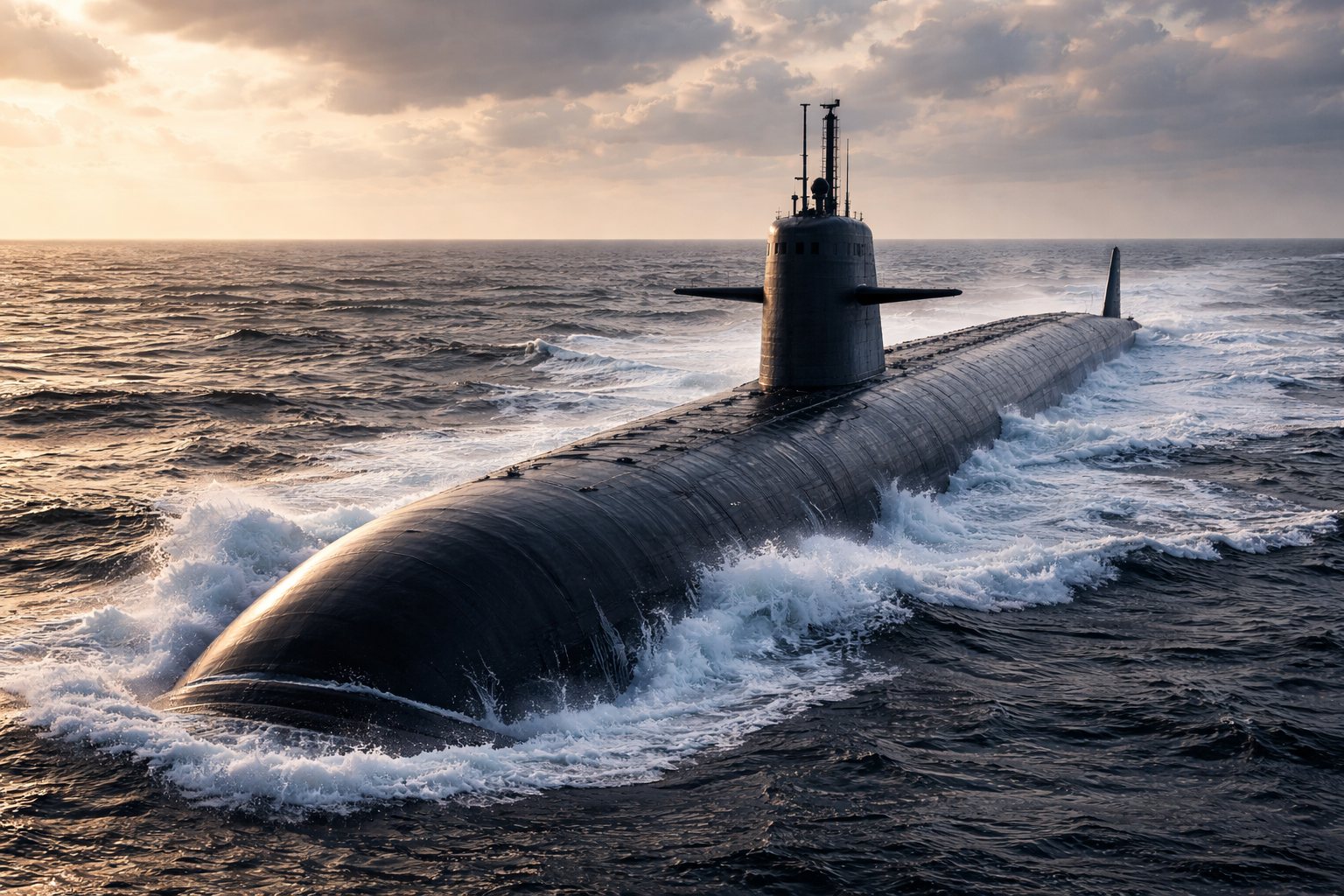
Fincantieri and OCCAR have agreed a contract amendment worth approximately €317 million for Italy’s U212 Near Future Submarine programme, expanding its technology and support package while bringing the fourth boat forward by two years.
All four submarines are under construction for the Italian Navy at Fincantieri’s integrated Muggiano shipyard. Deliveries are now planned between 2029 and 2032, creating a schedule under which the navy should receive one boat each year.
The amendment adds countermeasure systems developed by Fincantieri subsidiary WASS and strengthens the logistics arrangements intended to sustain the class through service. The fourth submarine, previously scheduled for 2034, is now due in 2032.
U212 NFS is an Italian development of the U212A design, incorporating a higher proportion of nationally controlled technology. Its principal changes include lithium-ion propulsion batteries, a new combat-management system, revised equipment integration, greater endurance, improved stealth, and stronger cyber resilience.
As design authority and prime contractor, Fincantieri coordinates a network spanning platform structures, propulsion, batteries, electronics, underwater weapons, sensors, and specialist machinery. Muggiano has extensive submarine experience, although annual delivery still requires a tightly sequenced production system with little room for disruption.
Annual output depends on predictable flow
Submarine construction is governed by the order in which pressure-hull sections, machinery, batteries, cables, pipework, sonar arrays, combat systems, and accommodation are installed. Many components become difficult to reach once adjoining modules are connected, giving late deliveries and non-conforming equipment a disproportionate effect on schedule.
Moving towards one delivery each year therefore requires coordinated supplier output rather than faster final assembly alone. Equipment must arrive in sequence, documentation must accompany hardware, and skilled trades must be available as each hull moves through welding, outfitting, integration, testing, and trials.
Pressure-hull welding relies on highly qualified personnel and tightly controlled procedures. Welds undergo extensive inspection because defects can have severe consequences under repeated deep-water pressure cycles, limiting the extent to which output can be increased simply by adding inexperienced labour.
Lithium-ion propulsion introduces another demanding production stream. Modules require consistent cells, thermal management, monitoring, electrical isolation, and fire protection, followed by qualification across charging, discharge, shock, vibration, flooding, and fault conditions.
The batteries can improve submerged performance and operating flexibility, but they also require new handling, storage, diagnostics, safety procedures, and shore infrastructure. Shipyard workers, naval maintainers, and emergency teams all need training before the technology enters routine service.
With U212 NFS construction already gaining pace, the contract amendment converts programme momentum into a firmer delivery sequence. It also adds workload beyond hull production through countermeasures, logistics, software, and through-life availability.
Domestic integration widens Fincantieri’s responsibility
Adding WASS countermeasures increases the technology held within the Fincantieri group. Submarine countermeasure suites may combine expendable devices, launch equipment, control software, and tactical functions intended to confuse or defeat hostile sonar and incoming weapons.
Integration reaches into storage, handling, pressure-resistant launch equipment, combat-system software, and acoustic-signature management. The equipment must function reliably at depth while remaining safe during loading, maintenance, and prolonged deployment.
Greater vertical integration can simplify commercial and engineering decisions, although it also concentrates accountability. Combat management, sonar, navigation, weapons, countermeasures, batteries, and platform control must exchange information securely without allowing a software fault or cyber compromise to move freely across the vessel.
The expanded logistics package acknowledges that submarine availability is governed as much by shore capacity as construction quality. Specialist spares, battery support, test equipment, software control, docking, and trained maintenance personnel must be ready before the first boats establish an operational rhythm.
Delivering submarines at annual intervals may create future maintenance peaks when the class reaches major overhaul points on a similar cadence. Italy will need to plan dock capacity, workforce, and component repair well before those periods arrive.
A compressed schedule also increases the importance of design stability. Changes introduced after later hulls have entered advanced construction can produce extensive rework, particularly where equipment is installed inside pressure-hull sections that are subsequently closed.
Fincantieri is building an increasingly integrated underwater business spanning hulls, electronics, countermeasures, equipment, and support. The annual-delivery objective from 2029 will test whether that structure can produce predictable flow across the yard and its suppliers.
Success will depend on stable design data, disciplined change control, qualified trades, and equipment arriving in the correct sequence. The revised programme is establishing submarine construction as a continuing production system rather than a series of widely separated individual projects.