IN Brief:
- GDLS-Canada has awarded KONGSBERG a NOK 1.1 billion follow-on order for PROTECTOR RS4 remote weapon systems.
- The systems will be integrated onto Canadian Army Armoured Combat Support Vehicles.
- Canada ordered another 190 ACSVs in July under a nearly C$2 billion expansion of the vehicle programme.
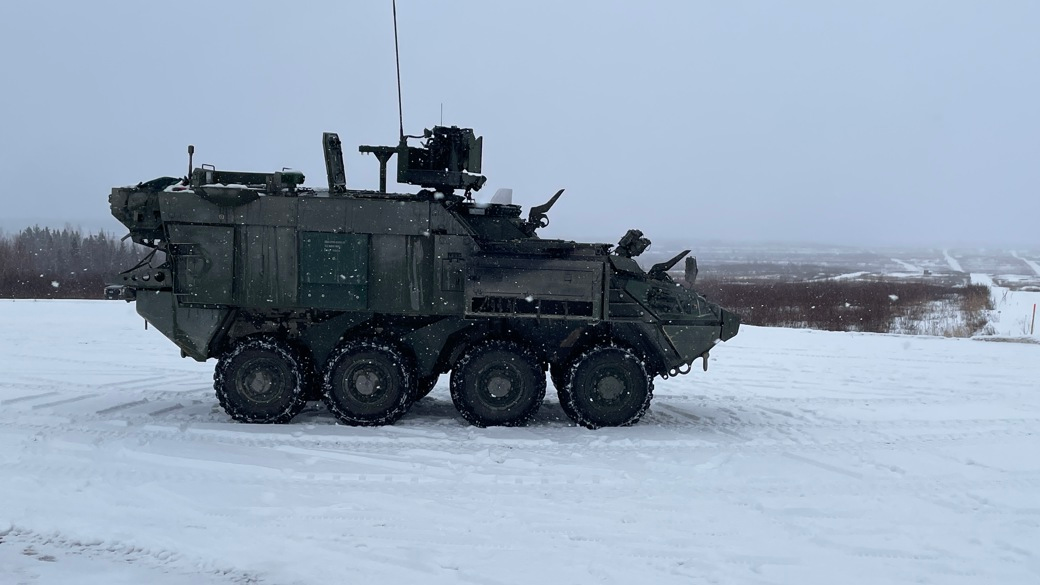
KONGSBERG has secured a NOK 1.1 billion follow-on contract from General Dynamics Land Systems–Canada for PROTECTOR RS4 remote weapon systems to equip Canadian Army Armoured Combat Support Vehicles.
The order continues an existing installation rather than introducing a new weapon station to the programme. KONGSBERG has previously supplied RS4 systems for Canadian ACSVs, and the additional contract follows Canada’s July decision to expand the vehicle fleet.
General Dynamics Land Systems–Canada received a nearly C$2 billion award in July for another 190 ACSVs for Canada and 35 additional vehicles for Ukraine. The Canadian order is an amendment to the original 2019 contract for 360 ACSVs, taking the domestic programme into another major production tranche.
KONGSBERG has not disclosed the number of RS4 systems covered by its NOK 1.1 billion award or a detailed delivery schedule. The value nevertheless makes the remote weapon station a substantial subsystem procurement inside the wider vehicle expansion.
The ACSV is based on General Dynamics’ LAV family and is intended to provide support functions across Canadian Army formations. Common vehicle architecture is used across several specialised roles, allowing the fleet to share mobility, protection, maintenance, and logistics while carrying mission equipment appropriate to each variant.
A remote weapon station allows the crew to operate an external weapon and sensor package from inside the protected vehicle. The RS4 can accept 5.56mm, 7.62mm, and 12.7mm machine guns and 40mm grenade launchers, with options for a coaxial weapon or anti-tank guided missile depending on configuration.
The sensor architecture can combine day cameras, thermal imagers, and laser range finding, while the stabilised weapon and sight system is designed to maintain observation and engagement capability as the host vehicle moves. KONGSBERG also supports wired and wireless control and integration with battlefield-management and defensive systems across the wider PROTECTOR family.
Those functions make the weapon station part of the vehicle’s electronic architecture rather than a mechanically isolated mount. Power supply, data interfaces, control software, sensor alignment, crew displays, safety interlocks, and fire-control integration all have to remain compatible with the host platform.
That is one advantage of a follow-on order. Once the RS4 has been integrated and qualified on the ACSV baseline, the platform manufacturer and customer already understand the principal interfaces and acceptance processes. Additional vehicles still need integration and test, but they do not require the same first-of-type engineering effort as a completely new weapon station.
Configuration management becomes more important as the fleet grows. Vehicles produced in different tranches may receive component revisions or later upgrades, and the weapon station has to remain supportable across those baselines without creating unnecessary differences in training, spares, diagnostics, or software.
Canada’s July ACSV expansion also places the RS4 order inside a broader domestic manufacturing programme. General Dynamics Land Systems–Canada employs around 1,700 people in London, Ontario, and says more than 600 Canadian suppliers support its vehicle production activities.
The strategic partnership associated with the July award is intended to streamline future technology development, integration of solutions against changing threats, and upgrades to vehicles already in service. That provides an industrial route for subsystems such as remote weapon stations, defensive aids, sensors, and communications equipment to evolve without treating every modification as a separate platform acquisition.
KONGSBERG’s relationship with Canada predates the ACSV programme. The company has supplied PROTECTOR systems to Canadian users for years, while the 2020 ACSV remote weapon station contract was valued at NOK 500 million. The latest NOK 1.1 billion order is therefore a larger follow-on procurement against an established vehicle and supplier relationship.
The broader PROTECTOR user base also reduces the degree to which Canada is supporting a unique weapon-station architecture. KONGSBERG markets RS4 across wheeled and tracked vehicles and naval applications, creating a larger production, upgrade, and support base than would exist for a customer-specific design.
That commonality does not remove national integration requirements. Canadian weapon, communications, software, and defensive-system configurations still need controlled baselines, and changes introduced into the global RS4 product cannot automatically be inserted into the Canadian fleet without qualification.
The vehicle expansion now puts production scheduling at the centre of the programme. General Dynamics has additional ACSVs to build, while KONGSBERG must align RS4 manufacture and delivery with vehicle assembly, integration, test, and Canadian Army acceptance.
Subsystem timing can become a programme constraint when vehicle output accelerates. An armoured hull cannot complete final acceptance with key mission equipment missing, so weapon-station supply, sensors, electronics, software, and test equipment need to arrive at rates matched to the assembly line.
The NOK 1.1 billion contract gives KONGSBERG another production tranche on a vehicle architecture it already knows. The next measure will be delivery execution — whether remote weapon station output remains aligned with the expanded ACSV build rather than becoming one of the bottlenecks created when a mature programme increases volume.