IN Brief:
- L3Harris has secured a second customer for its Global 6500-based AERIS X AEW&C platform.
- The programme adds momentum to the use of commercial-derivative jets for airborne surveillance and battle management.
- Production effort now centres on missionisation, certification, and long-term support rather than airframe supply alone.
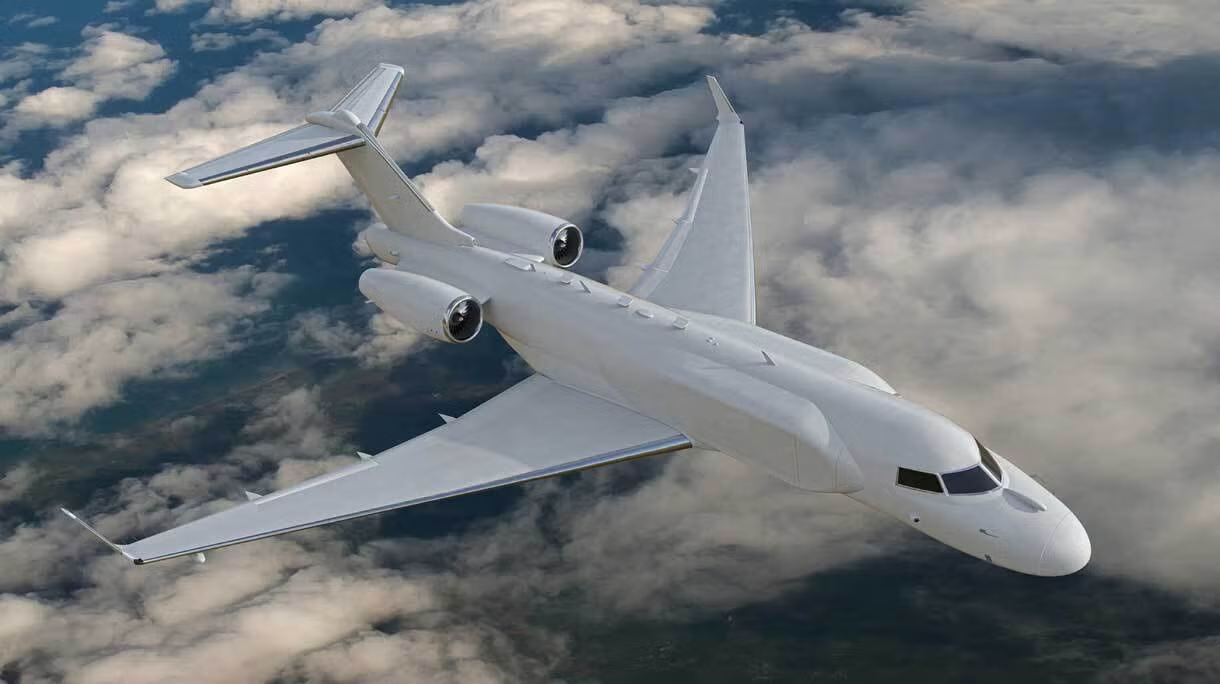
L3Harris has secured a second customer for its Bombardier Global 6500-based AERIS X airborne early warning and control aircraft, giving the programme wider export traction as air forces look for surveillance platforms that can be fielded and supported more efficiently than larger bespoke alternatives. The customer has not yet been named publicly.
AERIS X is part of a broader move toward commercial-derivative special-mission aircraft built on existing business-jet production lines. L3Harris has presented the platform as a combination of 360-degree surveillance, battle-management capability, and a mission-system architecture designed for rapid fielding. The Republic of Korea’s earlier selection gave the programme an initial anchor; a second order gives it broader commercial shape.
Using a business-jet platform offers several advantages for manufacturers and operators. The airframe benefits from an active production base, a mature support ecosystem, and operating economics that compare favourably with larger dedicated platforms. Those factors have made commercial derivatives increasingly attractive for ISR, maritime patrol, and AEW&C roles.
Missionisation remains the industrial centre of gravity
An AEW&C aircraft is defined by its mission package rather than the donor jet alone. Structural modifications, radar integration, cooling, power generation, wiring, mission consoles, software, and electromagnetic compatibility all have to be designed, tested, and certified as part of a coherent system.
That missionisation work is where schedule risk and industrial value typically concentrate. Once a platform begins to attract repeat customers, the differentiator becomes the manufacturer’s ability to deliver complex aircraft modification and support work without allowing customisation to derail production flow.
Through-life support will shape the export case
Operators buying AEW&C platforms also look beyond delivery. Maintenance depth, mission-system upgrades, local industrial participation, training, repair capacity, and software support play a large part in whether a platform gains durable export standing.
AERIS X now moves further into that phase. With a second customer secured, the programme has shifted from a single-order proposition to an aircraft line beginning to establish repeat demand.