IN Brief:
- MBDA is developing the high-supersonic STRATUS RS and low-observable subsonic STRATUS LO as complementary long-range strike missiles.
- The RS concept uses a controllable ramjet and active sensing, while the LO design emphasises passive sensors and reduced detectability.
- France and the UK are awaiting a formal RS development award; flight tests are planned before the end of the decade.
MBDA has set out additional technical and programme details for its STRATUS family of long-range strike missiles, distinguishing a high-supersonic rapid-strike design from a lower-speed weapon intended to reduce detection. The company discussed the two configurations during Euronaval in France, while the formal development contract for the rapid-strike variant remains outstanding.
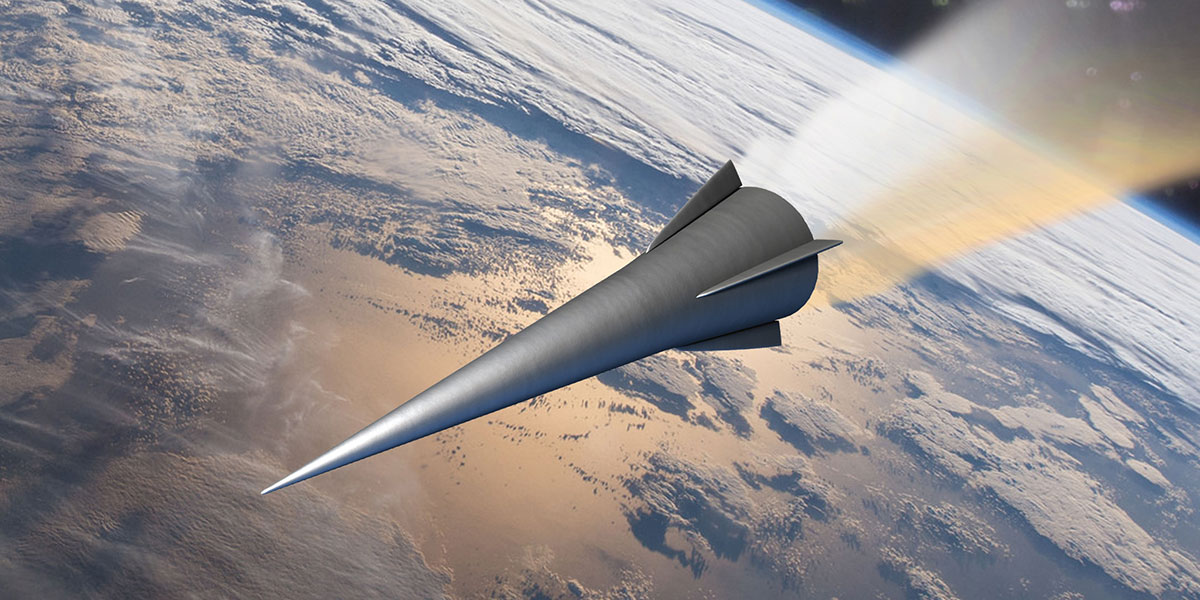
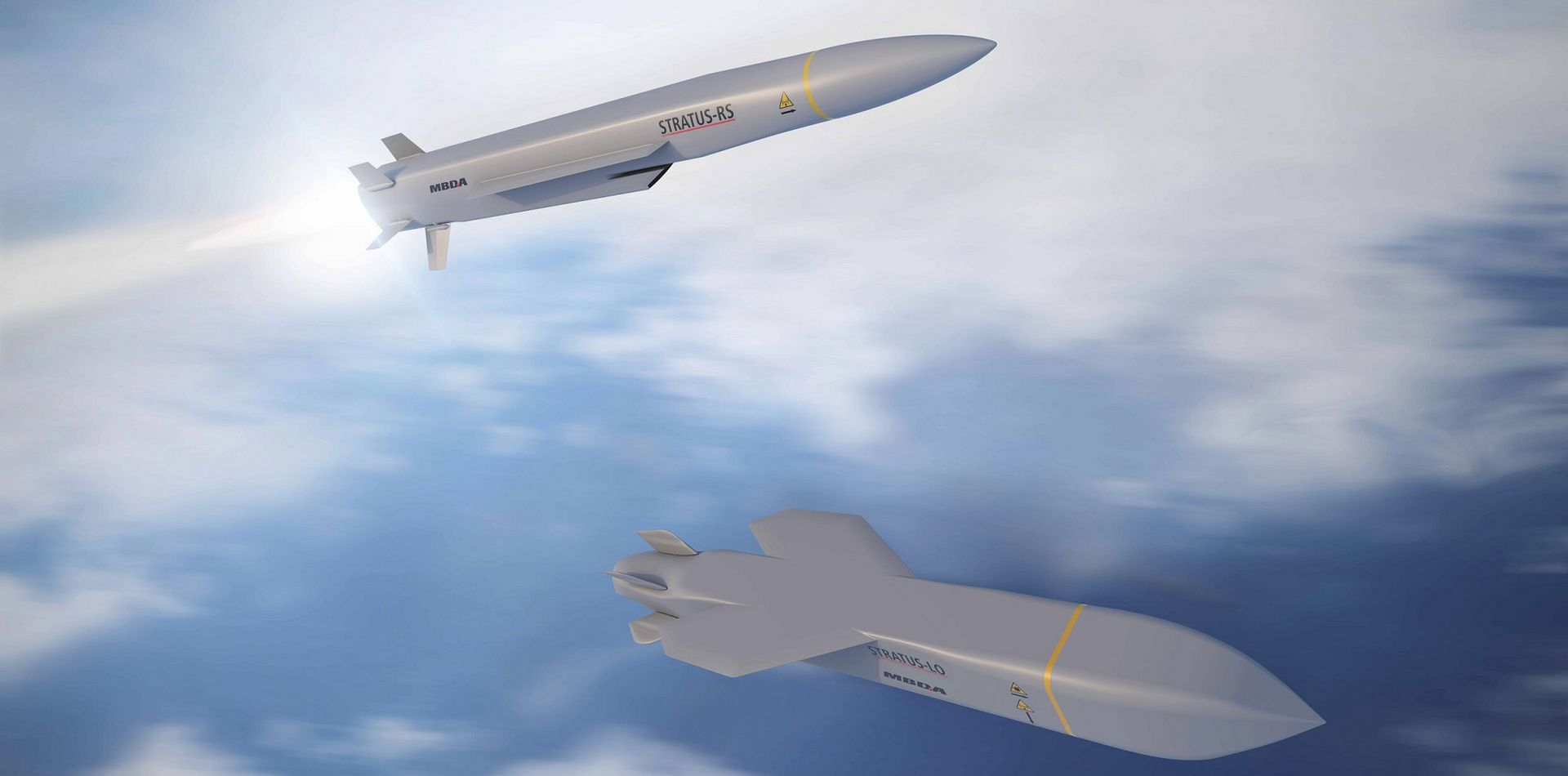
The two designs are STRATUS RS, or Rapid Strike, and STRATUS LO, or Low Observable. RS is intended to fly at high-supersonic speed with considerable manoeuvrability; LO is planned as a high-subsonic weapon with a reduced observable signature. Their different flight profiles are intended to offer complementary routes into defended areas. Neither configuration is currently an operational, flight-qualified missile.
France and the United Kingdom lead the RS programme, while Italy has joined the wider effort and is participating in the LO variant. The family follows the Future Cruise/Anti-Ship Weapon programme and is intended for deep strike, anti-ship attacks, suppression or destruction of air defences, and strikes against high-value aircraft. Each mission places different demands on target information, seeker behaviour, warhead effects, and launch-platform integration.
RS is planned to use a liquid-fuel ramjet with controllable thrust. Unlike a rocket motor that carries both fuel and oxidiser, an air-breathing ramjet uses oxygen from the atmosphere while the vehicle is moving fast enough to sustain the required flow through its engine. That architecture can support sustained high-speed flight, but it brings demanding inlet, fuel control, thermal management, and flight-envelope requirements. MBDA has not published a certified speed or range for the finished weapon.
Thrust control would allow RS to vary its flight profile rather than operate at one fixed engine setting. The fuel needed for acceleration, sustained high-speed flight, or manoeuvres must be balanced against the desired range and the loads imposed on the missile structure. MBDA describes the design as highly manoeuvrable, but no public flight-test results establish its eventual speed, range, or turning performance.
At Euronaval, an MBDA executive indicated that the planned range would substantially exceed that of the Exocet anti-ship missile. No definitive STRATUS RS range figure was disclosed, and the comparison therefore cannot be converted into a certified specification. The manufacturer also expects the two STRATUS missiles to be of broadly similar size and mass to the existing Storm Shadow cruise missile, a factor that informs potential aircraft carriage and integration work.
The seeker concepts are also different. Reporting from Euronaval identifies an active radio-frequency seeker and synthetic aperture radar for RS, with Thales supplying seeker technology. Synthetic aperture techniques combine radar returns gathered as a sensor moves to produce a more detailed image of a scene. Applying that information to target discrimination requires processing, reference data, and testing against the target types and conditions expected in service.
For LO, MBDA specifies passive multimode sensing, with reporting identifying radio-frequency and infrared inputs rather than an emitting radar. Passive sensors do not need to illuminate a target with the missile’s own radar signal, but their available information changes with the target’s emissions and the surrounding environment. Both missile concepts incorporate plans for automatic target recognition, which would require validation across representative scenarios.
Air launch is envisaged from aircraft including Rafale and Typhoon, with future combat-air platforms also under consideration. MBDA has described booster-assisted options for surface launch, introducing separate demands for shipboard handling, exhaust management, launch controls, and safe separation from the launcher. Public reporting indicates that RS would require a wider Sylver vertical-launch configuration; the existence of a proposed interface is not evidence that a shipborne integration has been qualified.
The two designs would therefore create different demands on mission planning. RS is intended to use speed and manoeuvrability to complicate interception, while LO would attempt to delay detection. Their proposed coordinated use depends on target information and the separate missiles’ ability to receive an appropriate mission plan. MBDA has not disclosed a qualified collaborative-engagement configuration or demonstrated effectiveness against a specified air defence system.
MBDA says the preceding assessment phase has validated technical foundations for further design work. Development must still establish an integrated configuration of propulsion, sensing, warhead, guidance, and data systems. Flight testing is also required before weapons can be cleared for carriage and release from aircraft, or launched from naval installations. Those separate platform interfaces are not resolved merely by choosing a missile airframe.
An RS development award is still being negotiated with France’s DGA on behalf of the participating governments. MBDA expects flight trials of both variants before the end of the decade and has outlined an early-2030s service ambition, but neither date represents an achieved milestone. The programme has not disclosed a final production quantity, unit price, or confirmed ship installation.
A formal RS development contract with the French procurement authority is the immediate outstanding programme milestone. It would establish the next scope of engineering and qualification work after the assessment phase. Publicly available information does not yet identify a production order, final unit price, or agreed number of missiles, and the proposed early-2030s entry into service remains a programme objective.