IN Brief:
- Northrop Grumman expects substantial growth across AARGM-ER, SiAW, and PAC-3 related work.
- Shared technologies and test resources have allowed schedule pressure to move between programmes.
- Expansion will require stable designs, qualified suppliers, integration laboratories, test assets, and trained personnel.
Northrop Grumman is expanding missile capacity across several programmes as demand grows for air defence, suppression weapons, and stand in strike capability.
The company’s portfolio includes work associated with PAC-3, the Advanced Anti Radiation Guided Missile Extended Range, and the Stand in Attack Weapon. Together, those programmes could support billions of dollars in future sales if development, qualification, and production schedules remain aligned.
AARGM-ER is designed to provide greater range and survivability than earlier anti radiation weapons, supporting attacks against modern and relocatable air defence systems. SiAW draws on related technologies for a broader target set inside contested environments.
Shared engineering can reduce duplication across the two weapons, but it also allows problems to travel between programmes. Common technologies, suppliers, laboratories, software, and specialists create efficiency only when their schedules remain compatible.
Testing and design work on AARGM-ER have affected SiAW progress, while Northrop has recorded additional programme costs as integration continued. The company is adding engineering resources and laboratory capacity across the portfolio.
Integration laboratories allow guidance, navigation, seekers, control systems, software, and platform interfaces to be connected before complete flight articles are consumed. Their availability becomes restrictive when several programmes require hardware in the loop testing, software verification, fault investigation, and configuration changes at the same time.
Flight testing creates an even narrower resource. Each event requires an instrumented weapon, launch aircraft, range access, telemetry, targets, safety approval, data analysis, and specialist personnel. A failed or inconclusive trial can affect months of schedule when the next suitable range window is unavailable.
Missile manufacture begins long before final assembly. Rocket motors, actuators, seekers, navigation units, processors, power supplies, warheads, fuzes, structures, radomes, cables, and software all need sufficient maturity to support a repeatable configuration.
Suppliers hesitate to invest heavily while interfaces and requirements continue to change, yet freezing a design too early can transfer unresolved faults into production. Programme leaders must create enough stability for tooling and material orders without preventing necessary engineering changes.
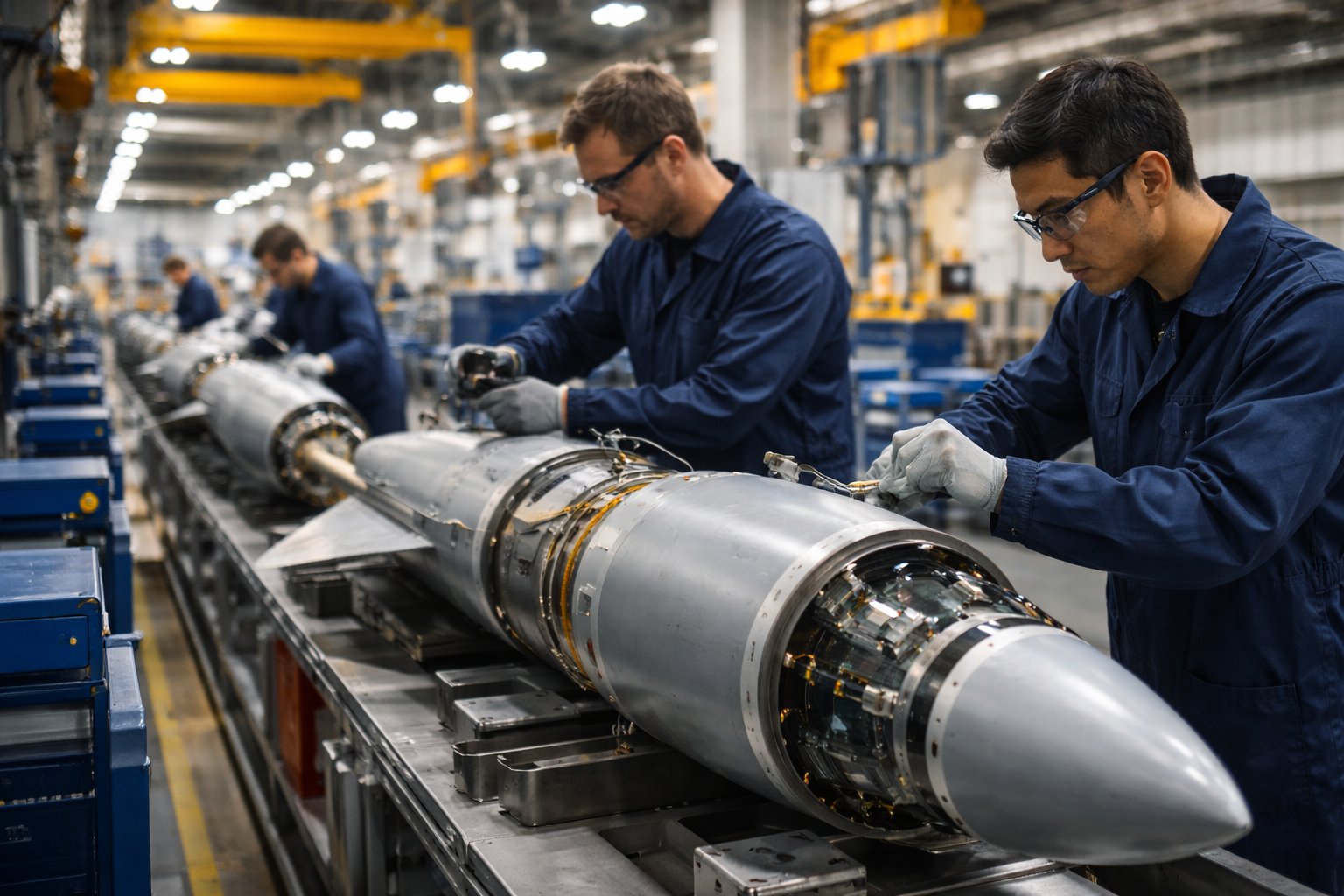
Northrop has expanded its West Virginia manufacturing base with a Missile Integration Facility at the Allegany Ballistics Laboratory. The 113,000 sq ft facility is intended to increase assembly capacity for current and future strike weapons, including AARGM-ER and SiAW.
Physical space alone will not determine output. Workstations require qualified processes, calibrated equipment, approved tooling, controlled software, trained technicians, and a steady flow of compatible components from lower tier suppliers.
Recent efforts to expand PAC-3 motor production have shown how one component category can restrict complete missile deliveries. Northrop’s programmes depend on similar points of concentration across propulsion, electronics, energetics, and specialised materials.
Software now represents a growing share of missile capability and production risk. Target processing, guidance, mission planning, electronic protection, and aircraft interfaces must be verified alongside physical hardware, while each release remains tied to a controlled weapon configuration.
Aircraft integration brings a separate schedule. The missile must accept mission data, communicate with the launch platform, remain safe during carriage, separate cleanly, and operate across the aircraft’s authorised flight envelope.
Changes to either the weapon or aircraft can trigger additional analysis, laboratory work, or flight testing. Where AARGM-ER and SiAW are intended for several platforms, integration capacity must be allocated carefully to prevent one aircraft programme delaying another.
International demand can support larger production runs and more resilient suppliers, but export customers may require different aircraft interfaces, training, support, or security boundaries. Those variations must remain limited enough to preserve an efficient core configuration.
Workforce depth will be difficult to expand quickly. Missile production requires propulsion engineers, RF specialists, software developers, energetic material personnel, systems engineers, machinists, inspectors, and technicians whose knowledge is built through programme experience.
The projected sales opportunity therefore depends on execution across design and production. Customer demand is strong, but contracts can move ahead of deliverable hardware when engineering, testing, and supplier capacity do not grow together.
Northrop’s investment in laboratories and manufacturing facilities addresses part of that constraint. The rate achieved will depend on whether shared programme resources can support AARGM-ER and SiAW without turning commonality into a queue.