IN Brief:
- A Patria AMV at Parola in Finland was remotely controlled from Tokyo, more than 7,800 kilometres away.
- The architecture combined drive-by-wire control, a closed 5G network, situational awareness, and vehicle-health data.
- Patria is positioning the approach for unmanned logistics, convoying, and increasingly autonomous vehicle operation.
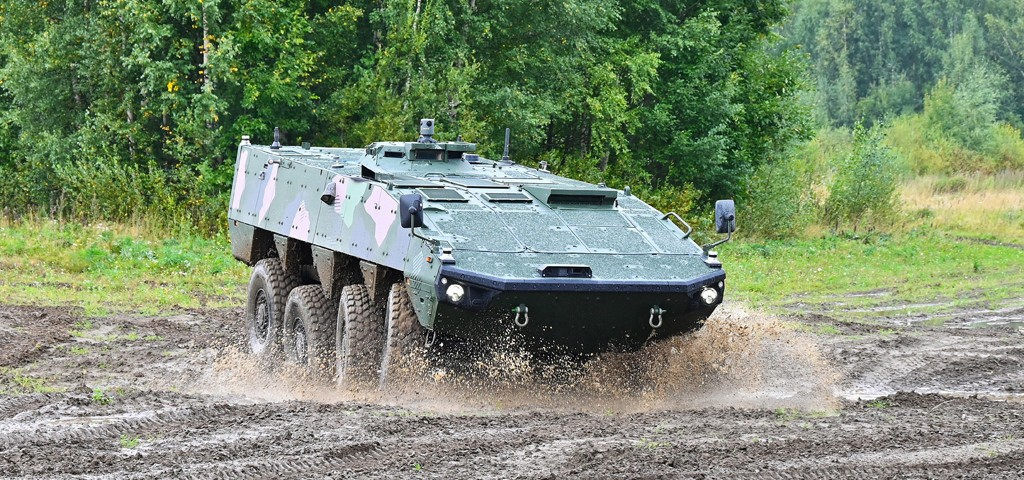
Patria has demonstrated remote operation of an AMV armoured vehicle in Finland from a control station in Tokyo, linking a drive-by-wire vehicle at the Parola military testing area to an operator more than 7,800 kilometres away.
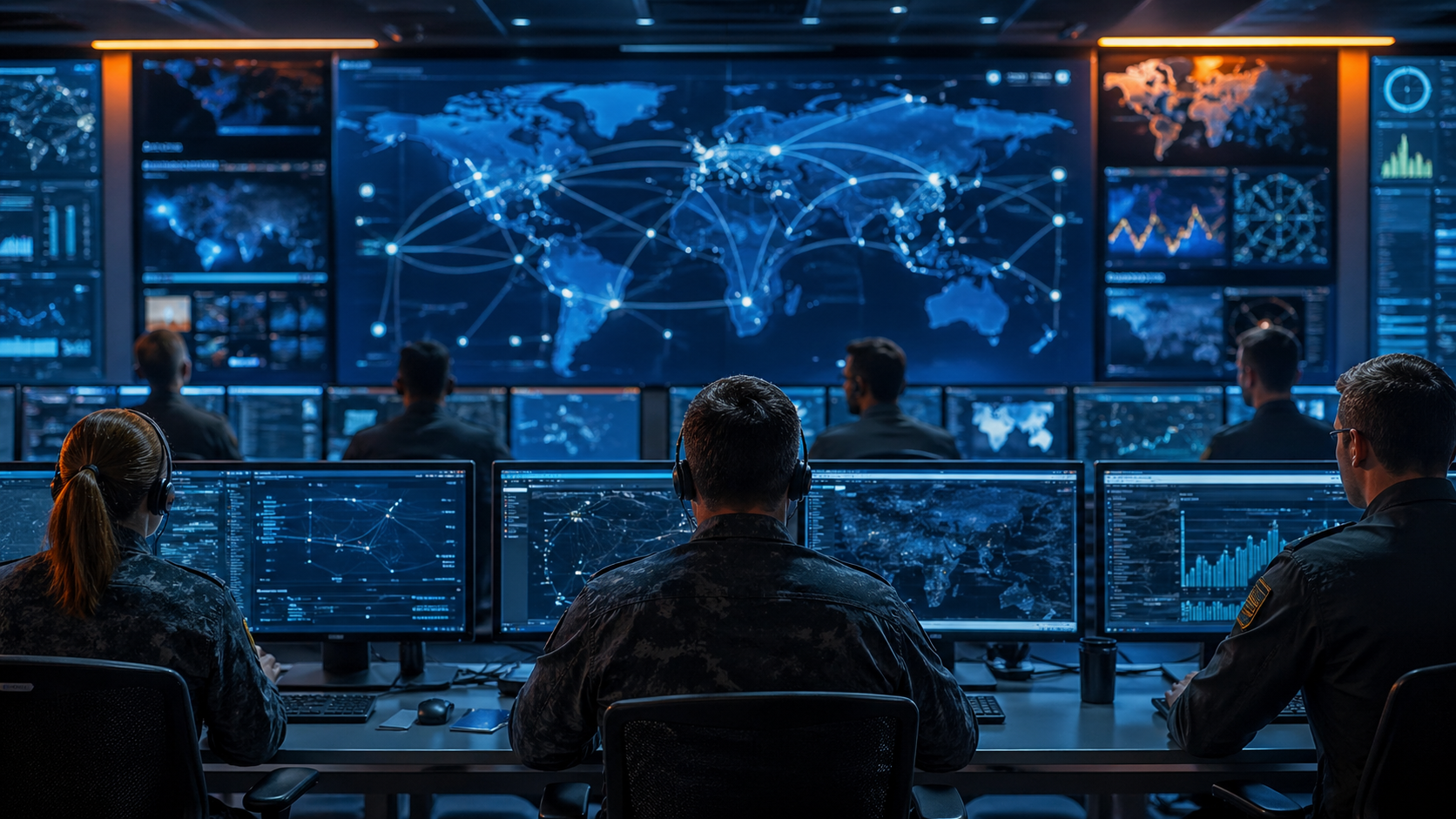
The demonstration took place on 25 and 26 August and combined secure 5G connectivity with real-time situational awareness. It was arranged by Patria and The Japan Steel Works, with the Finnish vehicle operated from a remote desk in Japan while supporting systems exchanged vehicle, sensor, and environmental information.
Patria used an AMV equipped with drive-by-wire technology, allowing steering and other vehicle functions to receive electronic commands rather than depending solely on direct mechanical input from a driver inside the platform. That electronic control layer is the basis for remote driving and for later increases in automated operation.
The data link ran over Telia’s 5G mobile network using a virtual mobile private network and international roaming. Patria says all traffic was routed through a closed corporate network separated from the public internet, while the same architecture can be adapted to 4G, 5G, and tactical software-defined radios.
Distance was the most visible part of the demonstration, but it was not the most difficult engineering requirement. Remote operation becomes useful only when an operator can understand the vehicle’s condition, local terrain, surrounding activity, and communications state well enough to make safe decisions without being physically present.
Patria DOME provided the core situational-awareness environment, supplemented by ICEYE synthetic-aperture radar data. Nokia supplied real-time extended-reality multimedia technology and a 5G 360-degree camera, SAVOX connected personnel through intercom and voice-over-IP systems, while Basemark demonstrated augmented-reality support.
The vehicle’s health and maintenance information was also incorporated through Patria’s ILIAS system. Combining operational control with platform-health data gives a remote crew more of the information normally available to people sitting inside or working around the vehicle, although it also increases the amount of data that has to be moved, prioritised, and displayed.
The remote operating device came from UXV Technologies, but Patria says the control software can be installed on other hardware. That separation between software and a particular operator console is important if the architecture is to be adapted across customers or vehicle roles without tying the entire system to one workstation.
Patria identifies unmanned logistics, convoying, and autonomous waypoint navigation among the possible applications. Those missions do not necessarily require a human operator to steer continuously from thousands of kilometres away; a more practical architecture could combine local autonomy for routine movement with remote supervision and intervention when required.
Drive-by-wire makes that division possible because the vehicle accepts electronic commands regardless of whether they originate from a remote operator or an onboard autonomy stack. The same control interfaces can therefore support several operating modes, provided the system handles transitions between them predictably.
Communications loss remains one of the central engineering problems. A heavy armoured vehicle needs defined behaviour if control data is delayed or interrupted, while authentication, encryption, and command authority have to prevent an unauthorised user or corrupted message from influencing movement.
Latency is another constraint. The Tokyo-to-Finland demonstration shows that long-distance operation can be achieved over functioning commercial infrastructure, but tactical networks may introduce congestion, intermittent coverage, jamming, or rapidly changing routes. The vehicle therefore needs enough local control logic to remain safe when the network behaves less cleanly than a planned demonstration link.
Patria’s ability to use different communications bearers is more important in that context than the 7,800-kilometre figure alone. A military system that depends on one commercial 5G path would have limited usefulness, whereas an architecture able to move between civilian and tactical links can be adapted to different operating environments.
The demonstration also shows how established crewed vehicle families are becoming platforms for autonomy work. Manufacturers can retain mature automotive structures, protection, payload capacity, and support arrangements while adding digital control, sensors, computing, and communications instead of designing an entirely new robotic vehicle for every mission.
That route still creates a substantial qualification burden. New electronics must survive vibration, temperature, electromagnetic interference, and military handling, while software updates and remote-control functions need to remain compatible with the vehicle’s safety systems and configurations already in service.
Patria has not announced a production order arising from the Tokyo event. Its immediate value is therefore as an integration demonstration showing that vehicle control, secure networking, situational awareness, platform-health data, and several partner technologies can operate together across an unusually long connection.
The harder test will come when the same architecture is exposed to degraded communications and less predictable terrain. Remote armoured vehicles will earn their place through controlled behaviour when networks deteriorate, rather than by repeating a record-distance drive on an ideal connection.