IN Brief:
- Germany is the first international SPY-6 customer, with the radar planned for its F127 frigate programme.
- Raytheon is adding Andover capacity as SPY-6 production moves towards more than double current output by 2028.
- Japanese supplier participation and further export pursuits are pushing SPY-6 towards a multinational production and sustainment model.
Raytheon is expanding production of its AN/SPY-6 radar family as the system moves beyond its US Navy base into Germany and other potential international programmes, putting manufacturing capacity and allied supplier participation alongside sensor performance in the export proposition.
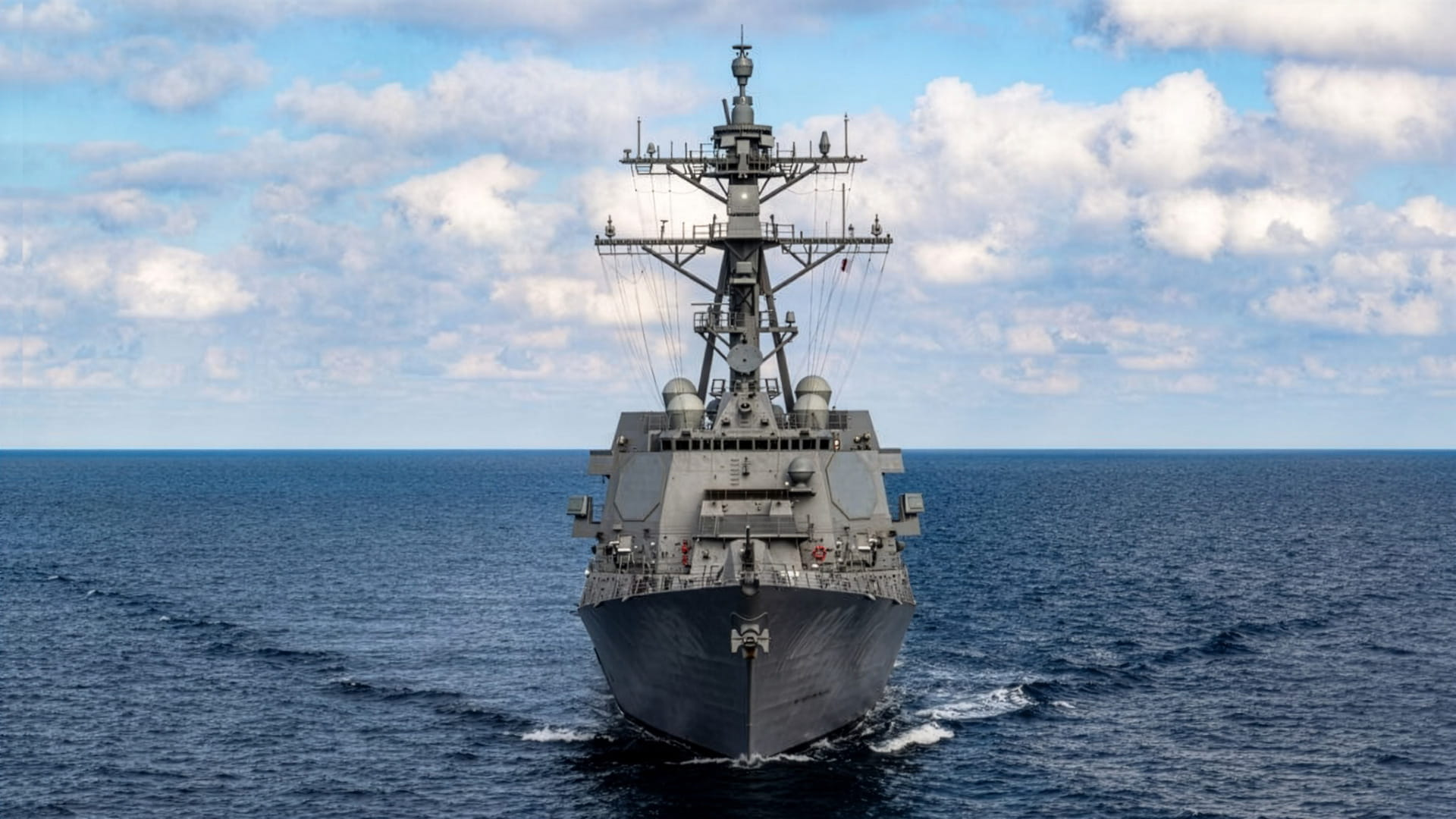
Germany has selected SPY-6 for its planned F127 air-defence frigates, becoming the radar family’s first international customer. Raytheon is also positioning the system for Japanese requirements and has opened discussions around future Danish frigates, while US Navy installation continues across new-build and existing surface combatants.
The German programme is the most mature export case. The original Foreign Military Sales proposal identified SPY-6(V)1 for eight F127 frigates, although the final radar configuration remains under review as Germany develops the ship design and examines cost and delivery options. Raytheon is supporting that work alongside planning for local sustainment and supplier participation.
SPY-6 uses a modular architecture based on Radar Modular Assemblies, or RMAs, which can be combined into different aperture sizes for different platforms. The SPY-6(V)1 configuration fitted to US Navy Flight III Arleigh Burke-class destroyers uses four fixed arrays with 37 RMAs per face, while smaller variants use fewer modules for backfit and frigate-sized applications.
That modularity carries a direct industrial advantage. A common radar building block can support several ship classes without creating a separate sensor architecture for every customer, but only if RMA manufacture, semiconductor supply, test, calibration, and final array integration can increase with programme demand.
Raytheon is producing roughly one array per month at its Radar Development Facility in Andover, Massachusetts. The company has identified almost $25 million of additional capital investment at the site, on top of much larger previous expenditure on automation and capacity, with the aim of more than doubling SPY-6 output by 2028.
The expansion follows a $1.8 billion US Navy production and sustainment contract extension announced in July. Options could take the cumulative value of the underlying arrangement to $3.3 billion, providing a large domestic production baseline before international volume is added.
That domestic fleet gives export customers a different proposition from buying a stand-alone radar. A larger common user base can spread engineering, sustainment, training, obsolescence-management, and software costs across more ships, while international customers can potentially join an established production stream rather than fund an isolated national variant.
Germany will test whether that model works in practice. Export integration still requires ship-specific engineering, combat-system interfaces, certification, training, spares, and maintenance arrangements, and local industrial participation can introduce another layer of configuration management even where the radar hardware is substantially common.
Japan is already entering the supply side of that equation. Mitsubishi Electric and Sampa Kogyo have agreements to provide SPY-6 components, and Raytheon has described those suppliers as contributors to the wider radar fleet rather than only a possible Japanese installation. That puts Japanese industrial participation into the production architecture before any final platform selection.
Raytheon faces competition from Lockheed Martin’s SPY-7 family in Japan, making the eventual decision a contest between scalable active electronically scanned array architectures with different programme histories and industrial footprints. Denmark remains at an earlier stage, with discussions under way but no publicly confirmed selection.
The production challenge at Andover is therefore becoming more important than the radar’s modular design alone. Higher output requires repeatable RMA manufacture, automated assembly, skilled engineering support, sufficient test capacity, and suppliers able to increase deliveries without eroding quality or schedule performance.
International sourcing can widen that industrial base, although it also raises the requirement for disciplined configuration control. Components produced in several countries have to meet the same performance, traceability, and acceptance standards if the radar family is to retain the economies promised by common architecture.
SPY-6 is entering a phase in which export success and factory performance will increasingly be linked. Germany’s F127 programme, Japanese supplier participation, and emerging European opportunities all depend on a production system already expanding for US requirements, leaving Raytheon with the less glamorous task that often decides whether an export campaign succeeds — making enough identical radar hardware on time.