IN Brief:
- Look Up has selected Skynopy to provide the ground segment interface for its ATLAS² automated space safety programme.
- The project links Look Up’s SORASYS radar network and SYNAPSE analytics platform with Skynopy’s virtualised ground station infrastructure.
- The production focus sits in sovereign European space safety, software-defined ground stations, RF simulation, and automated satellite manoeuvre chains.
Look Up has selected Skynopy to provide the ground segment interface for ATLAS², its automated space safety programme designed to connect collision detection directly with satellite command-and-control in low Earth orbit.
ATLAS², short for Acceleration Towards LEO Automated Space Safety, is intended to create a fully automated end-to-end collision avoidance service for satellites. The programme links Look Up’s SORASYS radar network and SYNAPSE data-fusion platform with Skynopy’s software-defined ground station infrastructure, giving the system a route from threat detection to manoeuvre command.
The orbital safety problem is becoming more urgent as satellite traffic increases. More than 15,000 active satellites are now in orbit, while hundreds of thousands of debris fragments move at high speed around the Earth. Low Earth orbit carries most space traffic, and even a small debris object can cause catastrophic damage if collision risk is mismanaged.
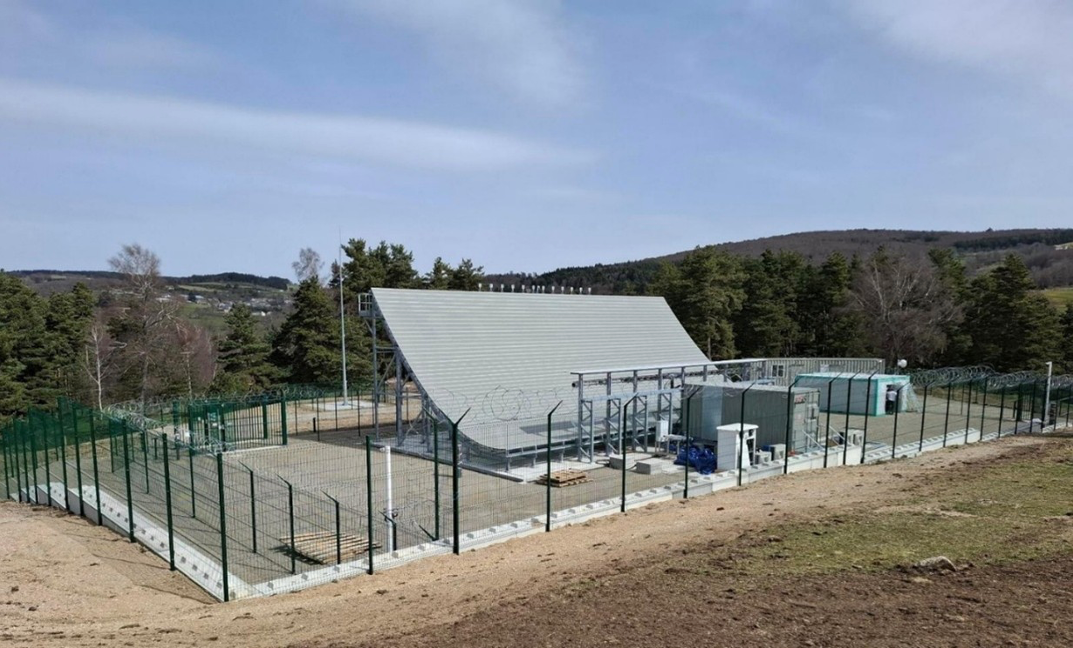
Look Up is building a sovereign European alternative in a field still heavily dependent on US space surveillance data. Its SORASYS network is planned around seven high-precision radars across EU sovereign territories, with the ability to detect debris down to a few centimetres. SYNAPSE adds multi-source data fusion, analytics, conjunction assessment, manoeuvre recommendations, and real-time threat detection.
Skynopy’s role is to turn that detection chain into an action chain. The company will design, develop, and demonstrate how its virtualised ground station network can interface with ATLAS², enabling command-and-control of satellites in response to detected collision threats. That step moves space situational awareness from warning into operational response.
The contract is structured in two phases. Phase 1 covers the architecture and concept of operations for the interface between Skynopy’s ground station network and ATLAS², alongside a high-fidelity RF signal simulator. The simulator will emulate in-orbit contacts between satellites and ground stations, model onboard radio behaviour, and provide a test environment that reflects collision avoidance scenarios. This phase is planned for completion in mid-2026.
Phase 2, subject to a gate review, will test the integrated chain with an operational satellite. The intended demonstration is direct: Look Up’s SORASYS radar network detects a collision threat, ATLAS² processes the manoeuvre requirement, and Skynopy transmits the telecommand that activates the satellite’s propulsion system.
Antonin Hirsch, CTO and co-founder of Skynopy, said: “This collaboration with Look Up is a first of its kind: for the first time, a collision avoidance detection system will be directly and automatically connected to a ground station network capable of commanding a real satellite. Our goal is to demonstrate that end-to-end reactivity, from threat detection to manoeuvre execution, is not only possible but deployable at scale. This is a critical building block for the future of sustainable space operations.”
The engineering burden sits in latency, reliability, interface control, and certification. Automated collision avoidance cannot rely on loose integration between separate services. It needs validated data flows, secure command links, tested RF behaviour, propulsion command safeguards, operator oversight rules, and confidence that automated actions will not create new risk.
Michel Friedling, CEO and co-founder of Look Up, said: “With ATLAS², we aim to connect detection directly to action in orbit. Skynopy stood out for its speed of execution, technical depth, and ability to interface with complex systems, making its ground segment a key enabler in transforming our detection capabilities into an operational collision avoidance service. Together, we are building the infrastructure to make space safer for every operator.”
For Europe, the programme strengthens the sovereignty argument around space safety. Military, civil, and commercial systems all depend on orbital access, from communications and Earth observation to navigation, meteorology, ISR, and emergency response. Collision avoidance is therefore moving from operator housekeeping into a strategic infrastructure requirement.
Software-defined ground stations are central to that future. Traditional ground networks can be constrained by fixed infrastructure, manual scheduling, and slower operational cycles. A virtualised network with automated interfaces can support faster tasking, more flexible access, and integration with analytics platforms. Skynopy’s network has grown to 17 operational sites in 18 months, giving the company a role in the ground-segment side of Europe’s NewSpace industrial base.
The programme also reflects a broader production shift in space. Space safety is no longer defined only by spacecraft manufacturing. Ground stations, radar networks, RF simulation, data platforms, propulsion command interfaces, and secure automation are now part of the supply chain. Automated collision avoidance will require manufacturers, operators, and ground-segment providers to treat interoperability as a production requirement from the start.
Look Up was founded in 2022 by General (Ret.) Michel Friedling, France’s first Space Commander, and Juan-Carlos Dolado Perez, former Head of Space Surveillance at CNES. With more than €64m raised, including a €50m Series A in 2025, the company is positioning ATLAS² as part of a wider European push for sovereign space surveillance and safety capability.
The Skynopy partnership gives that ambition a practical command layer. Detection alone is no longer enough in a crowded orbit. The industrial task now is to build trusted, automated infrastructure that can turn orbital warning into controlled manoeuvre before a collision becomes debris.