IN Brief:
- Sweden has received the first four Archer 8×8 systems from a $500 million contract for 48 howitzers placed in 2023.
- The 155mm platform combines an 8×8 chassis with automated weapon handling, protected crew operation, and rapid deployment.
- Forty-four systems remain under the original contract, while a further 18-system requirement and ammunition-capacity investments add to the industrial workload.
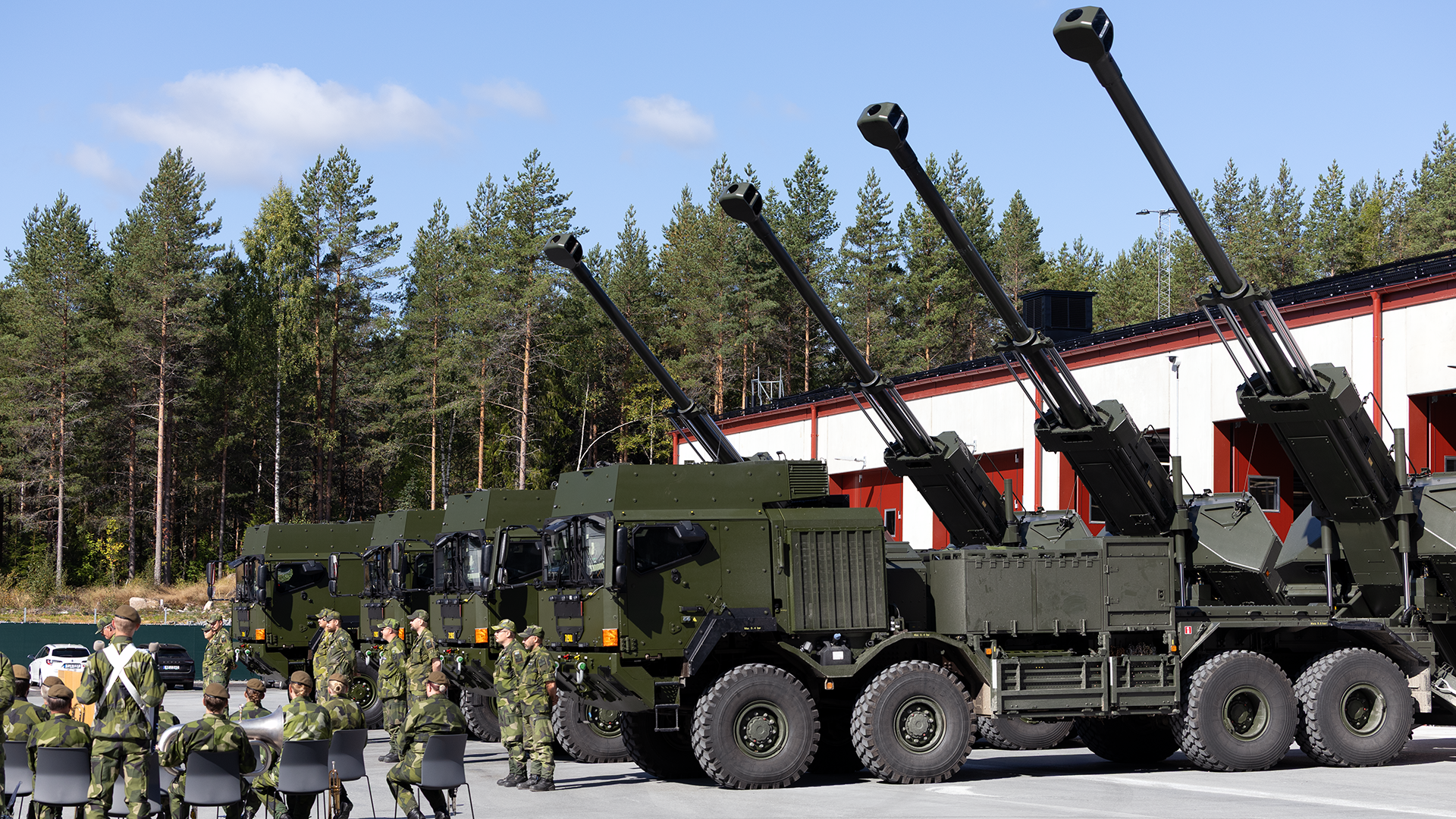
BAE Systems has delivered the first four Archer 8×8 artillery systems from Sweden’s current 48-system procurement, marking the first handover under the $500 million contract placed in 2023. The Swedish Defence Materiel Administration transferred the systems to the Swedish Armed Forces during a ceremony at the Villingsberg firing range on 26 August.
The delivery starts the physical fielding phase of a programme that has until now been defined mainly by contracts, production planning, and industrial preparation. A further 18 new Archer systems were announced in 2025 as part of Sweden’s military support package, adding another requirement beyond the original 48-system order. BAE Systems has not disclosed the delivery schedule for the remaining vehicles, but the first tranche establishes the baseline against which future production and handover rates can be measured.
Archer is a 155mm wheeled self-propelled howitzer built around rapid deployment, automated weapon handling, and protected crew operation. BAE Systems lists road speeds of up to 90km/h, an operating range of up to 650km on onboard fuel, and deployment and redeployment in around 20 seconds. The crew remains inside the armoured cab during firing, with ammunition handling and gun operation automated to reduce the amount of exposed work around the weapon.
Those characteristics place the system’s engineering burden well beyond the gun itself. The 8×8 chassis has to carry the weapon, ammunition, protection, power systems, electronics, and crew while preserving cross-country mobility and road performance. Fire control, navigation, communications, recoil management, ammunition handling, and vehicle systems also have to operate as one package if the system is to achieve the short firing and displacement cycles for which Archer is designed.
The move to the 8×8 configuration gives Sweden a production path based on a military off-the-shelf all-terrain vehicle rather than the earlier articulated 6×6 Volvo chassis used by the existing Swedish fleet. That changes elements of mobility, packaging, maintenance, and component support, while retaining the established 155mm artillery architecture. It also creates a separate fleet-integration task as crews, maintainers, and logisticians absorb the newer vehicle configuration alongside equipment already in service.
Sweden’s artillery expansion is being matched by investment further upstream in the ammunition chain. On 21 August, the government committed SEK500 million of state co-financing to five industrial proposals intended to increase ammunition production capacity. The projects include additional capacity for Archer propellant charges and fuzes, linking platform procurement directly to the less visible components needed to sustain a larger gun fleet.
Artillery capacity cannot be measured only by the number of launch platforms delivered. Propellant, explosives, fuzes, shell bodies, primers, storage, transport, and maintenance all have to expand at compatible rates. New gun deliveries can therefore expose weaknesses elsewhere in the supply chain if ammunition and support capacity remain fixed, particularly when several European armies are competing for many of the same energetic materials and specialist components.
BAE Systems has also been strengthening its Swedish manufacturing base around Archer and other weapons programmes. Earlier in 2026, the company completed its acquisition of Aston Harald Mekaniska Verkstad, a precision-machining business that it identified as strategically important to production and delivery capacity. Bringing critical machining closer to the prime contractor gives BAE Systems greater control over throughput for components that would otherwise remain dependent on an external supplier.
The industrial effect extends into maintenance as well as manufacture. A fleet of 48 new systems, plus the separately announced 18-system requirement, creates long-term demand for spares, training, software support, barrels, vehicle components, and depot work. Commonality with the British Army’s Archer fleet may create further opportunities around training and sustainment, although Sweden and the UK retain their own procurement and support arrangements.
Archer’s growing European footprint also places attention on production cadence. BAE Systems Bofors has to deliver against Swedish demand while supporting an installed user base and competing for future orders in a market where several countries are rebuilding artillery inventories. The first four Swedish 8×8 systems are less important as a standalone quantity than as the opening test of whether the enlarged industrial base can produce and hand over vehicles repeatedly without stretching component, test, or ammunition capacity.
Forty-four systems remain to be delivered from Sweden’s 2023 contract after this first tranche, before the additional 18-system requirement is considered. The programme has now crossed from procurement into serial delivery, and the next useful datapoints will be the interval between batches, the rate at which units enter service, and whether ammunition investment keeps pace with the expanding fleet. Those measures will show how quickly the contracted artillery capacity becomes available across the production and support system.