IN Brief:
- Vatn Systems and Taiwan’s NCSIST have agreed to explore autonomous underwater vehicle technology.
- The work includes AI-enabled command and control and possible use of Vatn’s S12 platform.
- Supply-chain and sustainment activity in Taiwan forms part of the proposed programme rather than a simple equipment sale.
Vatn Systems and Taiwan’s National Chung-Shan Institute of Science and Technology have agreed to explore autonomous underwater systems, command-and-control technology, and local sustainment capacity as Taiwan develops a broader undersea autonomy capability.
The memorandum creates a framework for the organisations to examine AI-enabled command-and-control systems, field autonomous underwater vehicles including Vatn’s S12, and build supply-chain and sustainment support in Taiwan. The arrangement joins a US defence-technology company specialising in compact autonomous undersea platforms with Taiwan’s principal government-backed defence research organisation.
Vatn Systems develops small and medium autonomous underwater vehicles intended for defence and allied applications. Its approach centres on producing comparatively affordable systems in numbers, allowing navies to distribute surveillance, reconnaissance, mine-countermeasure, and other missions across more vehicles rather than relying exclusively on large crewed platforms.
For Taiwan, the industrial element is as important as the vehicles themselves. Autonomous underwater systems only provide useful operational persistence if they can be maintained, repaired, reconfigured, and returned to service close to the operating area.
A fleet that depends on shipping hardware overseas for routine repair quickly loses much of the availability advantage associated with uncrewed systems. The agreement’s emphasis on Taiwanese sustainment and supply-chain capacity therefore gives the programme more substance than a straightforward purchase of imported vehicles.
Local support can encompass pressure-hull work, batteries, propulsion, navigation equipment, communications hardware, sensors, connectors, seals, calibration, software updates, test equipment, and trained technicians. Some components may remain imported, but shifting more maintenance and technical work into Taiwan can shorten repair cycles and reduce reliance on trans-Pacific logistics.
Undersea autonomy creates a particularly difficult engineering environment because communications become severely constrained once a vehicle is submerged. Radio links used routinely by airborne and surface systems do not propagate through seawater in the same way, forcing autonomous underwater vehicles to rely more heavily on onboard navigation, pre-programmed behaviour, acoustic communications, and mission software.
Command and control is therefore fundamentally different from conventional drone operations. Operators cannot assume a persistent high-bandwidth connection throughout a mission, so the vehicle must make more decisions locally and cope safely with periods in which it cannot communicate with a human controller.
AI-enabled mission software may improve classification, route adjustment, collaborative behaviour, or response to changing conditions, but it also creates an assurance problem. Military users need confidence that autonomous decisions remain predictable, particularly in an environment where an operator may be unable to intervene immediately.
Navigation creates another constraint. GPS signals are unavailable underwater, placing greater emphasis on inertial navigation, acoustic positioning, seabed references, onboard sensing, or periodic surfacing where the mission permits it. Small errors accumulate over time, so endurance only has value if the vehicle can maintain sufficient positional accuracy to complete its task and return to a recovery area.
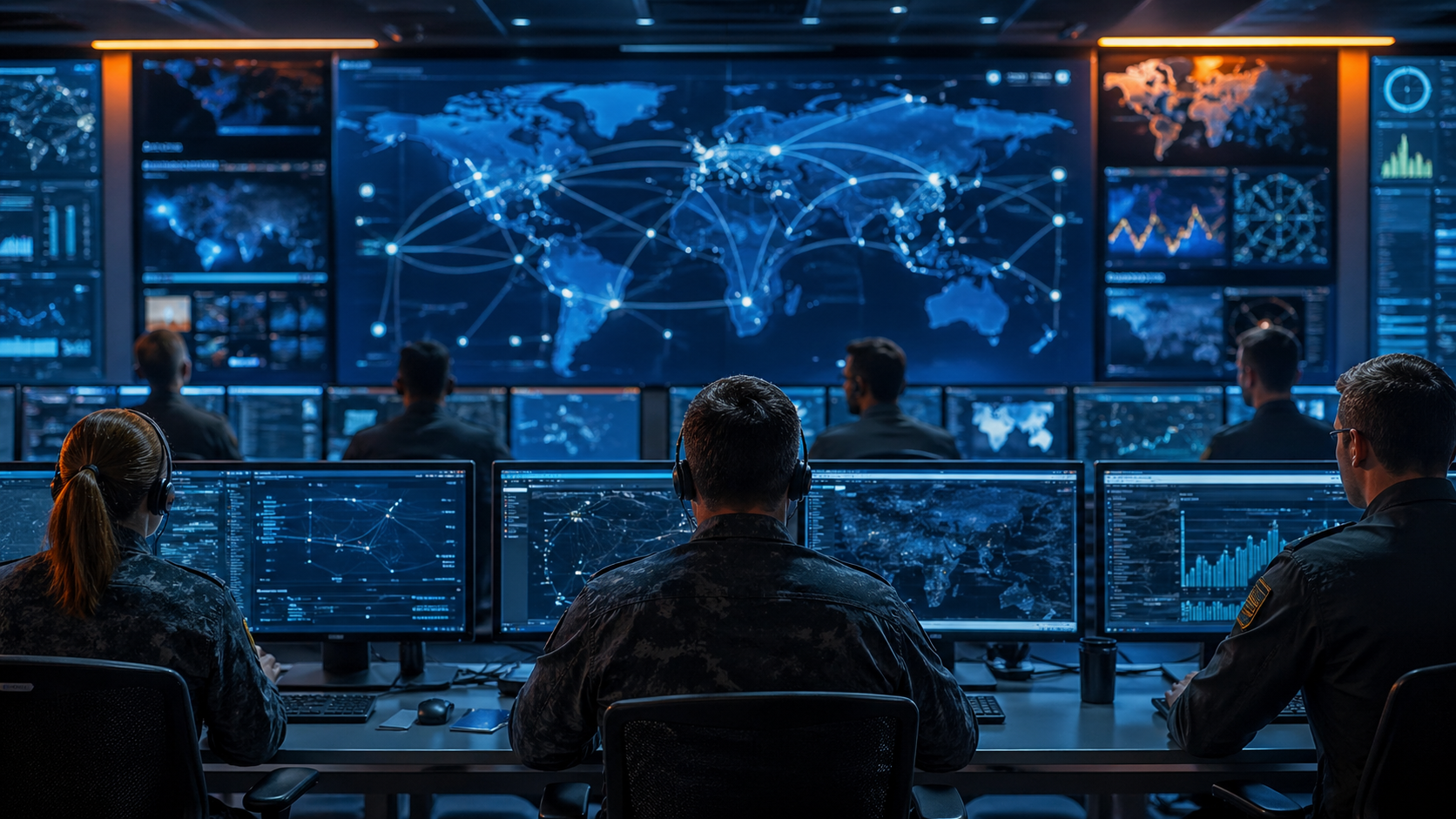
Those technical limitations explain the partnership’s interest in a broader command-and-control architecture rather than an isolated vehicle. Multiple autonomous platforms require mission planning, data fusion, task allocation, communications management, and a method for combining information from undersea vehicles with surface, airborne, or shore-based sensors.
NCSIST brings experience developing and supporting Taiwanese defence systems, which could help adapt Vatn technology to local requirements rather than treating the S12 as a fixed off-the-shelf import. Areas for localisation could include communications interfaces, payloads, software, environmental qualification, command-system compatibility, or mission-specific support equipment.
No procurement quantity or production contract has been announced, and the partners have not disclosed the planned extent of Taiwanese manufacturing content. The agreement therefore remains exploratory rather than evidence of an established fleet programme.
The distinction matters. A small evaluation using imported vehicles would provide useful technical experience but limited industrial effect. Local assembly, maintenance, component production, software integration, and support would create a much deeper national capability and reduce reliance on external sustainment during a prolonged crisis.
The broader market for autonomous underwater systems is developing rapidly as navies look for ways to extend surveillance and seabed coverage without assigning every task to a crewed submarine or surface ship. Smaller systems can be built in greater numbers and placed at greater risk, but the economics work only if manufacturing cost, reliability, navigation, communications, and recovery can be controlled at fleet scale.
Vatn has been positioning its technology around that scaling problem, while Taiwan has a strategic reason to examine systems able to distribute sensing and complicate an adversary’s planning. Combining an imported platform architecture with local engineering and sustainment could provide a quicker route to capability than developing every subsystem nationally from the outset.
The next meaningful milestone will be evidence of vehicle trials, integration work, or a defined production and support arrangement. Until then, the memorandum remains an industrial framework, but its focus on sustainment suggests that both organisations are considering the complete support system around autonomous undersea vehicles rather than simply the hardware entering the water.