IN Brief:
- The latest TESEO MK2/E firing included an approximately 20-minute piloted cruise flight that MBDA says validated missile range and overall system design.
- A 2025 production contract is already in place, with first deliveries to the Italian Navy targeted for 2028 after qualification concludes.
- The missile adds an AESA RF seeker, satellite-linked in-flight control and engagement of sea and land targets at longer range than earlier TESEO variants.
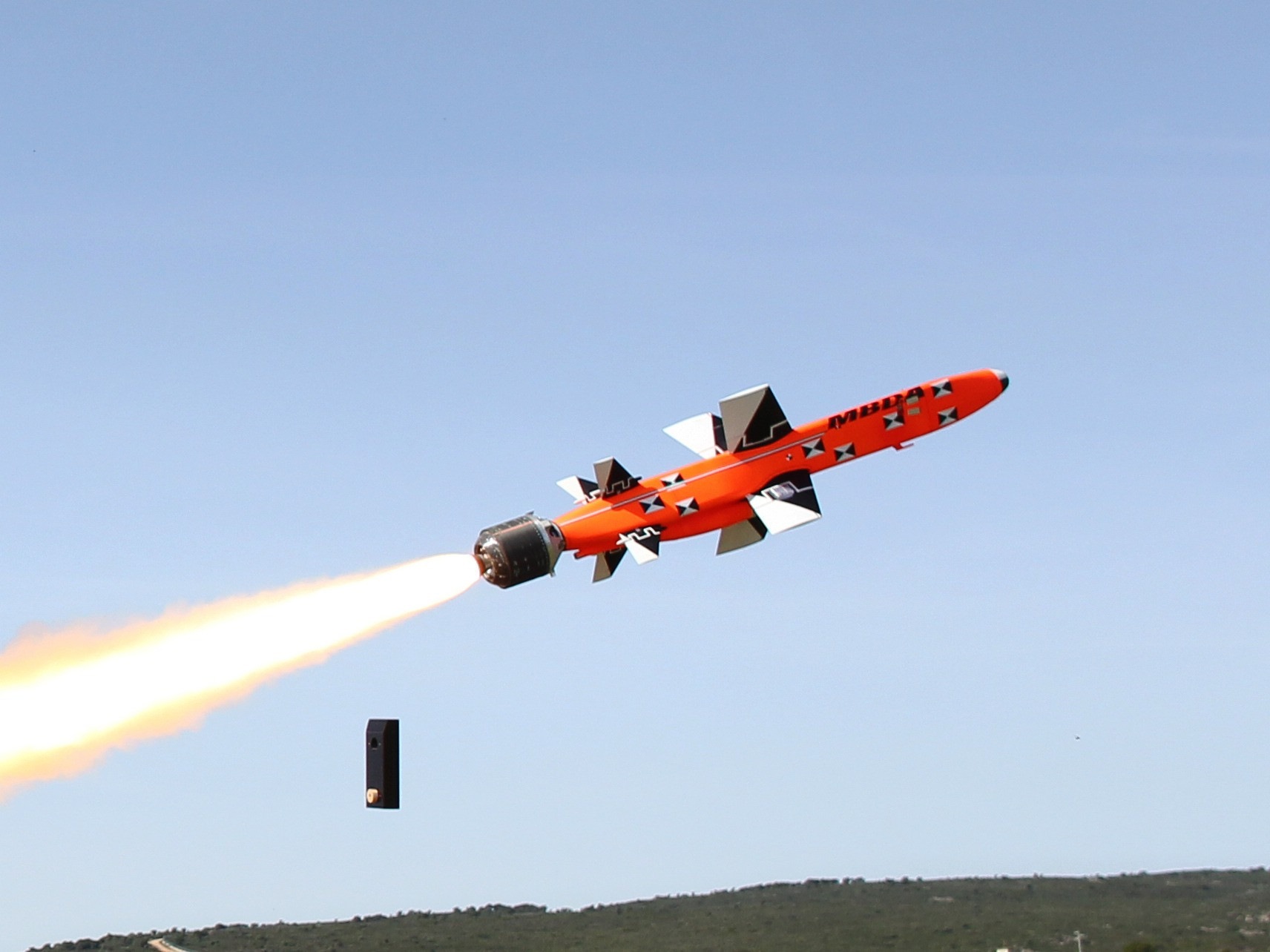
MBDA has completed a validation firing of the TESEO MK2/E anti-ship missile for the Italian Navy, using an approximately 20-minute piloted cruise flight to validate range and the overall design before the programme closes its development phase.
The test is the latest step in a qualification sequence that moved into flight testing in 2024. MBDA says the earlier firing validated the design of new missile components and aerodynamics, while the latest event was intended to demonstrate the evolved system over a substantially longer flight profile and confirm the design as a whole.
Italy launched TESEO MK2/E development in 2021 under a contract with the National Directorate of Naval Armaments covering development, integration and qualification. A production contract followed in 2025, and first delivery is targeted for 2028, leaving the remaining qualification work directly tied to an established manufacturing timetable rather than a future procurement decision.
TESEO MK2/E is the latest member of the TESEO missile family, known internationally as OTOMAT. The Italian Navy plans to integrate the new weapon across several surface combatant classes, including PPA multipurpose combat ships, future DDX destroyers, FREMM frigates and Horizon-class destroyers, with later integration also planned for the FREMM EVO fleet.
That range of host platforms makes ship integration a substantial part of the programme. A new missile enters service only after combat-management interfaces, mission planning, launch equipment, data links, safety cases and ship-specific installation work are aligned. Maintaining a common weapon baseline across vessels with different architectures will therefore be as important as reproducing the missile itself on the production line.
The new configuration introduces an active electronically scanned array radio-frequency seeker, shorter reaction times and an enhanced mission-planning architecture. MBDA also specifies in-flight missile control through a satellite data link, allowing the weapon to receive information during the engagement rather than relying only on a pre-launch target solution.
The company says the resulting missile is intended for both sea and land targets at longer ranges than previous TESEO generations. It has not disclosed a range figure in the latest announcement, so the significance of the validation firing lies in confirmation of the contracted performance envelope rather than a new public maximum.
An AESA seeker and in-flight connectivity also place greater demands on the wider combat system. Sensors and targeting networks feeding the weapon must provide sufficiently accurate and timely information to exploit those functions, while ship systems have to remain interoperable as software and combat-management configurations evolve through their own upgrade cycles.
The production contract signed in 2025 means development closure and industrial preparation are running in parallel. That approach can shorten the interval between qualification and fielding, but late design changes become more expensive once tooling, suppliers, test equipment and ship integration work have been prepared around a production configuration.
Supplier control is therefore central to the remaining programme. Guidance electronics, propulsion, actuation, communications hardware and energetic components all have to meet qualification standards consistently at series-production rates. A successful flight test validates the integrated design; repeating that performance across production batches requires a different set of industrial controls.
MBDA has an established anti-ship portfolio spanning TESEO/OTOMAT, EXOCET and MARTE, while European navies are also moving through a broader cycle of ship and missile modernisation. TESEO MK2/E remains an Italian sovereign programme, however, and its near-term schedule is defined by the Navy’s own integration and delivery requirements.
The latest firing strengthens the basis for transition because it addresses system-level performance over an extended flight rather than concentrating on new airframe elements alone. Further work remains before operational introduction, including completion of qualification and platform integration, but the programme has moved beyond proving individual design changes towards demonstrating the configuration that production will have to reproduce consistently.
The 2028 delivery target gives those remaining activities a fixed industrial horizon. Qualification evidence must be closed, production hardware has to enter repeatable manufacture and ship integration needs to remain aligned with availability of operational-standard missiles. Any delay in one strand can affect the others because the programme is already past the point where development and production preparation can be treated separately.
With a manufacturing contract in place and a fleet of host ships identified, the next milestones are unusually concrete. Completing qualification without destabilising the production baseline and keeping integration work on schedule will determine whether the Italian Navy receives the first TESEO MK2/E weapons in 2028 as planned.