IN Brief:
- Undersea cables carry more than 95% of international data traffic, leaving physical disruption with potentially wide economic and security consequences.
- Satellite networks and advanced RF systems can provide geographically diverse communications capacity when subsea infrastructure is unavailable.
- LEO constellations and higher-frequency RF technologies are increasingly becoming integral to multi-layered resilient communications architectures.
by Tudor Williams, CTO at Filtronic
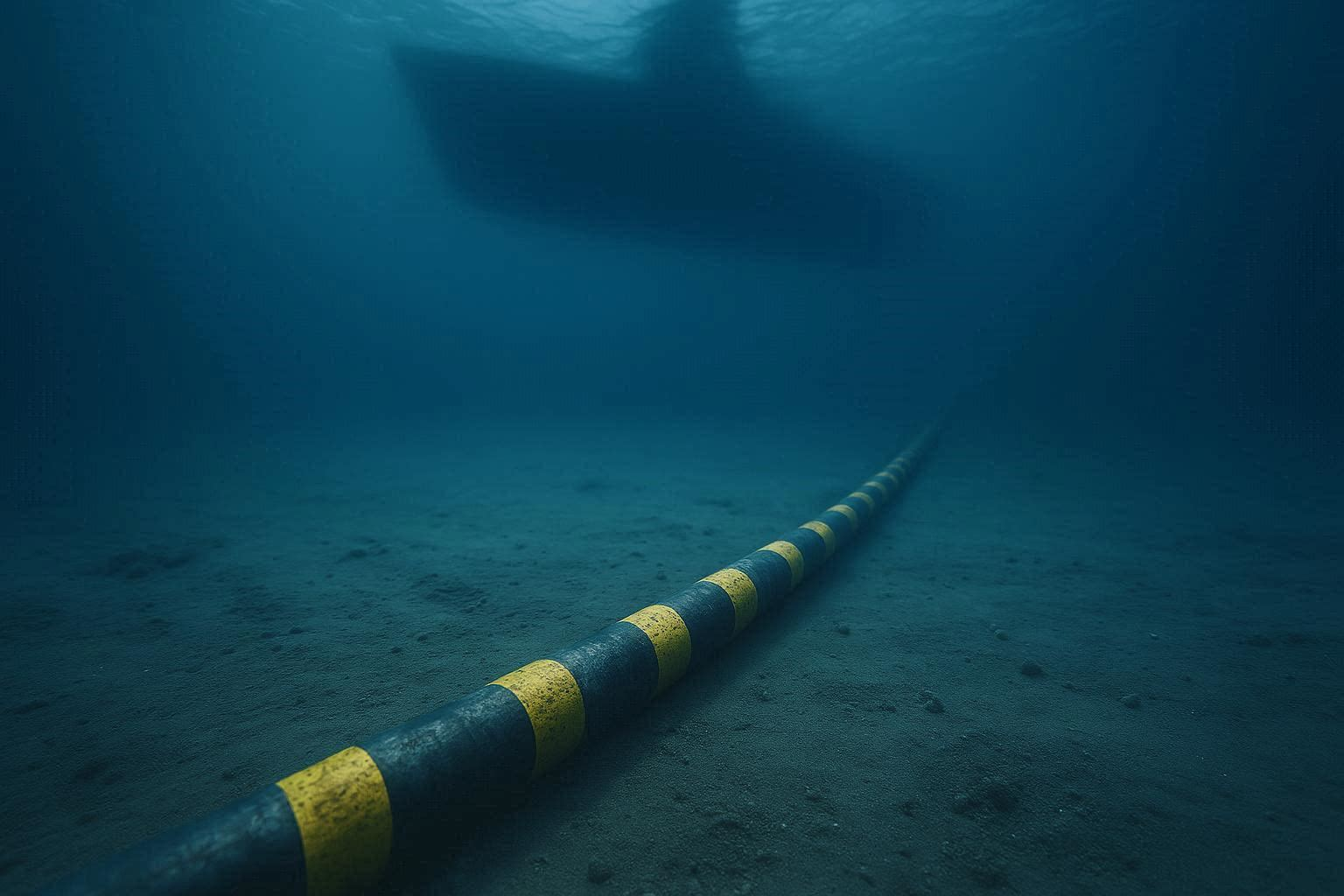
Undersea cables are the backbone of the global digital economy, carrying more than 95% of international data traffic and supporting everything from financial markets and defence communications to cloud services and government operations. Yet as reliance on this infrastructure intensifies, so too do the risks. Incidents of cable damage, whether accidental or deliberate, are rising sharply, exposing a critical vulnerability in the world’s connectivity architecture.
For the UK, the stakes are particularly high. As an island nation, over 90% of daily internet traffic travels via subsea cables. This single layer of infrastructure underpins national security, economic stability and essential public services. Any disruption, whether caused by natural events, human error or hostile activity, has the potential to create far-reaching consequences across multiple sectors.
Rising Risks Beneath the Surface
Traditionally, most subsea cable faults have been accidental. Fishing activity, shipping anchors and general maritime operations remain common causes of damage. Natural hazards, including seismic activity and underwater landslides, further contribute to cable breaks, often with little warning and lengthy repair times.
However, the threat landscape is evolving. Growing geopolitical tension and increased undersea activity have heightened concerns around deliberate interference. Reports of foreign adversaries monitoring and potentially targeting subsea infrastructure have elevated these assets to a matter of strategic importance.
Their relative inaccessibility, which was once seen as a protective factor, now presents a challenge, as monitoring and defending vast stretches of seabed infrastructure is complex and resource-intensive.
The result is a convergence of risks that exposes a fundamental weakness. It is no longer viable to rely on a single, physically vulnerable layer of connectivity.
From Vulnerability to Resilience, the Role of Space
At Filtronic, we believe this challenge demands a fundamental shift in how resilience is baked into communications infrastructure. Space-based connectivity is rapidly moving from a contingency solution to a strategic necessity.
Satellite communications offer an independent and geographically diverse alternative to subsea networks. By bypassing the ocean floor, they eliminate many of the physical vulnerabilities associated with cable infrastructure. In the event of a disruption, whether that be from a cyber-physical attack, natural disaster or geopolitical conflict, satellite networks can maintain critical communications and ensure operational continuity.
Governments and operators are increasingly investing in space-based capabilities to strengthen resilience. Their priorities are clear:
- Providing redundancy for critical national and defence communications
- Ensuring continuity during geopolitical crises or coordinated attacks
- Enabling rapid failover and recovery when subsea networks are disrupted
Low Earth Orbit (LEO) satellite constellations are accelerating this transition. Offering lower latency and higher capacity than traditional satellite systems, they are redefining what space-based connectivity can deliver. Increasingly, these networks are not just complementary to terrestrial infrastructure but are becoming integral to future communication architectures.
Enabling the Next Generation with RF Technology
The effectiveness of space-based connectivity depends on the performance of the technologies that power it, particularly radio frequency (RF) systems. As demand for high-capacity, secure and reliable satellite communications grows, advanced RF technology is playing a central role in enabling next-generation networks.
At Filtronic, we specialise in high-performance RF solutions that support the delivery of robust, high-throughput satellite links. These technologies are critical in ensuring that data can be transmitted efficiently, securely and reliably between ground infrastructure and space-based assets.
Advanced RF capabilities enable:
- High-bandwidth data transmission, supporting increasingly data-intensive applications
- Secure and resilient communications, with protection against interference and signal disruption
- Scalable network architectures, allowing operators to expand capacity as demand evolves
As satellite systems move into higher frequencies like Ka-band, RF performance becomes more critical. These bands offer higher capacity but are more affected by signal loss and atmospheric conditions, requiring precise engineering to ensure reliable operation.
A Strategic Imperative for the UK
For the UK, the case for space-based resilience is clear. The combination of heavy reliance on subsea cables and an increasingly complex threat environment demands a more diversified approach to connectivity.
Satellite infrastructure provides a vital second layer, enhancing resilience, protecting critical services and reducing exposure to single points of failure. This is not about replacing subsea cables, but complementing them within a multi-layered ecosystem where redundancy limits risk.
As investment grows, collaboration between governments, operators and technology providers will be essential, along with interoperability between terrestrial and space-based systems to ensure seamless connectivity.
In a world where outages can cost billions, resilience is a strategic necessity. The vulnerabilities of subsea infrastructure highlight the need for a more diversified approach. At Filtronic, we believe space-based connectivity, combined with advanced RF technology, will enable faster, more secure and resilient networks. As threats evolve, the priority is no longer whether to invest, but how quickly space-based solutions can be scaled.
This article originally appeared in the Summer 2026 edition of IN Defence. Read the full issue here.