IN Brief:
- VOP CZ unveiled the CAP SHADOW Tanker at Future Forces Forum in Prague on 21 October.
- The vehicle uses a Tatra Force chassis and a specialised KOBIT tanker body for ground and aviation refuelling.
- A January 2025 framework covers at least 13 vehicles, with options for up to 47 by 2031; prototype testing continues.
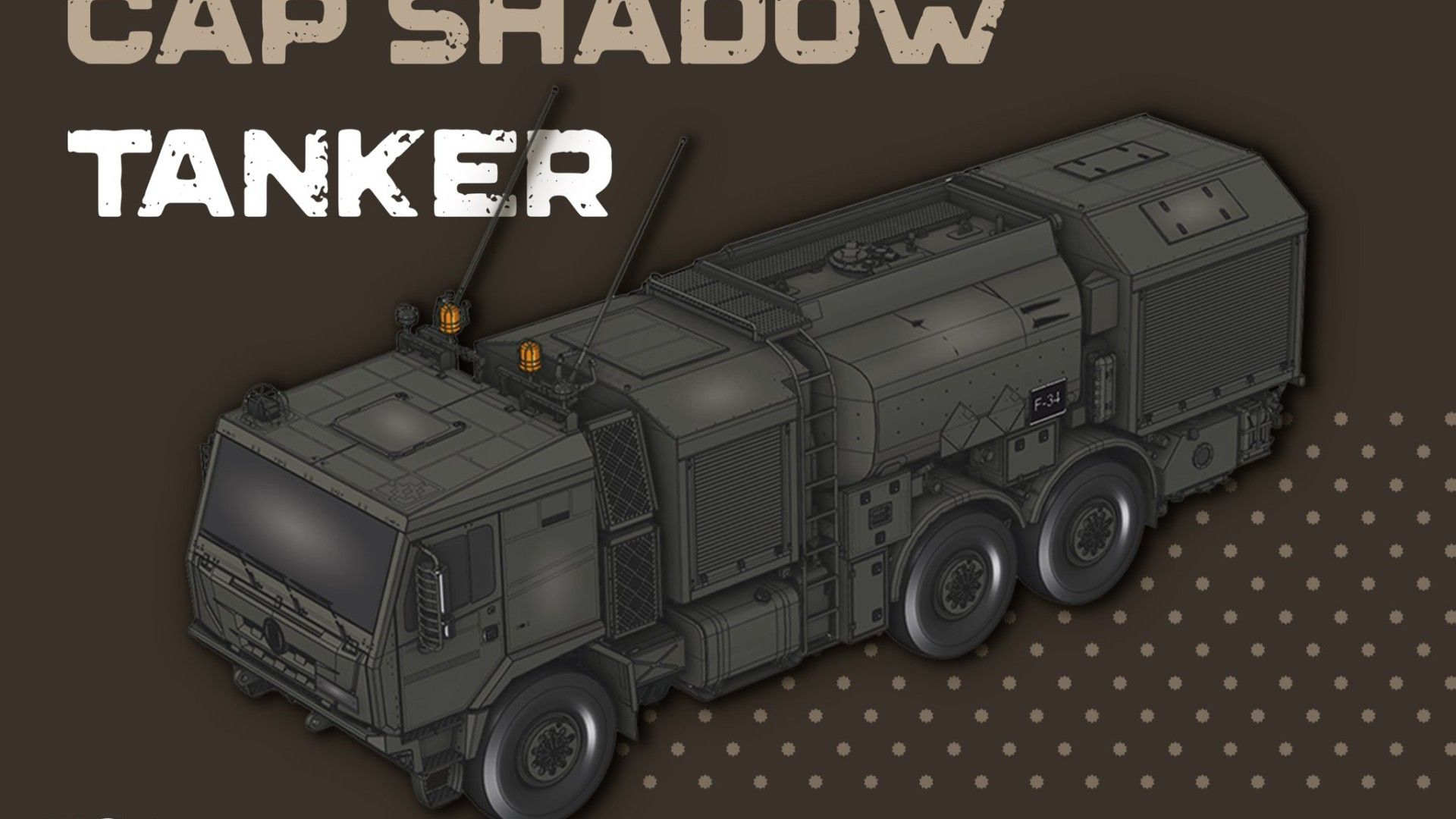
Czech state-owned manufacturer VOP CZ has presented its CAP SHADOW Tanker to the public at Future Forces Forum in Prague, showing a new multifunctional military fuel vehicle designed for both ground and aviation operations. The unveiling took place on 21 October and concerns equipment being developed under an existing Czech Ministry of Defence procurement framework.
The vehicle uses a Tatra Force truck chassis fitted with a specialised tanker body produced by KOBIT, the Czech engineering company based in Jičín. It is intended to replace older military refuelling equipment while extending the tasks that can be supported from the same vehicle platform.
The vehicle was unveiled on 21 October in the Czech Armed Forces’ outdoor presentation area, following a presentation scheduled for 11:30 during the exhibition’s opening day. The event brought together defence organisations and industrial suppliers, with VOP CZ showing the developing tanker configuration alongside other military equipment.
CAP SHADOW is intended to transport fuel and deliver it to vehicles through a measured, filtered supply system. Its principal advertised change compared with the CAP-16M1 is the ability to support aircraft and helicopters alongside ground equipment. The manufacturer describes compatibility with NATO aviation requirements, although it has not published an acceptance matrix identifying every approved aircraft, connection and fuel configuration.
Vehicle and aircraft refuelling can impose different technical demands. Ground equipment and aviation platforms may require distinct transfer arrangements, filtration levels and fuel handling procedures. Integrating several modes into one tanker calls for equipment suited to the specified fuels and the receiving platforms, with operating instructions and testing needed for each application.
Filtration removes specified contaminants during fuel transfer, while metering equipment provides information about the quantity delivered. Both functions are relevant to managing fuel quality and inventory, although the performance and approval of a particular system depend on the components installed and the standards applied. VOP CZ has not released verified transfer-rate figures or a complete list of qualified fuel types for CAP SHADOW.
A specialist tanker body combines storage, pumping, pipework, valves, hoses and the equipment used to control delivery. These systems need to be arranged so that personnel can handle fuel safely while maintaining access for inspection and maintenance. The tanker must also accommodate the weight of its contents within the chassis and vehicle limits.
The Tatra Force platform provides the mechanical foundation for the fuel-handling installation. Integrating the body involves mounting and load distribution as well as electrical and control interfaces between the truck and the tanker equipment. Its precise mobility characteristics depend on the completed variant and the mass carried, so general performance figures for other Tatra vehicles are not a substitute for CAP SHADOW test results.
Vehicle handling can change as fuel is transferred, because the quantity and location of liquid within the tanks affect total weight and mass distribution. The design and operation must account for those conditions, alongside any movement of liquid during travel. VOP CZ has not disclosed the detailed tank compartment arrangement, full vehicle mass or accepted loading limits in its exhibition account.
The existing procurement arrangement dates to 30 January 2025, when the Ministry of Defence agreed with VOP CZ to acquire at least 13 multifunctional tankers. The framework permits additional orders up to a possible total of 47 vehicles by 2031. That maximum is an option ceiling rather than an announcement that all 47 have been purchased or delivered.
The 2025 agreement established a need to replace ageing equipment and improve the ability of Czech military logistics units to supply measured and filtered fuel to ground and air platforms. The public presentation in October is a separate project milestone, involving the vehicle developed for that requirement rather than a newly announced procurement award.
VOP CZ says the first prototype is undergoing inspection testing. This places the programme beyond the initial design stage but does not establish that military qualification has been completed. Testing will need to assess the vehicle and fuel equipment against the applicable requirements before the accepted production configuration and delivery milestones can be confirmed.
The company has prior experience manufacturing military tankers for Czech forces, providing an industrial base for the new configuration. KOBIT’s role in building the tanker superstructure also links the programme with an established domestic specialist supplier. The distribution of responsibilities for long-term maintenance and any future upgrades has not been fully disclosed.
Fuel distribution is an important element of sustaining military operations because the movement of aircraft and ground equipment depends on reliable delivery as well as stock availability. A vehicle serving several types of receiving equipment could provide flexibility where the appropriate fuel and approved transfer arrangements are available. The extent of that flexibility will be determined by the accepted configuration, not the manufacturer’s general compatibility claim alone.
Future Forces Forum also included VOP CZ’s cooperation discussions with EOS and its presentation of Bushmaster protected mobility vehicles. Those are separate developments. The CAP SHADOW design should not be described as incorporating an EOS weapon station or as evidence of a new order for Bushmaster equipment.
The October unveiling establishes the first public showing of the new tanker while its inspection testing continues. Subsequent progress will involve confirming the qualified refuelling configurations, completing customer acceptance activity and delivering vehicles under the 2025 framework, with optional quantities remaining dependent on later procurement decisions.