IN Brief:
- Castelion has received a $105 million U.S. Navy contract to integrate Blackbeard with the F/A-18 carrier air wing.
- The award covers hardware and software integration, system safety work, certification, flight testing, and carrier-related activity.
- The company is scaling production through Project Ranger, a New Mexico hypersonic manufacturing campus focused on solid rocket motors and final assembly.
Castelion has secured a $105 million U.S. Navy contract to continue integrating its Blackbeard hypersonic strike weapon onto the F/A-18 Super Hornet, moving the system toward early operational capability in 2027.
The award covers hardware and software integration with the F/A-18E/F airframe, system safety work, airworthiness certification, flight testing, and carrier-related activity. A weapon intended for naval aviation must be cleared for flight, storage, handling, loading, and carriage from an aircraft carrier at sea.
The contract follows a $49.9 million U.S. Navy award earlier this year to move Blackbeard from prototype work toward integrated operational use. Together, the awards point to a rapid development path for an air-launched hypersonic weapon designed to sit within the existing carrier air wing rather than require a new launch platform.
Blackbeard is being developed as a hypersonic strike system engineered for repeatable production. Hypersonic weapons have often been expensive, low-volume systems with long development cycles, leaving production capacity as a central constraint on military usefulness.
Carrier integration
The F/A-18 integration work will cover mechanical interfaces, aircraft software, mission planning, carriage loads, thermal effects, and weapons-release testing. Carrier certification adds storage conditions, deck handling, vibration, salt exposure, and the operational tempo of embarked aviation.
The Navy will need confidence that Blackbeard can be introduced without disrupting carrier operations, weapons loading flows, or aircraft availability. That places certification and integration work on the critical path alongside missile performance.
Hypersonic production scale
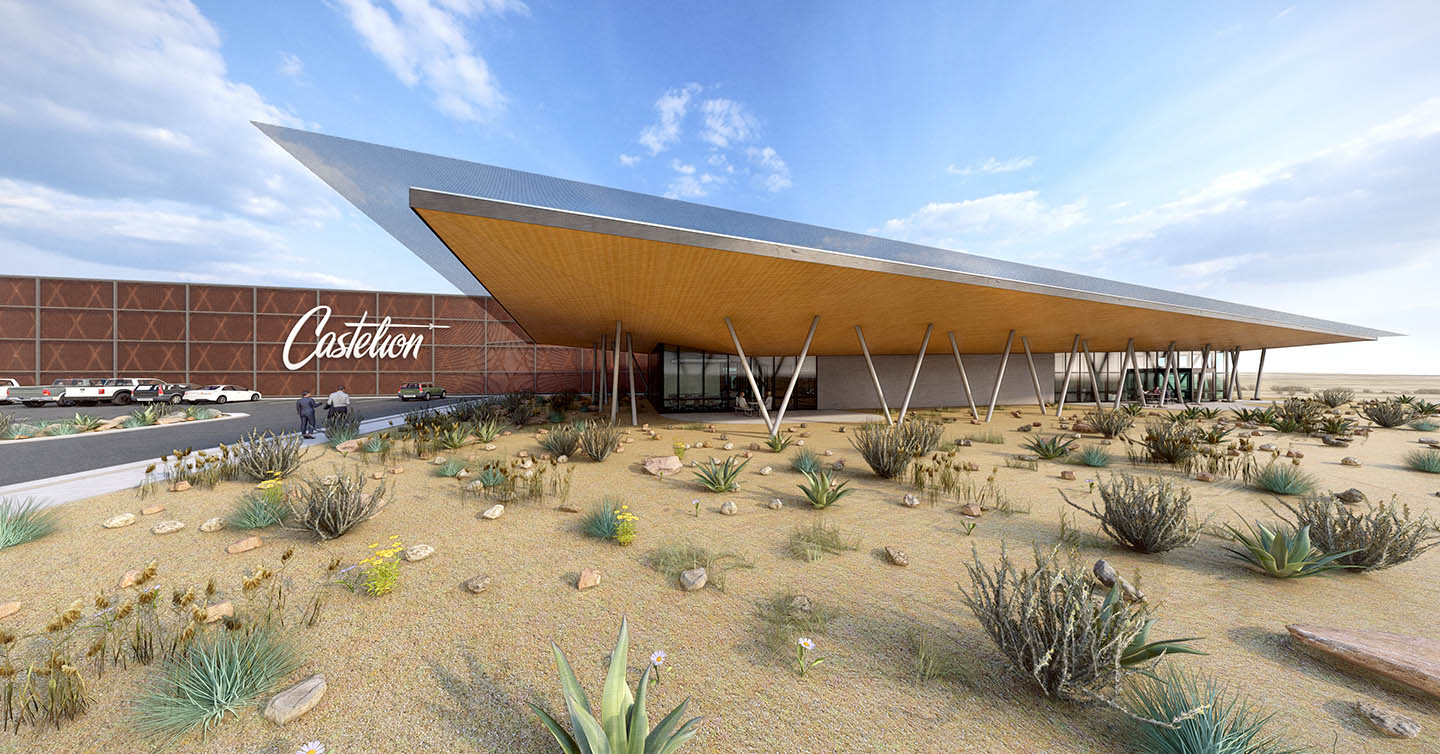
Castelion’s production strategy is tied to Project Ranger, a 1,000-acre manufacturing campus in Sandoval County, New Mexico. The site is planned to support solid rocket motor manufacturing, static testing, and final assembly of hypersonic weapons, with more than $220 million in private investment and over 300 planned manufacturing jobs.
The production base will determine how quickly Blackbeard can move from flight test activity into a deployable inventory. Demand will fall across rocket motors, guidance electronics, airframe materials, test infrastructure, software certification, and high-rate final assembly.