IN Brief:
- Valour is the second of six Multi-Role Combat Vessels being built for the Republic of Singapore Navy.
- The 8,000-tonne ships will command and deploy airborne, surface, and underwater uncrewed systems.
- Series production is progressing alongside complex integration of automation, weapons, sensors, networks, and future mission modules.
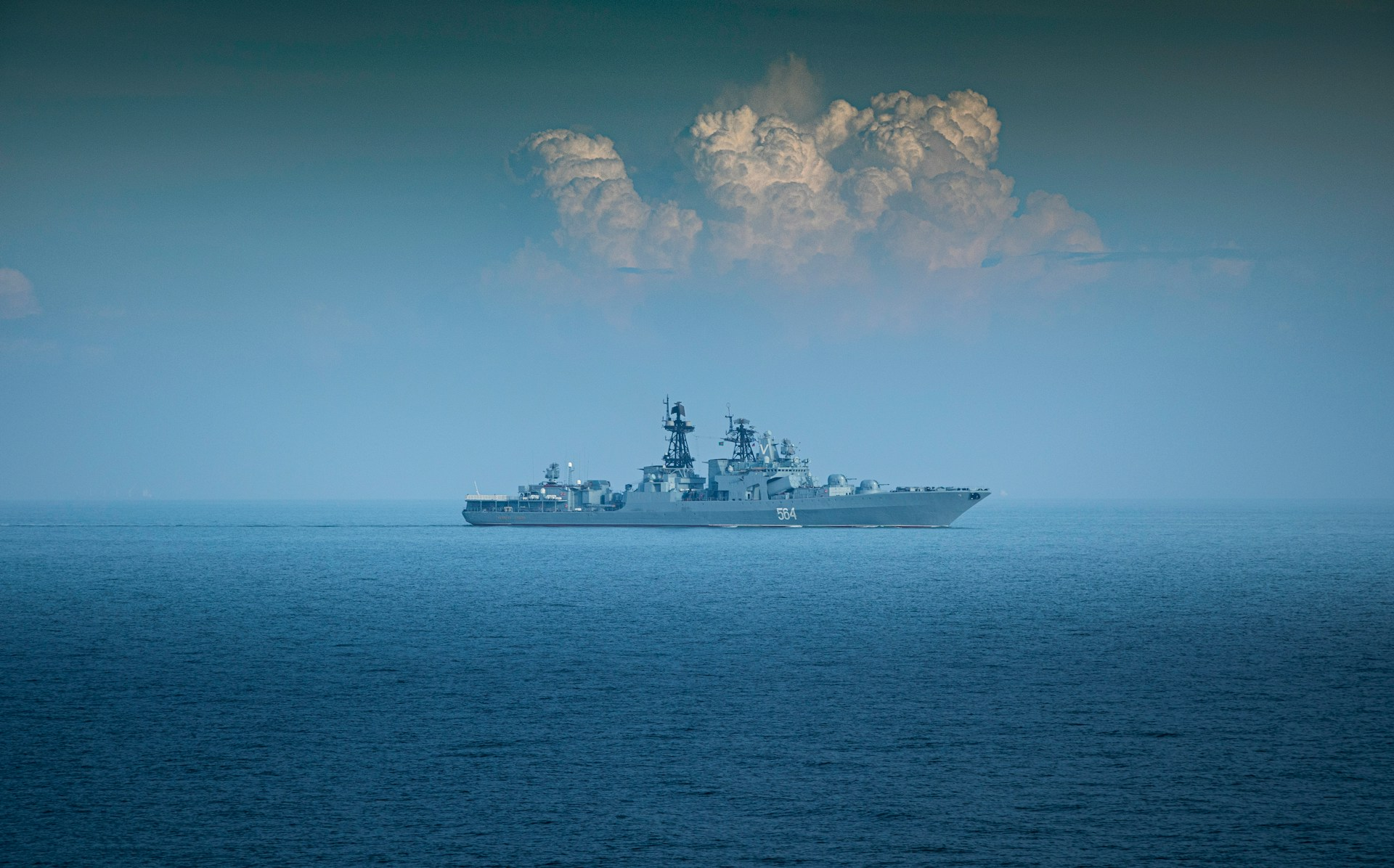
ST Engineering has launched Valour, the second of six Multi-Role Combat Vessels being built for the Republic of Singapore Navy, at its Benoi shipyard.
The launch moves the vessel from primary hull construction into an extended period of outfitting, combat-system integration, harbour testing, crew training, and acceptance trials. Deliveries are scheduled to begin from 2028 as the new class replaces the navy’s smaller Victory-class missile corvettes.
At approximately 150m long and displacing around 8,000 tonnes, the MRCV is considerably larger than the ships it will replace. That scale supports a broader role as a command platform and mothership for uncrewed air, surface, and underwater systems, alongside conventional functions delivered through missiles, guns, sonar, radar, electronic warfare equipment, and secure communications.
The ships are intended to exceed 7,000 nautical miles of range and remain deployed for more than 21 days, yet their complement will remain below 100 personnel. Extensive automation is therefore embedded across bridge, engineering, combat, and support functions rather than added as a secondary efficiency measure.
Bridge operations are designed around two personnel instead of the five commonly required aboard comparable vessels, while the engineering control centre is intended to operate with a single watchkeeper. Delivering those reductions requires integrated machinery monitoring, remote control, automated fault detection, decision-support software, and reliable communication between systems that would previously have been supervised separately.
Launch exposes the integration workload
Although launch is the most visible production milestone, many of the programme’s highest-risk activities now begin. Equipment supplied through different design authorities, software cycles, and qualification regimes must be installed, aligned, powered, cooled, connected, and tested as a functioning ship rather than as a collection of subsystems.
The combat suite includes multifunction and fire-control radar, electro-optical sensors, hull-mounted sonar, electronic warfare equipment, naval guns, and surface-to-air weapons. Hardware installation is followed by calibration and alignment, after which the combat-management system must demonstrate that sensor tracks can be fused, distributed, prioritised, and converted into controlled engagements.
Automation adds further dependencies because reductions in crew numbers transfer routine monitoring and fault response into sensors, software, actuators, and shore support. Machinery-control systems must distinguish between minor anomalies and developing failures, while operators need sufficient visibility to intervene when automated responses are incomplete or unsuitable.
Uncrewed systems place a separate layer of demand on the ship. A mothership requires launch and recovery arrangements, maintenance areas, charging or fuelling capacity, secure data links, mission-planning tools, payload handling, storage, and procedures for controlling several vehicles simultaneously.
Containerised mission modules broaden the available roles, although each module still needs structural restraint, power conversion, cooling, network access, safety certification, and software assurance. The ability to exchange payloads quickly depends on common physical and digital interfaces, together with a configuration system that records exactly which equipment and software are installed before deployment.
Singapore’s Defence Science and Technology Agency, DSO National Laboratories, ST Engineering, and their suppliers are developing these functions as a common architecture. Earlier work on parallel MRCV construction and the class’s composite low-observable structures is now converging in a vessel that must prove its systems under operationally representative conditions.
Series production raises the cost of change
The first MRCV entered the water around nine months before Valour, while work on later ships is already under way. Overlapping construction can sustain shipyard employment and allow fabrication, outfitting, and engineering teams to move continuously between hulls, but problems discovered on the lead ships may require modifications to vessels that are already well advanced.
Waiting for complete testing before starting each subsequent ship would reduce retrospective change, although it would lengthen the programme and interrupt production flow. Building several vessels concurrently protects throughput, while increasing the importance of rapid feedback between trials teams, designers, suppliers, and the shipyard.
Digital configuration control will carry much of that burden. Changes arising from machinery trials, software testing, combat-system integration, or crew evaluation must be assessed and incorporated into later vessels before the relevant spaces become inaccessible. Where the change arrives too late, the programme must decide whether to retrofit, defer, or accept a temporary difference between ships.
Electronics obsolescence adds another pressure because processors, displays, networking equipment, and storage systems can pass through several commercial generations during a six-ship naval programme. Replacing a discontinued component may require software changes and fresh qualification even when the substitute offers equivalent performance.
The MRCV has been designed with electrical and physical growth capacity for future sensors, electronic warfare equipment, directed-energy systems, and additional uncrewed platforms. Reserving power, cooling, weight, and internal volume during construction is cheaper than restructuring the vessel later, although every reserve competes with equipment required at entry into service.
Automation will ultimately be judged through availability rather than demonstration performance. A reduced crew has less spare capacity to absorb maintenance peaks, battle damage, or persistent faults, so the reliability of machinery-control systems, diagnostics, and shore support becomes closely connected to operational endurance.
Valour’s launch shows that Singapore has established a functioning series-production rhythm. Keeping shipyard output, software maturity, crew preparation, autonomous-system integration, and acceptance activity aligned across six vessels will determine whether the class enters service as a coherent fleet rather than a sequence of individually completed ships.